
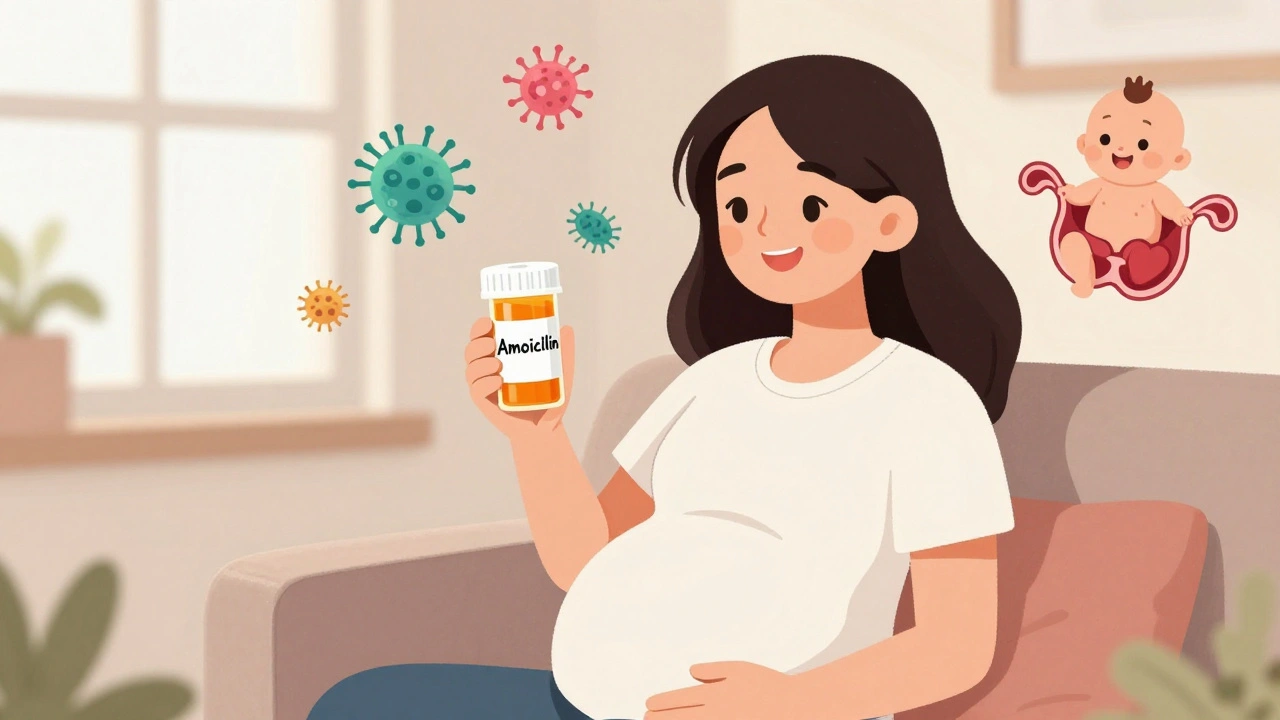
Why Antibiotics Are Sometimes Necessary During Pregnancy
Getting an infection while pregnant can be scary. But leaving it untreated can be riskier. A simple urinary tract infection, if ignored, can turn into a kidney infection - and that raises your chance of preterm labor by 50 to 70%. That’s why doctors don’t hesitate to prescribe antibiotics when they’re needed.
It’s not about taking medicine just because you can. It’s about treating what’s harmful. About 1 in 5 pregnant people in the U.S. gets an antibiotic during pregnancy, mostly for UTIs, bacterial vaginosis, or Group B Strep. The goal? Kill the infection without hurting the baby.
Which Antibiotics Are Actually Safe?
Not all antibiotics are created equal when you’re pregnant. Some are well-studied and trusted. Others? Avoid them.
Penicillins - like amoxicillin and ampicillin - are the gold standard. They’ve been used for decades in pregnancy with no link to birth defects. Amoxicillin crosses the placenta, but studies show fetal levels are only about half of mom’s. No increased risk of problems. It’s the first choice for most infections, including Group B Strep during labor.
Cephalosporins - like cephalexin and cefaclor - are close seconds. They’re often used if someone has a penicillin allergy (though many people think they’re allergic when they’re not). Ceftriaxone is fine too, unless you’re close to delivery. Then it can interfere with bilirubin processing and raise the risk of jaundice in newborns.
Clindamycin is common for dental infections or bacterial vaginosis. It reaches the baby at about 30-40% of mom’s levels. No red flags in human studies. It’s a solid option when penicillin isn’t an option.
Azithromycin is the go-to macrolide for chlamydia. It’s safe, even in the first trimester. But don’t confuse it with erythromycin or clarithromycin - those are linked to a rare but serious stomach condition in newborns called infantile hypertrophic pyloric stenosis, especially when taken early in pregnancy.
Nitrofurantoin is the top pick for UTIs after the first trimester. It doesn’t cross the placenta much. But in the first 12 weeks, it’s linked to a small increase in cleft lip risk - about 2.4% higher than average. So it’s avoided early on, but perfectly fine later.
Antibiotics to Avoid During Pregnancy
Some antibiotics have clear, well-documented risks. Skip them unless it’s a life-or-death situation.
Tetracyclines - like doxycycline - are a hard no after week 5. They bind to developing bones and teeth. The result? Permanent gray or brown staining on baby’s teeth, and weaker bones. Even one dose can do it.
Sulfonamides - like Bactrim or Septra - are risky in the first trimester. Studies show a 2.6 times higher chance of neural tube defects like spina bifida. After the first trimester? They’re okay if nothing else works.
Aminoglycosides - like gentamicin - can damage the baby’s hearing. Even at normal doses, 10-20% of babies exposed in utero may develop permanent hearing loss. These are only used in hospitals, under strict monitoring, for serious infections like sepsis.
Fluoroquinolones - like ciprofloxacin - are banned in Europe during pregnancy. The FDA says they’re not completely off-limits, but only for life-threatening infections. Some studies show no increased risk of joint problems, but the data is still thin. Most doctors won’t touch them unless there’s no other option.
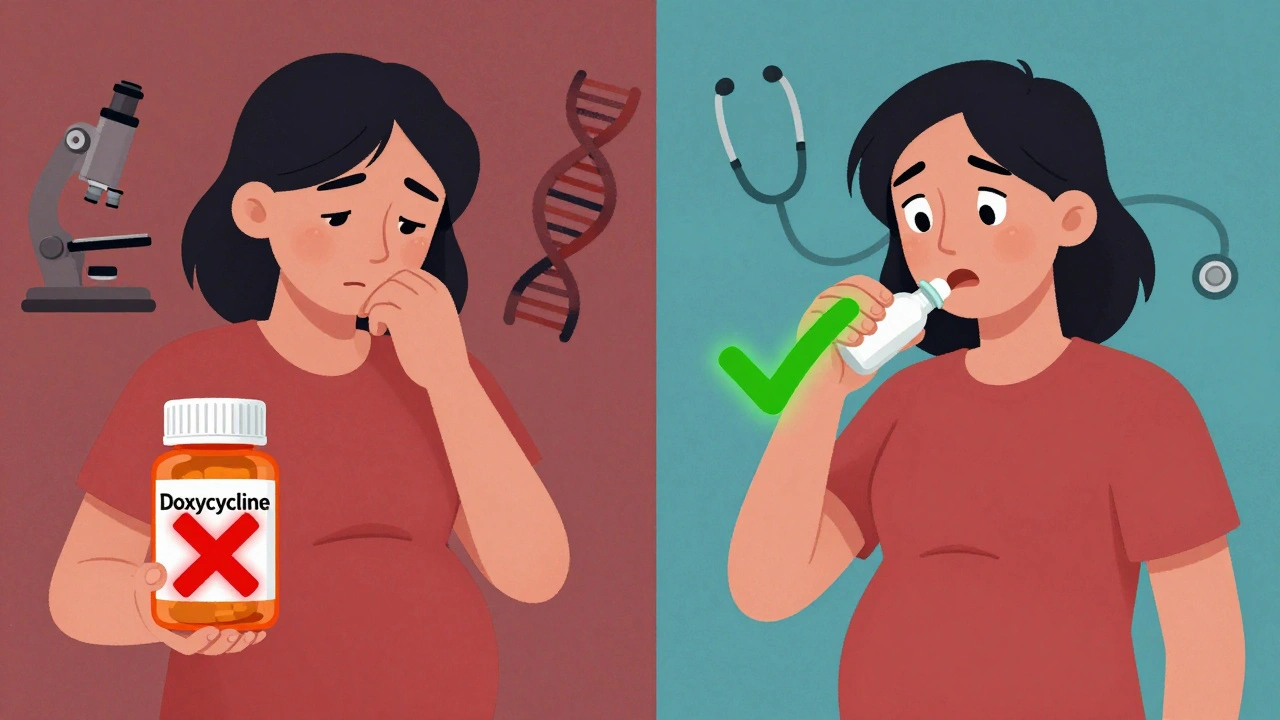
Common Side Effects - And What to Do About Them
Even safe antibiotics can cause side effects. Most are mild, but they can feel worse when you’re already dealing with morning sickness or fatigue.
- Nausea - Happens in 15-20% of people taking amoxicillin. Take it with food. Not on an empty stomach. Ginger tea or crackers can help.
- Diarrhea - Affects 5-25% of users. It’s usually mild. But if it lasts more than 48 hours after finishing the antibiotic, watch for signs of C. diff: watery stool, fever, belly cramps. Call your provider. This can be serious.
- Yeast infections - Antibiotics kill good bacteria too. That can let yeast overgrow. Vaginal itching or thick white discharge? Talk to your doctor. Over-the-counter treatments like clotrimazole are safe during pregnancy.
- Allergic reactions - Rash, swelling, trouble breathing? Seek help immediately. But here’s the thing: 90% of people who say they’re allergic to penicillin aren’t. A simple skin test can clear it up. Don’t assume - get it checked.
Counseling Matters - Here’s What You Should Hear From Your Doctor
Good counseling doesn’t just say, “Take this pill.” It answers your real questions.
Your provider should explain:
- Why you need this antibiotic - What infection are you treating? What happens if you don’t treat it?
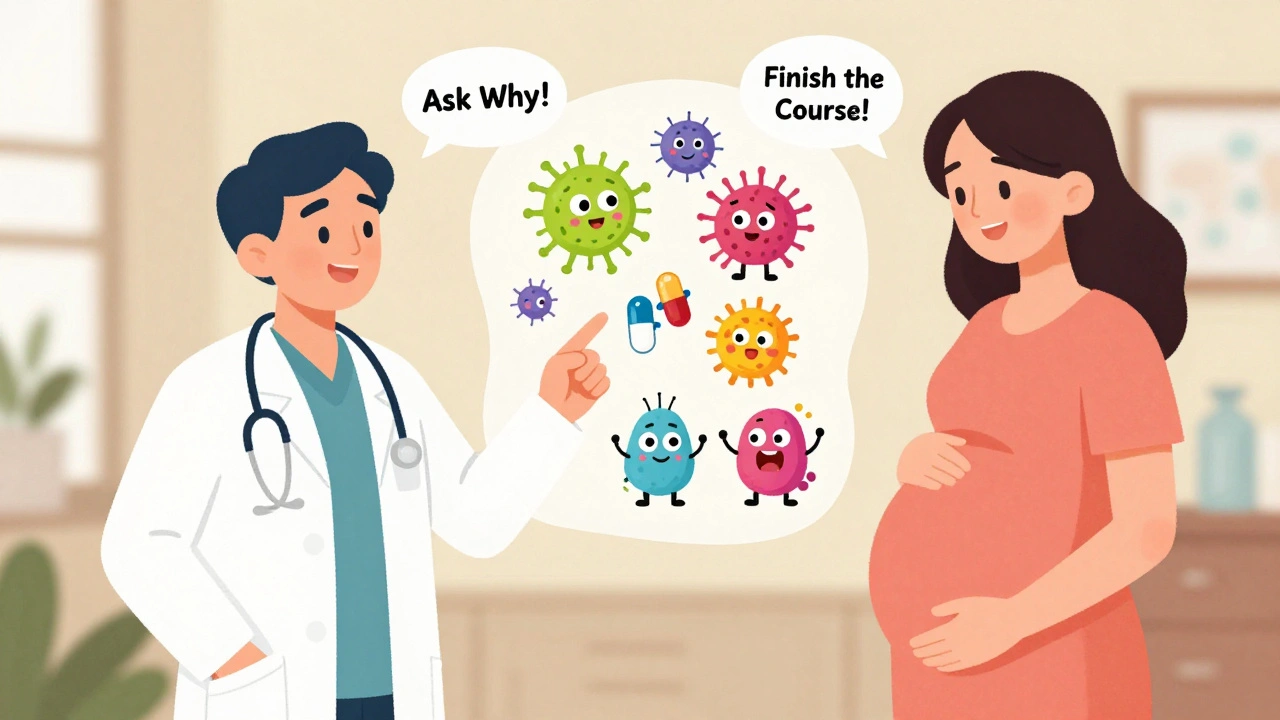
- Why this one is safe - Not just “it’s okay.” Show the data. “Amoxicillin has been studied in over 100,000 pregnancies. No increase in birth defects.”
- What side effects to expect - When do they start? How long do they last? What’s normal? What’s not?
- Why finishing the full course is non-negotiable - Stopping early because you feel better lets the strongest bacteria survive. That’s how resistant infections start. And resistant infections are harder to treat - especially when you’re pregnant.
One study found that when doctors did this kind of counseling, patients were 37% less likely to stop their antibiotics early. And 29% more likely to take them exactly as prescribed. That’s huge.
What About Allergies? Don’t Assume - Get Tested
So many people say, “I’m allergic to penicillin.” But most of the time, it’s not true. Maybe they had a rash as a kid. Or got sick while taking it. Or their mom said they were allergic.
Here’s the truth: If you’re labeled penicillin-allergic, you’re more likely to get a broader-spectrum antibiotic - like clindamycin or azithromycin. But those aren’t always better. They can cause more diarrhea, or carry other risks.
Getting tested - even during pregnancy - is safe and simple. A skin prick test or oral challenge under supervision can tell you for sure. If you’re not allergic, you can go back to the safest, most effective option: amoxicillin.
What’s New in 2025?
Things are changing. For years, pregnant people were left out of drug trials. That meant doctors guessed at safety.
Now, the FDA is pushing for more inclusion. The NICHD launched a major study in early 2024 - the AMRIP project - tracking 15,000 pregnancies exposed to antibiotics. This will give us real data on long-term outcomes, especially for third-trimester use.
ACOG updated its guidelines in 2024 to reflect new data on azithromycin. No increased risk of heart defects. That means it’s even more widely recommended now for STIs.
And the big picture? Antibiotic resistance is growing. The global market for pregnancy-safe antibiotics is expected to hit nearly $2 billion by 2027. But the real win? Using the right drug, at the right time, for the right reason.
Bottom Line: Trust the Process, Ask Questions
Antibiotics aren’t magic. But when used correctly, they’re one of the most powerful tools we have to protect both mom and baby.
You don’t need to avoid them. You need to use them wisely. If your doctor prescribes one, ask: Why this one? Is it safe? What side effects should I watch for? What happens if I don’t take it?
Don’t let fear stop you from getting the care you need. And don’t let assumptions - about allergies, side effects, or risks - guide your choices. Let evidence do that.
Safe antibiotics exist. They’re used every day. And they’re saving lives - yours and your baby’s - right now.




Desmond Khoo
December 7, 2025 AT 22:26Nicholas Heer
December 8, 2025 AT 04:57Sam Mathew Cheriyan
December 9, 2025 AT 04:39Ted Rosenwasser
December 10, 2025 AT 21:14Sadie Nastor
December 11, 2025 AT 01:12Oliver Damon
December 11, 2025 AT 11:21Ryan Sullivan
December 12, 2025 AT 22:16Wesley Phillips
December 14, 2025 AT 09:59Olivia Hand
December 15, 2025 AT 11:19