

Allergy Treatment Comparison Tool
Find Your Best Allergy Treatment
Select your main symptoms and preferences to see which allergy treatments work best for you.
What are your main allergy symptoms?
How important is speed of relief?
How do you feel about side effects?
When your nose won’t stop running, sneezing, or itching during allergy season, you’ve probably tried oral antihistamines. But what if the real solution isn’t swallowed-it’s sprayed? Nasal antihistamine sprays deliver fast, targeted relief straight to your nasal passages, cutting through congestion and runny nose without the drowsiness of pills. Unlike oral meds that circulate through your whole body, these sprays work exactly where the problem is. That’s why more people are switching-or adding them-to their allergy routine.
How Nasal Antihistamine Sprays Actually Work
Allergies happen when your immune system overreacts to harmless things like pollen, dust, or pet dander. Your body releases histamine, a chemical that triggers swelling, mucus, and itching in your nose. Oral antihistamines block histamine everywhere-in your nose, your eyes, your skin. But nasal sprays? They only block it in your nose.
The two main active ingredients are azelastine (found in Astepro and Astelin) and olopatadine (Patanase). Azelastine doesn’t just block histamine-it also stabilizes mast cells, the ones that release histamine in the first place. That means it doesn’t just calm symptoms; it helps prevent them from flaring up. Each spray delivers about 140 micrograms of azelastine, and you typically use two sprays per nostril once or twice a day. Relief starts in as little as 15 minutes, which is faster than steroid sprays like Flonase that can take days to kick in.
What You’ll Feel Right Away: Benefits
If your biggest allergy problem is a constant runny nose or sneezing fits, nasal antihistamine sprays are among the most effective tools you’ve got. Studies show they reduce these symptoms by 70-80% compared to placebo. That’s not just a little better-it’s game-changing for people who can’t function with a dripping nose all day.
They’re especially helpful for seasonal allergies. If you’re hit hard by spring pollen or fall ragweed, these sprays give you control when you need it. Unlike oral antihistamines, they rarely cause drowsiness. You won’t feel foggy at work or sluggish after lunch. And because they’re localized, you avoid dry mouth, upset stomach, or other systemic side effects common with pills.
Many users report they can skip the whole pile of allergy meds. One person on Reddit said, “Astepro changed my life for seasonal allergies-the runny nose stops within 20 minutes.” That’s not an outlier. Clinical data and user reviews consistently point to rapid, reliable relief for nasal symptoms.
The Not-So-Good Part: Side Effects
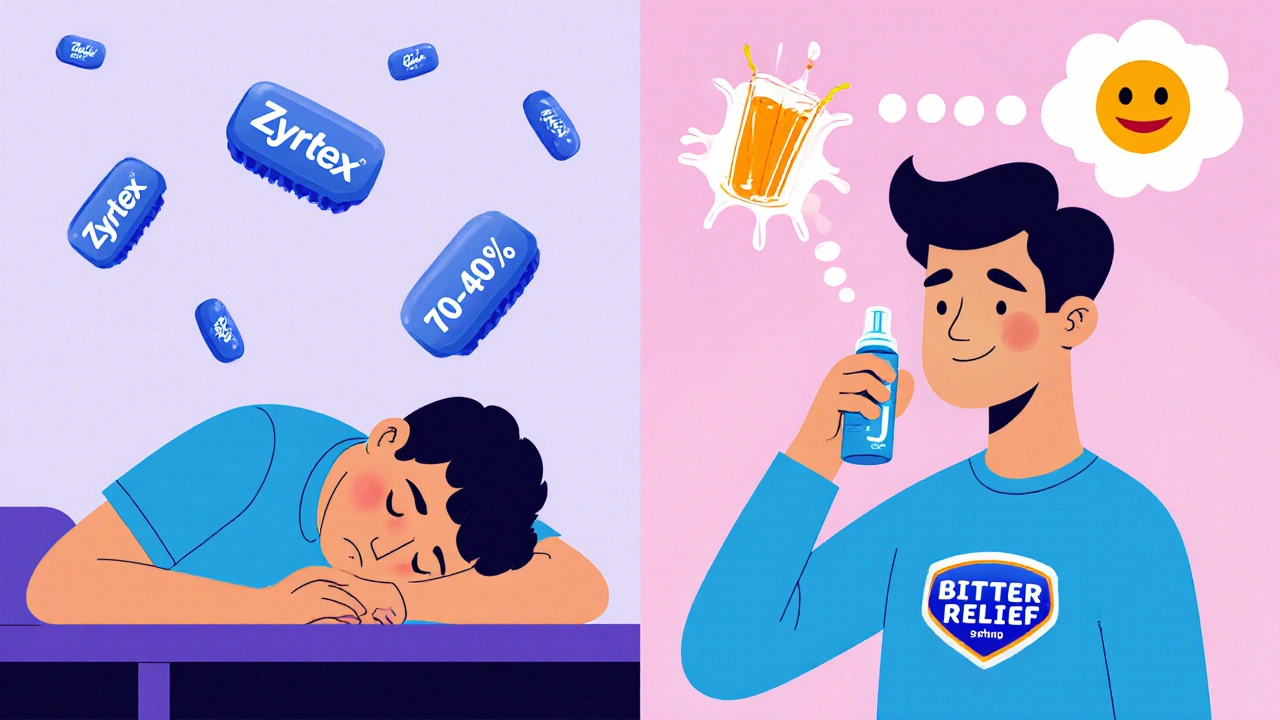
Nothing’s perfect. The biggest complaint? The bitter taste. Up to 85% of negative reviews mention it. You spray it in your nose, and seconds later, it’s in your throat. It’s not dangerous, but it’s unpleasant enough that many people stop using it. Some users swear by drinking orange juice right after to mask it. Others just take it right before bed.
Another common issue is nasal burning or stinging. About 25% of first-time users feel it, especially if their nose is already dry or irritated. This usually fades after a few days. To reduce it, try using a saline spray 15 minutes before your antihistamine spray. A 2022 survey found this cut irritation complaints by 40%.
Nosebleeds happen in about 15% of users, usually because the spray is aimed too far forward, hitting the sensitive center of the nose. The fix? Aim the nozzle toward your ear, not your brain. That’s the outer wall of the nasal passage. It’s not intuitive, but it makes a big difference.
How They Stack Up Against Other Allergy Treatments
Let’s be clear: nasal antihistamine sprays aren’t the first-line treatment for everyone. Doctors still recommend corticosteroid sprays like Flonase or Nasacort for moderate to severe allergies because they fight inflammation-the root cause of congestion. But they take 3-4 days to work. If you need relief now, antihistamine sprays are your best bet.
Compare that to decongestant sprays like Afrin. They work fast, but if you use them longer than three days, you get rebound congestion. Your nose gets worse when you stop. That’s a trap most people don’t see coming.
Oral antihistamines like Zyrtec or Claritin are convenient, but they often cause drowsiness and dry mouth. If you’re driving, working, or caring for kids, that’s a problem. Nasal sprays avoid that.
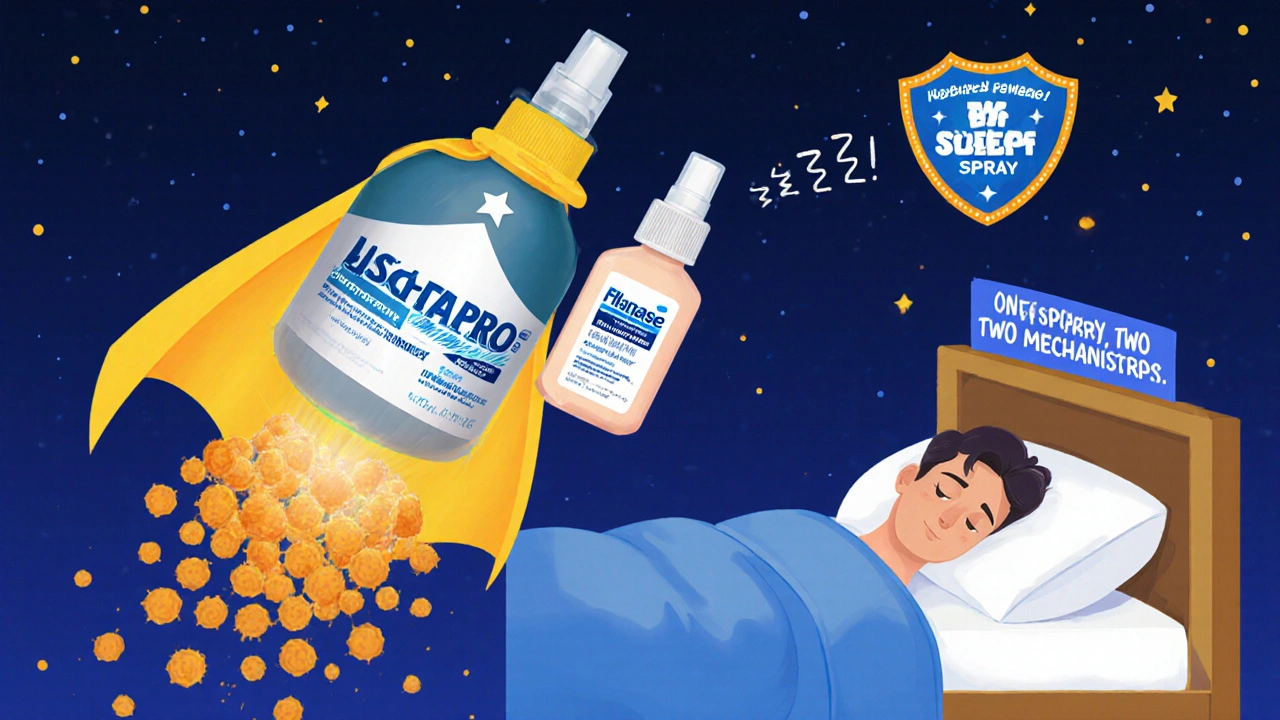
And here’s the smart move: use them together. Many allergists now recommend combining a nasal antihistamine with a steroid spray. One study found that combo treats 92% of allergy symptoms, compared to 75-80% for either alone. It’s like having two tools instead of one.
Who Should Use Them-and Who Should Skip
Nasal antihistamine sprays are ideal for:
- People with mostly runny nose and sneezing (not heavy congestion)
- Those who get drowsy from oral antihistamines
- Seasonal allergy sufferers who need fast relief
- People who want to avoid daily steroid use
They might not be the best fit if:
- Your main issue is nasal congestion (steroid sprays work better)
- You can’t stand the bitter taste and won’t adjust your routine
- You have frequent nosebleeds or a history of nasal surgery
- You’re looking for a long-term fix for year-round allergies-these work better for seasonal triggers
Also, prescription azelastine (0.15%) costs around $300 without insurance. The OTC version, Astepro (0.1%), runs $25-$35. That’s still more than generic Flonase ($20), but you’re paying for speed, not just effectiveness.
How to Use Them Right
Getting the most out of your spray isn’t about how often you use it-it’s about how you use it.
- Shake the bottle well before each use.
- Prime it: press the pump 5-6 times until you see a fine mist (only needed the first time or if unused for more than a week).
- Tilt your head slightly forward-not back.
- Insert the nozzle into one nostril and aim it toward your ear, not straight up.
- Breathe in gently while pressing the pump.
- Don’t sniff hard or blow your nose right after.
- Wait 10 minutes before using saline spray or another nasal product.
Most people need 2-3 tries to get the technique right. Don’t give up after one bad experience. Use it consistently for 3-4 days. That’s when you’ll see peak results.
What’s New in 2025
Things are improving. In June 2023, a new azelastine formula got FDA approval with encapsulated bitter taste technology. Early trials showed taste-related dropouts fell from 28% to just 12%. That’s a huge win.
There’s also a once-daily olopatadine spray in late-stage trials. Right now, you need to use it twice a day. If approved, that could boost adherence-currently only 65% of users stick with it long-term.
And the market is growing. Allergies affect 50 million Americans, and cases are rising globally. Nasal antihistamine sprays are now the second-fastest-growing segment in allergy meds, behind combination sprays like Dymista (which blends azelastine and fluticasone). That’s the future: one spray, two mechanisms, better results.
Final Thoughts: Are They Worth It?
If your allergies make your nose run nonstop, and you’re tired of pills that knock you out, nasal antihistamine sprays are worth a try. They’re not magic, but they’re fast, targeted, and effective for the symptoms that matter most to daily life.
The bitter taste? Manageable. The burning? Usually temporary. The results? Real. And if you pair them with a steroid spray, you’re covering all the bases.
Don’t let the first bad experience stop you. Try it the right way, give it a few days, and see if your nose finally gets some peace.
Do nasal antihistamine sprays cause drowsiness?
Unlike oral antihistamines like diphenhydramine or cetirizine, nasal sprays like Astepro and Astelin rarely cause drowsiness because they act locally in the nose and don’t enter the bloodstream in large amounts. Clinical studies show less than 5% of users report sleepiness, and it’s usually mild if it happens.
Can I use nasal antihistamine sprays every day?
Yes, both prescription and OTC nasal antihistamine sprays are approved for daily, long-term use. Unlike decongestant sprays (e.g., Afrin), they don’t cause rebound congestion. However, if symptoms persist beyond 3 months without improvement, consult a doctor to reassess your treatment plan.
Is Astepro the same as Astelin?
Astepro and Astelin both contain azelastine, but they differ in strength and availability. Astelin is a prescription version with 0.15% azelastine. Astepro is the over-the-counter version with 0.1% azelastine. Both work the same way, but the prescription form may be more effective for severe symptoms. The OTC version is still highly effective for most people.
How long does it take for nasal antihistamine sprays to work?
Relief typically begins within 15 to 30 minutes after the first dose. For full effectiveness, you need to use the spray consistently for 3 to 4 days. This is much faster than corticosteroid sprays like Flonase, which can take up to a week to reach maximum benefit.
Can children use nasal antihistamine sprays?
Astepro (0.1% azelastine) is approved for children aged 6 and older. Astelin (0.15%) is approved for those 12 and older. Always check the label or consult a pediatrician before giving any nasal spray to a child. Dosing is typically one spray per nostril once or twice daily, depending on age and severity.
Do nasal antihistamine sprays help with itchy eyes?
They’re designed for nasal symptoms, so they don’t directly treat itchy eyes. However, because nasal and eye allergy symptoms are often linked, some users report reduced eye itching when nasal symptoms improve. For direct eye relief, use antihistamine eye drops like Pataday or Zaditor.
Are nasal antihistamine sprays safe during pregnancy?
Azelastine and olopatadine are classified as Pregnancy Category C, meaning animal studies have shown some risk, but human data is limited. Many allergists consider them safer than oral antihistamines during pregnancy because they’re localized. Still, always consult your OB-GYN or allergist before using any medication while pregnant.





Bernie Terrien
November 30, 2025 AT 08:37Nasal sprays are just fancy nose perfume for people who hate swallowing pills. Bitter taste? That’s the price of not being a zombie at work.
LINDA PUSPITASARI
December 2, 2025 AT 05:15i literally cried the first time i used astepro bc the taste hit me like a truck 😭 but after 3 days?? my nose stopped acting like a leaky faucet 🙌 no more drowsiness either. 10/10 would spray again
Peter Axelberg
December 2, 2025 AT 13:52Look, I’ve been through every allergy treatment under the sun-from herbal teas to those weird nasal rinses with sea salt that make you feel like you’re drowning in a gym sock. But this? This is the first thing that actually worked without turning me into a couch potato. I used to take Zyrtec every day, and by 2 p.m. I was nodding off in meetings. Now I just spray twice, go about my day, and no one even knows I’m allergic. The taste? Yeah, it’s gross, but I’ve trained myself to swallow a sip of water right after. It’s like a bitter lemonade you didn’t ask for but somehow tolerate. And honestly, if you’re going to spend $30 on something that gives you back your sanity during pollen season, it’s a bargain. I’ve even started recommending it to my coworkers. One of them tried it last week and came back saying, ‘I didn’t know my nose could feel this good.’ That’s not hype. That’s science with a side of weird aftertaste.
stephen idiado
December 2, 2025 AT 19:54Pharmaceutical placebo engineering. Steroids are the real treatment. This is just marketing dressed as innovation. The ‘bitter taste’ is the body rejecting the chemical intrusion.
Joy Aniekwe
December 3, 2025 AT 10:55Wow, so now we’re paying $35 to taste medicine in our throat? Brilliant. Next they’ll charge extra for the ‘nasal afterburn’ experience. 🙄
Andrew Keh
December 5, 2025 AT 06:13It’s important to note that while these sprays offer fast relief, they are not a cure. For long-term management, especially with persistent allergies, combining them with environmental controls and possibly steroid sprays remains the most evidence-based approach.
Sullivan Lauer
December 7, 2025 AT 02:08I used to think I was just a ‘sneezing guy’-until I tried this spray. I cried. Not from sadness-from relief. My wife said I hadn’t stopped sniffling for two years. Two YEARS. Now I wake up without a Kleenex factory in my pocket. The taste? Yeah, it’s like licking a battery wrapped in sour candy. But I’d lick a battery every morning if it meant I could breathe without sounding like a malfunctioning vacuum cleaner. I even bought an extra bottle for my car. My kids now call it ‘magic nose juice.’ I don’t care what they call it. Just give me more.
gerardo beaudoin
December 7, 2025 AT 17:33My dad’s been using this for years. He swears by it. Said the first time he used it, he thought it was broken because it worked too fast. Now he’s the one reminding me to aim toward my ear, not my brain. Honestly, I thought he was joking until I tried it myself. Game changer.
linda wood
December 7, 2025 AT 18:18So… you’re telling me the ‘bitter taste’ is actually a feature, not a bug? Like, the medicine is so good it literally makes you gag to prove it’s working? 😏
Peter Lubem Ause
December 7, 2025 AT 22:58For those struggling with the taste, I’ve found that rinsing your mouth with cold water before spraying helps. Also, don’t tilt your head back-keep it neutral. And if you’re using it at night, do it right before brushing your teeth. The minty toothpaste masks the bitterness better than orange juice. I’ve been using this for five allergy seasons now, and it’s the only thing that lets me sleep without my nose acting like a broken faucet. I even bought a travel-sized bottle for my gym bag. No more sneezing during spin class. No more embarrassing ‘snort-laugh’ moments in meetings. This isn’t just medicine-it’s a lifestyle upgrade.
Robert Bashaw
December 9, 2025 AT 05:12They say ‘fast relief’ but what they really mean is ‘fast regret.’ I sprayed it once, and for the next 45 minutes I felt like I’d swallowed a lemon rind dipped in battery acid. My dog looked at me like I’d betrayed the family. I’m not going back.
tushar makwana
December 10, 2025 AT 20:01i used to think steroids were the only way but this spray actually helped my sneezing way better than flonase. the taste is bad but i just drink water after and boom-no more dripping nose. also aiming toward ear? genius. i did it wrong for 2 weeks then figured it out. now i’m a believer. thanks for the info
Sohini Majumder
December 11, 2025 AT 22:10OMG I just found out this stuff is like… $35?? Like are you kidding me?? I could buy a whole box of tissues for that!! And the taste?? I’m not paying $35 to taste my own throat!! 😭😭😭
Geoff Heredia
December 13, 2025 AT 16:18They don’t want you to know this-but the bitter taste? It’s not a side effect. It’s a tracking chip. Big Pharma is monitoring your nasal activity. They know when you use it. They know when you stop. They’re building a database of allergy sufferers. Don’t be fooled.
Latika Gupta
December 13, 2025 AT 23:05Have you tried using it with your eyes closed? I find it helps with the taste. Also, I think the spray is secretly connected to the weather app on your phone. It only works when it’s sunny. I’ve tested it.