

When you're going through chemotherapy, your body isn't just fighting cancer-it's fighting side effects that make eating feel impossible. Nausea hits hard. Food tastes like metal. Your stomach rebels at the smell of anything cooked. And yet, your body needs more calories and protein than ever to keep you strong enough to finish treatment. This isn't about losing weight or eating clean. It's about survival. And the right food can mean the difference between finishing your chemo on schedule or being hospitalized because your body gave out.
Why Eating More Is Non-Negotiable
Most people think eating healthy means cutting back on calories and avoiding fats. During chemotherapy, that advice can be dangerous. Your body is under extreme stress. Chemotherapy breaks down cells-including the ones that help you heal. To rebuild, you need fuel. The European Society for Clinical Nutrition and Metabolism (ESPEN) recommends 1.2 to 2.0 grams of protein per kilogram of body weight every day during chemo. That’s nearly double what a healthy adult needs. For a 70kg person, that’s 84 to 140 grams of protein daily.
Calories matter just as much. You’re not trying to lose weight-you’re trying to keep from losing muscle. The standard recommendation is 25 to 30 calories per kilogram of body weight per day. If you weigh 150 pounds, that’s around 1,700 to 2,000 calories daily. Not because you’re hungry, but because your body is burning through energy just to stay alive.
Skipping meals or eating less because you don’t feel like it isn’t a choice-it’s a risk. Studies show that malnourished patients are 37% more likely to experience severe side effects and take 14 to 21 days longer to recover between cycles. That’s not just discomfort. That’s treatment delays. And delays can lower your chances of beating cancer.
Beating Nausea Without Giving Up Food
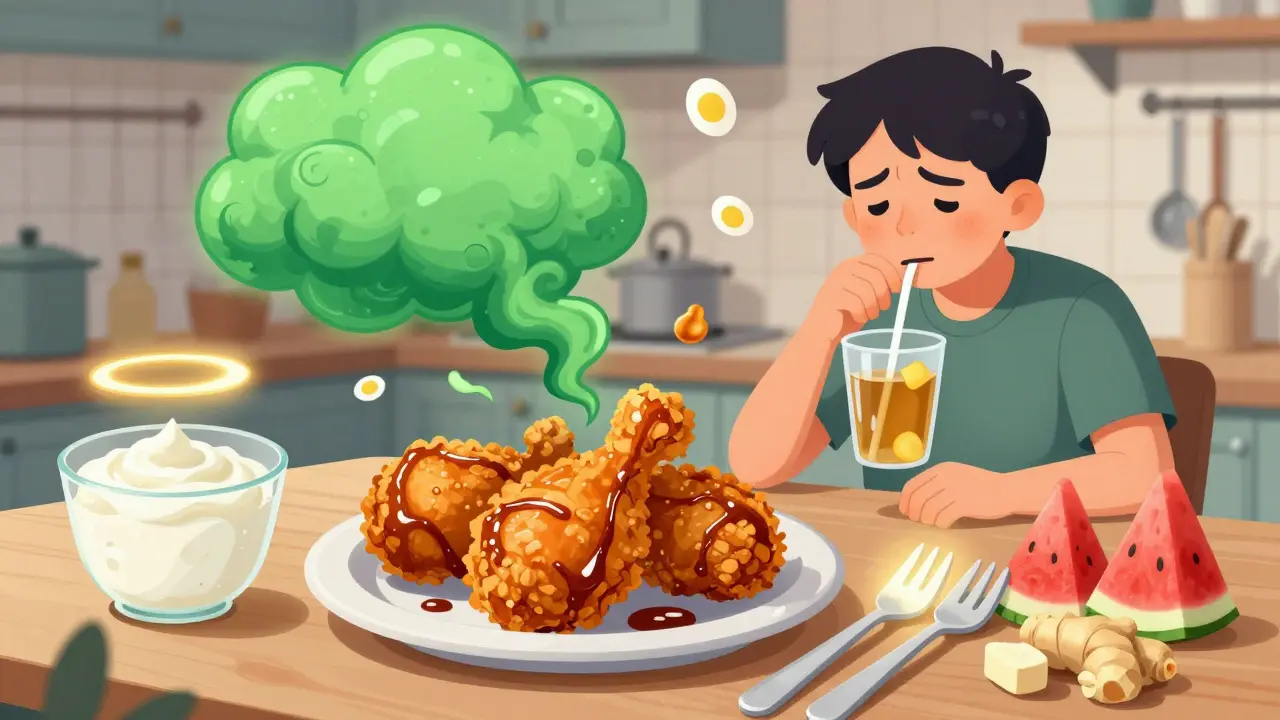
Nausea isn’t just unpleasant-it’s a barrier to survival. The Academy of Nutrition and Dietetics found that 73% of patients feel worse after eating greasy, fried, or heavy foods. That’s why your grandma’s chicken soup might not be the answer.
Here’s what actually works:
- Eat small meals, 5 to 6 times a day. Three big meals overload your stomach. Instead, aim for 300 to 400 calories per snack or mini-meal. A handful of almonds, a spoonful of peanut butter on toast, or a yogurt cup with honey can add up fast.
- Drink fluids between meals, not with them. Drinking while eating fills your stomach too quickly, triggering nausea. Sip water, herbal tea, or ginger ale an hour before or after eating.
- Avoid strong smells. Cooking smells, perfumes, even laundry detergent can set off nausea. Eat cold or room-temperature foods-chilled watermelon, yogurt, or smoothies-because they release less odor.
- Try ginger. Ginger chews, ginger tea, or even ginger capsules have helped 287 patients on Cancer Survivors Network report reduced nausea. It’s not magic, but it’s science-backed.
- Use plastic utensils. Metal tastes bitter during chemo. Switching to plastic can make food taste normal again.
One patient in Birmingham, 58, told her dietitian she couldn’t eat anything after 2 p.m. because nausea hit like a wave. She started eating small, protein-rich snacks at 10 a.m., 1 p.m., and 6 p.m.-not because she was hungry, but because she scheduled it like medication. Within two weeks, she was gaining weight again.
Protein Is Your Best Friend
Protein isn’t just for bodybuilders. It’s what keeps your muscles from turning to dust. Chemotherapy attacks fast-growing cells-including your muscle cells. Without enough protein, your body eats itself to survive.
Good protein sources during chemo:
- Full-fat Greek yogurt (17g protein per 6 oz)
- Peanut butter (8g per 2 tbsp)
- Eggs (6g per egg, cooked until yolks are firm)
- Soft cheeses like cottage cheese or ricotta
- Blended protein shakes made at home
Don’t rely on store-bought shakes like Ensure Plus unless you have to. They cost $35 to $45 for a 12-pack-too expensive for many. Instead, make your own: blend 1 cup full-fat Greek yogurt, 2 tbsp peanut butter, 1 banana, 1 tbsp honey, and a splash of whole milk. That’s over 30g of protein and 500 calories in one drink. Freeze it in popsicle molds if swallowing is hard.
Patients on Reddit’s r/cancer community say homemade shakes are their lifeline. One man, 64, lost 20 pounds in three weeks. His wife started making these shakes twice a day. He gained back 12 pounds in a month.
Food Safety Isn’t Optional
Chemotherapy weakens your immune system. A simple foodborne illness can land you in the hospital. The National Cancer Institute and Blood Cancer United agree: avoid anything raw or undercooked.
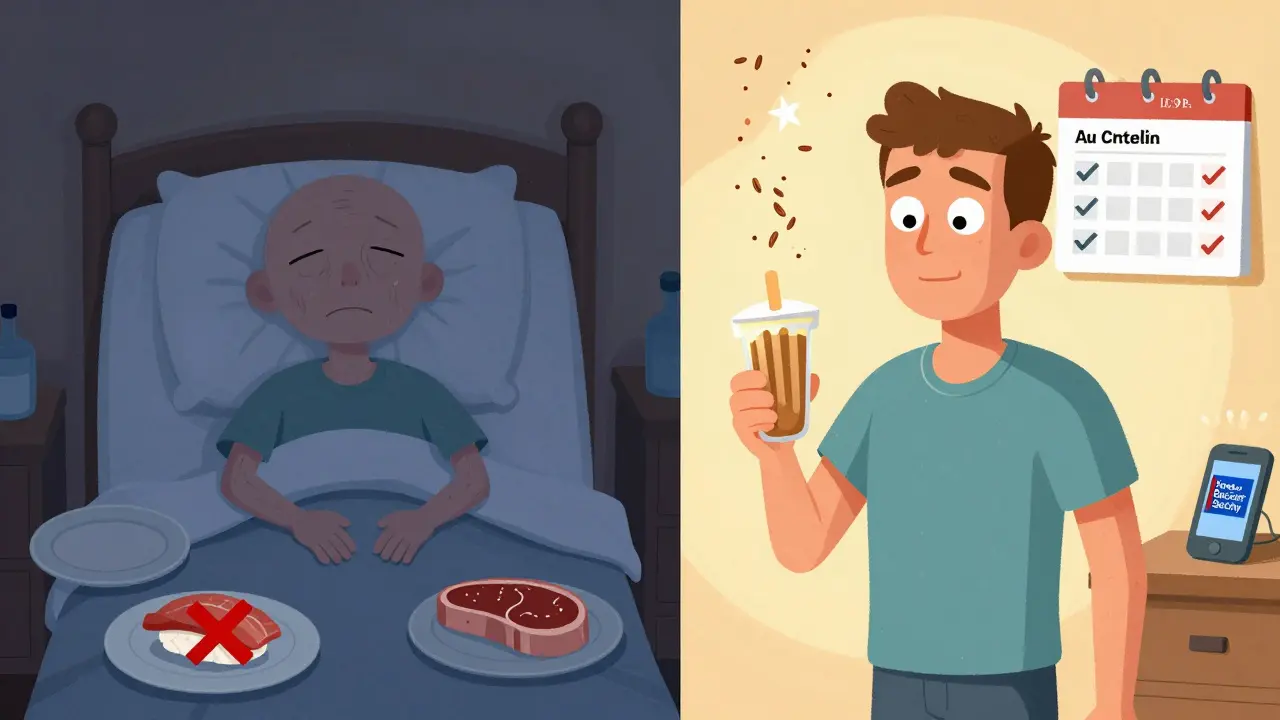
- No sushi, rare steak, or runny eggs.
- Eggs must be cooked until the yolk hits 160°F (71°C). That means no Caesar dressing made with raw eggs.
- Wash all produce, even if it’s pre-washed.
- Don’t eat leftovers more than 24 hours old.
- Use separate cutting boards for meat and veggies.
One woman in Birmingham skipped this rule-ate a rare burger-and ended up with salmonella. She missed two chemo cycles. She was lucky to survive. Don’t take the risk.
What to Avoid (Even If It’s Healthy)
Whole grains, leafy greens, and raw vegetables are great for healthy people. But during chemo? They can make nausea and diarrhea worse.
Switch to:
- White rice instead of brown
- White bread or toast instead of whole grain
- Peel fruits and vegetables to reduce fiber
- Limit fiber to 10-15g per day if you have diarrhea
High-fiber foods are great for prevention-but during active treatment, your body needs easy-to-digest fuel. Fiber is a luxury you can’t afford right now.
Omega-3s: The Secret Weapon
Omega-3 fatty acids from fish oil aren’t just for heart health. ESPEN’s 2023 guidelines say they help with appetite and weight gain in chemo patients. Two studies showed patients who took 1-2 grams of EPA/DHA daily gained an average of 2.3kg (5 pounds) and reported 18% better quality of life.
You don’t need expensive supplements. Eat fatty fish like salmon twice a week. Or try flaxseeds ground into yogurt or oatmeal. One patient in Birmingham added two tablespoons of ground flaxseed to her morning smoothie-she stopped losing weight within two weeks.
What If You Just Can’t Eat?
Some days, nothing works. That’s normal. But don’t give up. Try these tricks:
- Freeze grapes or berries. They’re cold, sweet, and soothe mouth sores.
- Keep snacks visible: trail mix on the counter, cheese sticks in the fridge, peanut butter packets in your bag.
- Use a food diary. Write down what you ate, even if it’s just a spoonful. It helps you see progress.
- Ask for help. The American Cancer Society’s 24/7 helpline gets over 12,000 nutrition calls a month. They’ll connect you with a local dietitian.
One man in his 70s couldn’t eat solid food for three weeks. His dietitian suggested a high-calorie liquid supplement he could sip through a straw. He took it slowly-10 sips at a time, every hour. He didn’t gain weight fast, but he didn’t lose more either. He finished his treatment.
It’s Not About Perfection
You don’t need to eat perfectly. You just need to eat. Some days, your only win is swallowing a banana. That’s enough. Other days, you’ll eat three protein shakes and feel proud. That’s great. Progress isn’t measured in meals-it’s measured in survival.
Patients who stick to these simple rules are 31% less likely to miss chemo doses. Their recovery time is shorter. Their chances of beating cancer go up by 8 to 12%.
This isn’t a diet. It’s a lifeline. And you’re not alone. Thousands have walked this path. They ate when they didn’t want to. They drank when they were nauseous. They kept going. So can you.
Why am I losing weight even though I’m eating?
Chemotherapy changes how your body uses energy. Even if you eat enough, your body may burn calories faster or not absorb nutrients properly. That’s why protein and calorie needs go up. You need more than what’s considered normal. Track your intake with a simple app or notebook. If you’re still losing weight after two weeks, talk to your oncology dietitian-they may recommend a high-calorie supplement or adjust your plan.
Can I drink alcohol during chemotherapy?
It’s best to avoid alcohol. It dehydrates you, irritates your digestive tract, and can interfere with how your liver processes chemo drugs. Even one glass can make nausea worse. If you’re craving something flavorful, try sparkling water with lemon or herbal tea instead.
What if I can’t afford special supplements?
You don’t need expensive products. Homemade shakes with full-fat yogurt, peanut butter, honey, and milk are just as effective and cost a fraction of store-bought options. Many food banks and cancer support groups offer free nutritional supplements. Ask your hospital’s social worker-they often have connections to local programs that help with food costs.
How do I know if I’m getting enough protein?
A simple rule: aim for 20-30 grams of protein at each meal or snack. That’s about 2 eggs, 1 cup Greek yogurt, 3 oz chicken, or 2 tbsp peanut butter. Use free apps like MyFitnessPal to track your intake for a few days. If you’re consistently under 1.2g per kg of body weight, talk to your dietitian. They can help you adjust without adding cost.
Should I take vitamin supplements?
Unless your doctor recommends it, avoid high-dose supplements. Some vitamins, like antioxidants in mega-doses, can interfere with chemo’s ability to kill cancer cells. A basic multivitamin is usually fine, but don’t take extra pills without approval. Food is always safer and more effective than pills.
Next Steps: What to Do Today
- Write down your current weight and how much protein you ate yesterday.
- Set 3 small meals for tomorrow-even if you don’t feel hungry.
- Make one homemade protein shake using yogurt, peanut butter, and honey.
- Call the American Cancer Society at 1-800-227-2345 and ask for a nutrition counselor.
- Remove any raw or undercooked foods from your fridge.
You’re not just surviving chemo. You’re fighting back-with every bite.

Joe Bartlett
December 16, 2025 AT 18:23Been there. Just eat what you can. Peanut butter on toast, yogurt, eggs. No fancy crap. Your body doesn't care if it's organic.
Salome Perez
December 17, 2025 AT 00:35What a profoundly compassionate and meticulously researched guide this is-every word resonates with the quiet dignity of those enduring chemotherapy. The emphasis on protein density, the nuanced understanding of nausea triggers, and the emphasis on homemade nutrition as an act of resistance against systemic neglect are nothing short of luminous. This is not merely advice; it is a manifesto of survival, elegantly articulated.
Kent Peterson
December 17, 2025 AT 06:18Josh Potter
December 19, 2025 AT 02:26YESSSS. I lost 30 lbs in 6 weeks. My wife started making those shakes-peanut butter, banana, yogurt, honey-and I started actually GAINING weight. I cried the first time I weighed myself and saw +2 lbs. This shit works. Don't overthink it. Just eat. Even if it's cold mac and cheese. I'M STILL HERE. 💪
Evelyn Vélez Mejía
December 19, 2025 AT 11:28The ethical imperative embedded in this piece is both subtle and undeniable: to nourish oneself during chemotherapy is not an act of vanity, but of moral fortitude. To refuse the body's demand for caloric integrity is to surrender agency to the disease. The recommendations herein-particularly the reclamation of agency through homemade nutrition-are not merely clinical; they are acts of existential defiance. One must eat, not because one desires, but because one refuses to be erased.
Anna Giakoumakatou
December 20, 2025 AT 07:45Oh, so now we’re recommending peanut butter as a cancer cure? How quaint. I suppose next you’ll tell me that sipping ginger tea will reverse tumor mutations. How touching, the way we romanticize survival as a series of snackable victories. Meanwhile, the real issue-systemic underfunding of oncology nutrition-is buried under a pile of homemade protein shakes and plastic utensils.
Sam Clark
December 20, 2025 AT 20:04Thank you for this comprehensive, evidence-based, and deeply humane resource. The emphasis on protein intake, food safety, and accessible alternatives to commercial supplements reflects a profound understanding of patient realities. These guidelines align precisely with current oncology nutrition standards and offer practical, compassionate steps that can genuinely alter outcomes. I will be sharing this with my entire clinical team.
Virginia Seitz
December 21, 2025 AT 19:31My mom did all this and lived 5 years longer than they thought. 🙏🍓🥜🥛
Peter Ronai
December 22, 2025 AT 13:05THIS IS WHY PEOPLE DIE. You're telling folks to eat peanut butter and yogurt like it's a magic spell? What about the 70-year-old with no teeth? The single mom working two jobs? The one who can't afford yogurt? This isn't advice-it's a privilege. You're blaming the sick for not eating enough while ignoring the system that makes it impossible.
Sachin Bhorde
December 22, 2025 AT 13:44Bro, I am from India, and we have so many local hacks! Like mash banana with ghee and jaggery-super calorie-dense, no sugar spikes. Also, boiled lentils with turmeric, blended smooth-easy on stomach. And don't waste money on Ensure-just add milk powder to dal. My cousin did this, gained 8kg. Also, chew fennel seeds after eating-helps with nausea. You don't need fancy stuff, just smart stuff. 💪
Jane Wei
December 23, 2025 AT 16:14My oncologist said the same thing. I used to hate eating. Now I just eat like it’s a chore. Like brushing my teeth. Doesn’t have to be fun. Just do it.