
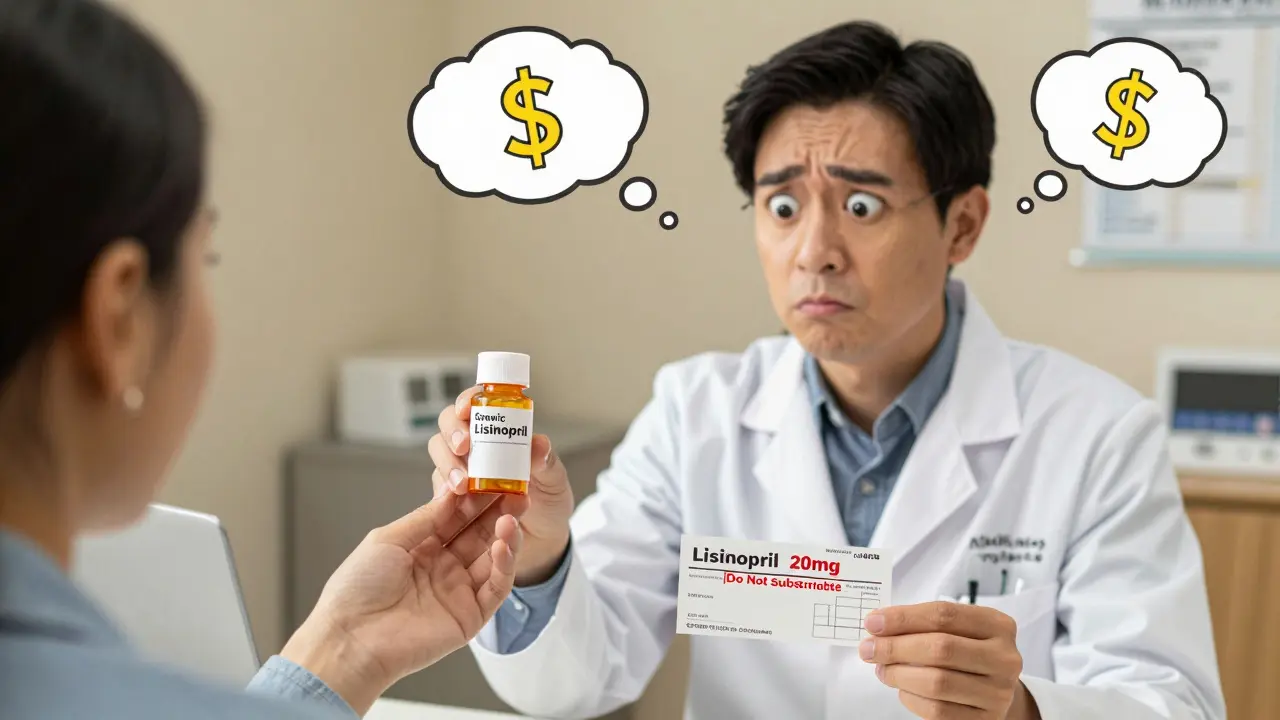
When you fill a prescription for a Medicare Part D drug, you might assume your pharmacist will give you exactly what your doctor ordered. But that’s not always the case. Medicare Part D substitution is a real, common, and often confusing part of how your drug coverage works. It’s not about swapping pills randomly - it’s governed by strict rules tied to your plan’s formulary, your out-of-pocket costs, and federal policies. If you’ve ever been handed a different pill bottle than expected, or seen your copay jump unexpectedly, you’ve run into substitution policies. Here’s how it actually works in 2026.
What Is Medicare Part D Substitution?
Medicare Part D substitution means a pharmacist can replace one drug with another - but only under specific conditions. It’s not a free-for-all. The most common type is generic substitution: if your doctor prescribes a brand-name drug, and a generic version exists that’s on your plan’s formulary, the pharmacist can give you the cheaper generic unless your doctor says no. This is allowed under federal law and encouraged by most plans because it saves money for everyone.
But substitution doesn’t stop there. Some plans allow therapeutic interchange - swapping one drug for another in the same medical class. For example, if you’re prescribed lisinopril for high blood pressure, your plan might substitute it with enalapril if both are covered and equally effective. But this usually requires prior authorization or step therapy. You can’t just get a random swap. The substitution must meet clinical guidelines and be approved by your plan’s pharmacy benefit manager (PBM).
How Formularies Control What Gets Substituted
Your Medicare Part D plan has a list of covered drugs called a formulary. Think of it like a menu. Not all drugs are on it. And even if they are, they’re grouped into tiers - each with different costs.
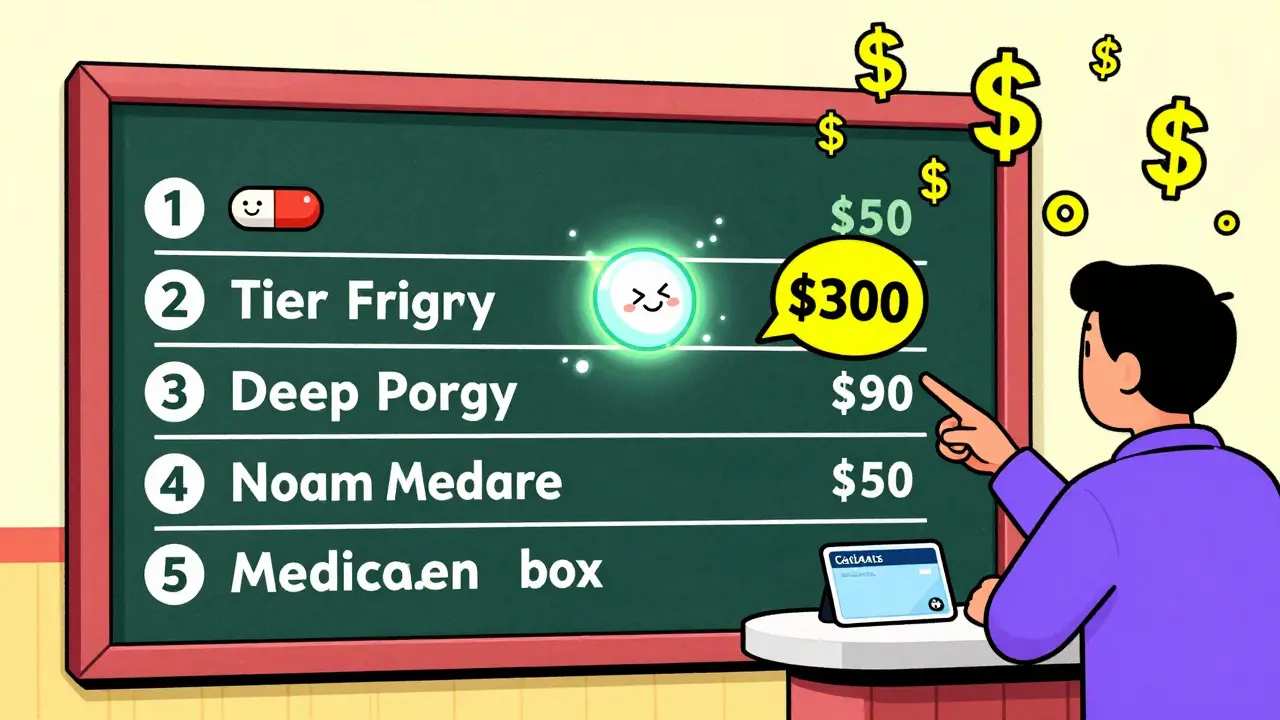
In 2025, most Part D plans use a five-tier system:
- Tier 1: Preferred generics - lowest cost, often $0-$10 copay
- Tier 2: Non-preferred generics - slightly higher, $10-$20
- Tier 3: Preferred brand-name drugs - $40-$60
- Tier 4: Non-preferred brands - $60-$100+
- Tier 5: Specialty drugs - often over $100, sometimes coinsurance (you pay a percentage)
If your doctor prescribes a Tier 4 drug, your pharmacist might automatically substitute it with a Tier 1 or 2 generic - if it’s medically appropriate and your plan allows it. But if your doctor writes “Dispense as Written” or “Do Not Substitute,” the pharmacist must honor that. You can also ask for a formulary exception if the substitute doesn’t work for you.
Formularies change every year. A drug you’ve been on for years might get moved from Tier 1 to Tier 4 - or even dropped entirely. That’s when substitution becomes unavoidable. You’ll get a notice from your plan, usually by October, before the new year starts. If you don’t act, you might end up paying way more.
Cost-Sharing Drives Substitution Decisions
Why do plans push substitution so hard? Money. And not just for the insurer - for you too.
In 2025, the Part D deductible is $590. After that, you pay 25% of the drug cost until you hit $2,000 in out-of-pocket spending. That’s the new out-of-pocket cap - thanks to the Inflation Reduction Act. Once you hit that, you enter catastrophic coverage. For the rest of the year, you pay nothing for covered drugs.
Here’s the catch: if you’re on a non-preferred brand or specialty drug, your coinsurance might be 30%, 40%, or even higher. That means you’ll hit the $2,000 cap faster - and your plan saves money by steering you toward generics. If you’re on insulin, for example, Humana caps your out-of-pocket cost at $35 per 30-day supply. That’s because insulin is a high-cost drug, and the law forces plans to limit what you pay. But if you’re on a different drug, say a specialty cancer med, you could pay hundreds per month until you hit the cap.
Substitution isn’t just about what’s cheaper - it’s about how fast you reach that $2,000 limit. The more you pay out of pocket, the sooner you get into catastrophic coverage. That’s why plans favor generics: they help you hit the cap faster, reducing their long-term costs.
How Medicare Advantage Plans Change the Game
Over the last decade, more people have moved from stand-alone Part D plans to Medicare Advantage (MA-PD) plans - which bundle medical and drug coverage. In 2025, there are 34 MA-PD options compared to just 14 stand-alone PDPs. That’s a huge shift.
Why does this matter? Because MA-PDs often have tighter formularies and more coordinated substitution rules. Your doctor, pharmacist, and plan all communicate within the same system. If you need a substitution, it’s often handled faster. But there’s a trade-off: you might have fewer drug choices. Some MA-PDs only cover drugs from one pharmacy network or limit access to certain specialists.
And if you’re switching from employer insurance to Medicare, be careful. If you drop your retiree drug coverage to enroll in Part D, you could lose benefits permanently. Some plans won’t let you rejoin later. Always check with your employer or union before switching.
What You Can Do: Practical Steps
You can’t control substitution - but you can control how it affects you.
- Review your formulary every year. Don’t wait for a letter. Go to your plan’s website and search for every drug you take. Check the tier, copay, and whether prior authorization is needed.
- Ask your doctor to prescribe generics. If your medication has a generic version, ask if it’s safe and effective. Most do.
- Use your plan’s mail-order pharmacy. Many plans offer lower copays for 90-day supplies. It’s cheaper and often avoids substitution delays.
- Request a formulary exception. If your drug was moved to a higher tier or removed, you can appeal. Submit a letter from your doctor explaining why the substitute won’t work. You have 60 days to file.
- Enroll during Open Enrollment. October 15 to December 7 is your chance to switch plans. If your drugs aren’t covered well, change now - don’t wait until you’re stuck with high costs.

What’s Changing in 2026?
The $2,000 out-of-pocket cap is moving to $2,100 in 2026. That’s a small increase - but it means you’ll pay a bit more before hitting catastrophic coverage. The $35 insulin cap remains. And more plans are expected to offer $0 premiums - but with higher copays on non-preferred drugs.
CMS is also tightening rules around PBM practices. That could mean fewer surprise substitutions and more transparency about why a drug was swapped. But for now, the system still favors cost-saving moves over patient preference.
Common Myths About Part D Substitution
- Myth: Your doctor’s prescription is final.
Truth: Unless they write “Do Not Substitute,” pharmacists can swap generics - and sometimes brands - without calling you. - Myth: All Part D plans are the same.
Truth: Two plans covering the same drug might charge $10 vs. $90 for it. Formularies vary wildly. - Myth: If a drug is covered, it’s always affordable.
Truth: A drug on your formulary could still be Tier 5 with 30% coinsurance. You might pay $300 a month. - Myth: You can’t change plans mid-year.
Truth: You can if you qualify for a Special Enrollment Period - like moving, losing other coverage, or getting Medicaid.
Bottom line: Medicare Part D substitution isn’t a glitch - it’s a feature. It’s built into the system to lower costs. But that doesn’t mean you’re powerless. Know your plan. Know your drugs. And don’t assume anything. If you’re unsure, call your plan’s pharmacy help line. Ask: “Is this drug on my formulary? What tier? And what’s my exact cost?” Write it down. You’ll thank yourself later.
Can my pharmacist substitute my medication without telling me?
Yes - but only if it’s a generic version of a brand-name drug and your doctor didn’t write "Do Not Substitute." Pharmacists are allowed to swap generics automatically under federal law. However, if they switch you to a different brand-name drug or a therapeutic alternative, they must contact your doctor or get prior authorization. You should always check your pill bottle and ask if the drug changed.
What happens if my drug gets removed from the formulary?
Your plan must notify you at least 60 days before removing a drug. You’ll get a letter explaining the change and what alternatives are covered. You can ask for a temporary exception to keep your current drug for up to 60 days while you and your doctor decide on a replacement. You can also file a formal appeal if you believe the substitute won’t work for you.
Are all generic drugs the same in Medicare Part D?
Medically, yes - generics must meet FDA standards for safety and effectiveness. But in Part D, not all generics are treated the same. Some plans put certain generic brands in higher tiers if they’re more expensive to distribute. Others may only cover one generic manufacturer. Always check which specific generic is on your formulary - not just the drug name.
Why do some drugs have coinsurance instead of a copay?
Coinsurance (a percentage of the drug’s cost) is used for higher-cost drugs - especially brand-name and specialty medications. It gives plans more control over spending. For example, if a drug costs $500 and your coinsurance is 25%, you pay $125. If it costs $800, you pay $200. Copays are fixed ($40, $60), so they’re easier to budget. But coinsurance means your cost can change month to month.
Can I switch Part D plans mid-year?
Yes - but only under specific conditions called Special Enrollment Periods. These include moving out of your plan’s service area, losing other drug coverage, qualifying for Extra Help (low-income subsidy), or entering or leaving a nursing home. Outside these, you must wait until the Annual Enrollment Period (October 15-December 7) to switch.



shannon kozee
March 20, 2026 AT 18:00Always check your formulary online. I do it every October like clockwork. Saves so much stress later.
Sandy Wells
March 22, 2026 AT 04:36Why do they even make us jump through these hoops? It's exhausting just trying to keep up.
Desiree LaPointe
March 22, 2026 AT 07:37Oh honey, you think this is complicated? Try navigating Medicare when you're 78 and your vision's failing. The system isn't broken-it's designed to confuse you into submission.
Jackie Tucker
March 23, 2026 AT 11:36It's fascinating how capitalism has weaponized pharmaceuticals into a tax on aging. We don't just pay for medicine-we pay for the privilege of not dying before the deductible resets.
trudale hampton
March 23, 2026 AT 14:32Mail-order pharmacy saved me $120/month. Seriously, do it. 90-day fills are a game-changer.
Natali Shevchenko
March 24, 2026 AT 00:42You know, I used to think the government was just inefficient. Now I think it's intentionally opaque. Why else would they make formularies change every year like a magic trick? You blink and your insulin goes from $35 to $140. It’s not a bug-it’s a feature of the profit model. And we’re all just supposed to shrug and say ‘oh well’?
Johny Prayogi
March 24, 2026 AT 17:16YES! Just switched to my plan’s mail-order last year. Got my meds delivered to my door. No more pharmacy line drama. 🙌
Allison Priole
March 26, 2026 AT 14:28It’s wild how much power pharmacists have in this system. I never realized they could swap my meds without asking-until I got a different pill and didn’t notice until I took it. Now I always check the bottle. And I’ve started asking my doctor to write ‘Do Not Substitute’ on everything. Small things, but they matter.
Casey Tenney
March 27, 2026 AT 01:49People who don’t review their formulary deserve to pay $300 a month. It’s not rocket science.
Chris Dwyer
March 28, 2026 AT 17:38Don’t panic if your drug gets moved. You’ve got options. Call your plan. File an exception. Talk to your doctor. You’re not alone in this. I’ve been there-now I help my neighbors navigate it. You got this 💪
Thomas Jensen
March 29, 2026 AT 23:22They’re doing this on purpose. PBMs and Big Pharma are in bed together. They want you confused so you don’t realize they’re making you pay more just to hit that ‘cap’ so THEY save money. It’s a scam. And they’re laughing all the way to the bank.
Shaun Wakashige
March 31, 2026 AT 20:52Formularies change every year? Ugh. I just take what they give me. Too tired to fight it.
Paul Cuccurullo
April 1, 2026 AT 19:58The $2,000 out-of-pocket cap is a step forward-but it’s still too high. Seniors shouldn’t have to choose between insulin and groceries. This isn’t healthcare. It’s a lottery.
Solomon Kindie
April 2, 2026 AT 13:04Generics arent the same because they dont have the same fillers. The FDA allows 10% variance. That’s enough to mess with someone on 5 meds. I’ve seen it. People get sick. They dont know why. Its not the drug. Its the filler. The system ignores this because it makes the math easier.
Timothy Olcott
April 4, 2026 AT 05:52USA for life baby!! 🇺🇸 If you dont like the system, move to Canada. They got free stuff. Wait no they dont. LOL. We got the best system. Just learn the rules. #MedicareWins