
Missing a dose of your medicine might seem like a small thing, but it can have a massive ripple effect on your health. Whether it's a forgotten morning pill or a confusing schedule of four different prescriptions, the struggle is real. In fact, about 50% of people with chronic diseases struggle to take their medications exactly as prescribed. This isn't just about being forgetful; it's about the difficulty of fitting a medical requirement into a busy, unpredictable life. When you miss doses, you aren't just skipping a pill-you're increasing your risk of a disease flare by 30% to 40%, according to research from Stanford Medicine.
The good news is that medication adherence isn't a personality trait; it's a skill. You don't need a perfect memory to get it right; you just need a system that works with your brain, not against it. By turning a clinical requirement into a mindless habit, you can stop the mental gymnastics of wondering, "Did I take that already?" and actually focus on feeling better.
The Secret to Sticking to Your Meds: Habit Stacking
The hardest part of any routine is the effort of remembering to start. This is where "habit stacking" comes in. Instead of trying to remember a pill at 8:00 AM in a vacuum, you attach the medication to something you already do without thinking.
Think about your morning. You probably brush your teeth, feed the dog, or make a pot of coffee. Stanford Medicine found that 78% of patients who linked their medication to existing habits showed much better adherence. For example, if you put your pill bottle right next to your toothbrush, the act of brushing your teeth becomes the "trigger" for the medication.
Mealtimes are another powerful anchor. For many, taking meds with breakfast or dinner is the easiest way to stay on track. However, a quick word of caution: not all meds play well with food. Some need an empty stomach to work properly, while others require food to prevent nausea. Always check with your pharmacist before deciding to tie your routine to a meal.
Choosing the Right Tools for Your Lifestyle
Relying on your memory is a gamble. To move from "trying to remember" to "knowing it's done," you need a physical or digital system. Depending on how your brain works, some tools will be far more effective than others.
| Tool | Best For | Pros | Cons |
|---|---|---|---|
| Weekly Pill Organizer | Multi-med regimens | Visual confirmation; easy to pack for travel | Requires a weekly "fill-up" session |
| Smartphone Alarms | Tech-savvy users | Loud, immediate reminders | Easy to silence and ignore |
| Medication Calendars | Visual learners | Satisfying "check-off" process | Requires a physical space to keep the list |
| Timer Caps | Forgetful patients | Beeps when it's time for a dose | Limited to specific bottle types |
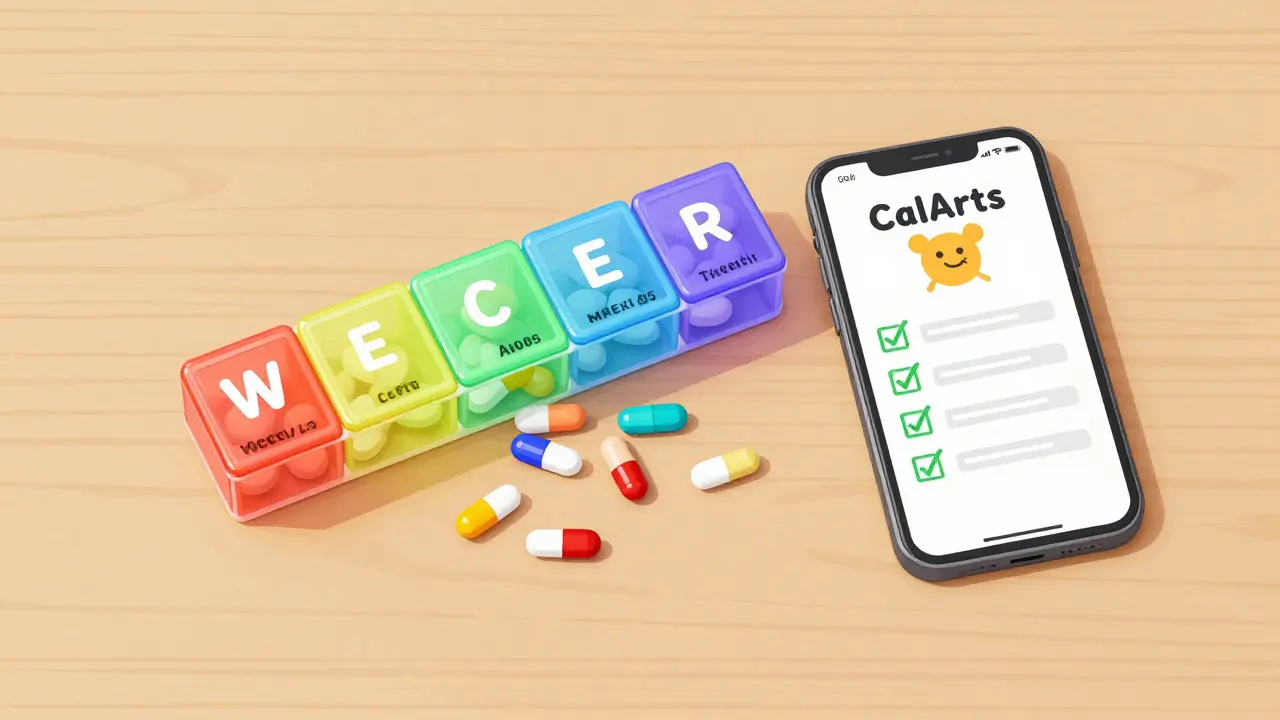
If you're managing multiple prescriptions, a pill organizer is a game-changer. The American Heart Association notes that multi-compartment weekly organizers can improve adherence by up to 35%. The trick is to make the "refill" part of your routine. Many people find that Friday evening is the perfect time to prep the coming week. It turns a daily chore into a once-a-week ritual.
For those who prefer digital help, smartphone alarms are great for people under 65, but they can become a nuisance for others. If you find yourself silencing your alarm and then forgetting the pill, try a different approach. Some people use a "buddy system," where a friend or spouse sends a quick text to check in. Just keep in mind that this depends on the other person's consistency!
Managing Complex Schedules and Polypharmacy
When you're taking five or more medications-a situation known as polypharmacy-the risk of missing a dose skyrockets. Medicare data shows that adherence rates drop from 75% for a single medication to just 50% when you're taking four or more. It's easy to feel overwhelmed when your kitchen counter looks like a pharmacy.
The first step in simplifying a complex routine is to talk to your doctor about consolidation. You might be surprised to find that some medications can be taken at the same time, or that a once-daily extended-release version of a drug is available. Reducing the number of times soon you have to think about your meds can cut the complexity of your routine by 40%.
If you struggle with memory or frequently worry if you've already taken a dose, try the "flip bottle method." After you take your pill, turn the bottle upside down. When it's time for the next dose, turn it right-side up again. This simple visual cue can reduce double-dosing incidents by about 22%.

Dealing with the "Wall": Why We Stop Sticking to the Plan
Even the best routines hit a wall. The most common culprits are travel, side effects, and "alarm fatigue." When you travel, your usual triggers (like your coffee maker or your home toothbrush) disappear, and the routine breaks. The solution is to have a dedicated travel pill case that is always packed and ready.
Side effects are a more serious barrier. Many people stop taking their meds not because they forgot, but because they don't like how the medication makes them feel. This is called "intentional non-adherence." If you're skipping doses because of nausea or dizziness, don't just push through it or quit. Call your provider. There is often a way to adjust the timing or the dose to make the medicine more tolerable.
Finally, avoid the trap of over-automation. While "smart pill bottles" and AI-powered reminders are emerging, they can create a gap for people who aren't comfortable with technology. The most sustainable routine is the one that fits your actual life, not the one that requires the most expensive gadget.
Step-by-Step: Setting Up Your New Routine
If you're starting from scratch, don't try to change everything overnight. Follow this 7-day transition plan to build a habit that actually lasts:
- Day 1: Audit Your Meds. List every medication, its dose, and exactly when it needs to be taken. Note which ones require food and which don't.
- Day 2: Identify Your "Anchors." Pick 2-3 things you do every single day without fail (e.g., waking up, lunch, brushing teeth).
- Day 3: Map the Pairings. Decide which med goes with which anchor. "I'll take my blood pressure pill while the coffee brews."
- Day 4: Set Up Your Tools. Buy your pill organizer or set your phone alarms. If using an organizer, pick a permanent spot for it where you'll see it immediately.
- Day 5: The First Run. Try the routine. If you find you're forgetting the mid-day dose, move the pill bottle to your lunch spot.
- Day 6: Refine and Adjust. Notice where the friction is. Is the pill bottle too hard to open? Is the alarm too quiet? Fix it now.
- Day 7: Lock It In. Establish your weekly refill time (like Friday night) to ensure you never run out of medication mid-week.
What should I do if I realize I missed a dose?
The rule of thumb is to take the missed dose as soon as you remember, unless it's almost time for your next dose. However, you should never double the dose to "catch up" without asking your doctor first, as this can be dangerous for certain medications. Check the patient information leaflet that came with your prescription for specific instructions on missed doses.
Are pill organizers safe for all types of medication?
Not always. Some medications are light-sensitive or moisture-sensitive and must stay in their original blister packs or amber bottles to remain effective. Always ask your pharmacist if your specific medications can be removed from their original packaging and placed in a plastic organizer.
How can I stop forgetting my mid-day doses when I'm at work?
The best way is to tie the medication to a workplace habit, such as your lunch break or a specific mid-afternoon meeting. Using a small, discreet portable pill case kept in your desk drawer or bag helps remove the friction of having to carry multiple bottles to work.
Can I take all my medications at once to make it simpler?
Only if your doctor approves it. Some medications interact with each other or require specific timing (e.g., one in the morning and one at night) to maintain a steady level of the drug in your bloodstream. Ask your provider if they can simplify your schedule to once-daily dosing.
Which is better: phone alarms or a physical checklist?
It depends on your personality. Phone alarms are better for people who need an active "wake up call," but checklists are better for those who experience "alarm fatigue" and start ignoring the noise. Many find a hybrid approach-an alarm to remind them and a checkmark to confirm-is the most effective.