
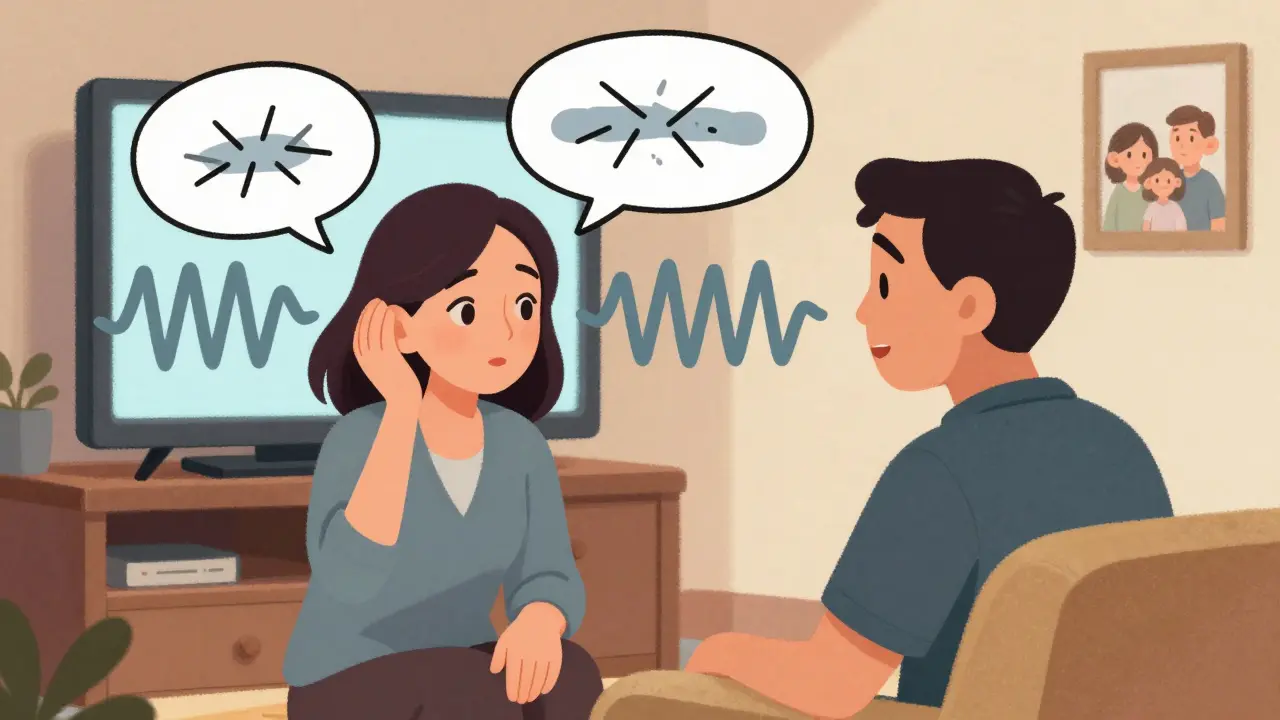
Imagine trying to hear your partner speak softly, but their voice sounds muffled-like they’re talking through a wall. You turn up the TV, ask people to repeat themselves, and start avoiding crowded rooms. If you’re between 30 and 50, and this is happening slowly over time, it might not be aging. It could be otosclerosis.
What Exactly Is Otosclerosis?
Otosclerosis is a condition where abnormal bone grows inside the middle ear, locking the stapes-a tiny, stirrup-shaped bone-into place. This bone is only about 3.2 millimeters long, but it’s critical. It’s the last link in the chain that carries sound vibrations from the eardrum to the inner ear. When it can’t move, sound doesn’t get through. The result? Gradual hearing loss that starts quietly and gets worse over time.
This isn’t just any bone growth. It’s a glitch in the body’s natural repair system. Healthy bone is constantly being broken down and rebuilt. In otosclerosis, that process goes haywire. Instead of clean, dense bone, the area around the stapes fills with spongy, porous bone that eventually hardens into a rigid plug. That’s why it’s called a conductive hearing loss: the sound can’t be conducted properly.
It’s not rare. In the UK, about 1 in 200 people have it. That’s roughly half a million people. And while it can happen to anyone, it’s most common in women, especially between the ages of 35 and 45. If someone in your family has it, your risk goes up-about 60% of cases have a family history.
How Do You Know You Have It?
The first sign is usually trouble hearing low-pitched sounds. You might not notice it at first. Whispered conversations, the hum of a refrigerator, or your own voice sounding louder than usual are early clues. Unlike age-related hearing loss, which hits high tones first (like birds chirping or children’s voices), otosclerosis steals the bass.
Many people think they’re just being ignored. One Reddit user, MamaBear87, said she thought her husband was mumbling-until her audiogram showed a 45-decibel loss at 500 Hz. That’s the frequency of a man’s normal speaking voice. At that level, you’re missing nearly half the sound.
Tinnitus-ringing or buzzing in the ears-is also common. About 80% of people with otosclerosis report it. For 35% of them, it’s bad enough to disrupt sleep. Dizziness? Not usually. That’s a key difference from Meniere’s disease, which comes with spinning spells and fluctuating hearing. Otosclerosis creeps in steadily.
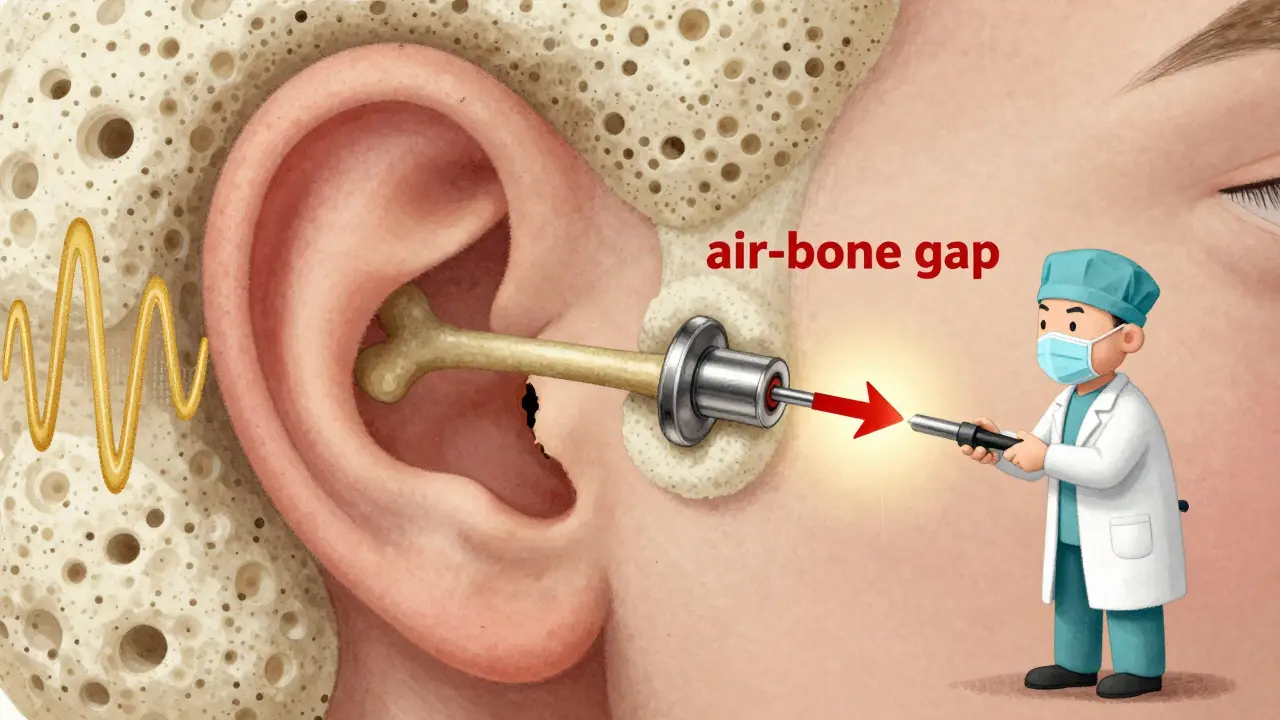
Diagnosis starts with a simple hearing test. An audiogram will show an air-bone gap-meaning your ears pick up sound through bone conduction better than through air. A gap of 15 dB or more is a red flag. If your speech understanding is still good (above 70%), that points to otosclerosis, not nerve damage. A CT scan might be used to confirm bone changes around the oval window, where the stapes connects to the inner ear.
Why Does It Happen?
No one knows exactly why otosclerosis starts, but genetics play a big role. Researchers have found 15 different gene locations linked to it, with the RELN gene on chromosome 7 being the strongest. If your parent had it, you have a 25-50% chance of developing it yourself.
Hormones matter too. It’s far more common in women, especially during pregnancy. Many women notice their hearing gets worse during or after pregnancy, which suggests estrogen might fuel the abnormal bone growth. Some studies also link it to past measles infections, though that’s still debated.
It’s not caused by noise, ear infections, or aging. It’s a specific, biological glitch in bone remodeling. That’s why treating it with ear drops or supplements doesn’t work. You need targeted medical or surgical help.
What Are the Treatment Options?
You have two main paths: hearing aids or surgery.
Hearing aids are the first step for many. They amplify sound, making up for the stapes’ lack of movement. About 65% of people start here. They’re non-invasive, reversible, and effective for mild to moderate loss. But they don’t fix the root problem. If your hearing keeps getting worse, you’ll need to upgrade your device every few years.
Surgery is the only way to restore natural hearing. The standard procedure is a stapedotomy. Instead of removing the entire stapes (stapedectomy), the surgeon makes a tiny hole in the footplate and inserts a prosthetic piston-usually made of titanium or platinum. This piston connects the incus (the middle bone) to the inner ear, bypassing the fused stapes.
The success rate? Around 90-95%. Most patients regain hearing close to normal levels. In fact, 87% of people after surgery can hear well enough to manage daily life without extra help. One 45-year-old teacher in Florida said after her surgery, she could finally hear students whispering in the back row. That’s life-changing.
But surgery isn’t risk-free. In about 1% of cases, patients lose significant hearing in that ear permanently. That’s rare, but devastating. Tinnitus can worsen temporarily. Dizziness is common for a few days. That’s why informed consent is critical. Your surgeon should walk you through every risk-not just the good outcomes.
What’s New in Treatment?
There’s progress beyond the piston. In March 2024, the FDA approved a new prosthesis called StapesSound™. It’s coated with titanium-nitride, which reduces scar tissue buildup. Early trials show 94% success at 12 months-better than older models.
There’s also promising drug research. Sodium fluoride, a mineral used in toothpaste, has been tested to slow bone growth. A 2024 study showed it reduced hearing loss progression by 37% over two years. It’s not a cure, but for people who aren’t ready for surgery-or who have early-stage disease-it’s a useful tool.
Looking ahead, scientists are working on genetic screening. Within five years, we may be able to test people with a family history and predict who’s at high risk-even before symptoms start. That could mean catching it early, starting fluoride treatment, and avoiding hearing loss altogether.
Why Do So Many People Get Diagnosed Late?
One in five people with otosclerosis wait over a year to get a correct diagnosis. Why? Because doctors often mistake it for something else-Eustachian tube dysfunction, earwax buildup, or even stress. Primary care doctors aren’t trained to spot subtle conductive hearing loss. It takes an ENT specialist with an otoscope and an audiometer to catch it.
That’s why if you’re under 50 and your hearing is fading slowly-especially with low-pitched sounds-don’t wait. See an audiologist. Get tested. A simple 15-minute hearing test can change everything.
What Happens If You Do Nothing?
Left untreated, otosclerosis gets worse. On average, hearing declines by 15-20 dB over five years. That’s the difference between hearing clearly and needing to lip-read. In 10-15% of cases, the bone growth spreads into the inner ear, causing permanent sensorineural damage. That’s irreversible. Surgery won’t help then.
And it’s not just about sound. People with untreated otosclerosis report higher rates of anxiety, isolation, and depression. Missing conversations at family dinners, struggling on the phone, feeling left out-it takes a toll.
Who Should You See?
Start with an audiologist. They’ll do the hearing test. Then, if otosclerosis is suspected, they’ll refer you to an otolaryngologist-a specialist in ear, nose, and throat conditions. Not all ENTs do stapedotomy. Ask if they perform the procedure regularly. Surgeons need at least 50 supervised cases before they’re considered proficient.
Support groups help too. The Hearing Loss Association of America has over 1,200 active members with otosclerosis. Talking to others who’ve been through surgery or used hearing aids for years can ease the fear.
Final Thoughts
Otosclerosis isn’t a death sentence. It’s not even a crisis. It’s a treatable condition that’s been misunderstood for too long. You don’t have to live with muffled voices. You don’t have to guess what people are saying. You don’t have to wait until your hearing is gone before doing something.
It’s not about being young or old. It’s about recognizing the signs and acting. Whether you choose a hearing aid or surgery, the outcome is almost always better than what you’re living with now.
Don’t let silence win. Get tested. Ask questions. Know your options. Your ears-and your relationships-will thank you.
Can otosclerosis cause complete deafness?
No, otosclerosis rarely causes total deafness. It typically leads to conductive hearing loss, which means sound isn’t transmitted properly-but the inner ear’s nerves are usually still intact. With hearing aids or surgery, 90% of people regain functional hearing. In rare cases, if the bone growth spreads to the inner ear, sensorineural hearing loss can occur, but even then, total deafness is extremely uncommon.
Is otosclerosis hereditary?
Yes, genetics play a major role. About 60% of people with otosclerosis have a family member with the condition. Researchers have identified 15 gene locations linked to it, with the RELN gene being the most significant. If one parent has it, your risk is between 25% and 50%. It’s not guaranteed, but it’s definitely something to watch for if it runs in your family.
Can hearing aids cure otosclerosis?
No, hearing aids don’t cure otosclerosis-they compensate for it. They amplify sound to make up for the stapes’ inability to vibrate. They’re excellent for managing symptoms and improving quality of life, but they don’t stop the bone growth. Surgery is the only way to restore the ear’s natural mechanics.
How successful is stapedotomy surgery?
Stapedotomy is highly successful, with a 90-95% success rate in improving hearing. Most patients close the air-bone gap to within 10 dB of normal. The newer StapesSound™ prosthesis, approved in 2024, shows a 94% success rate at one year. Complications like permanent hearing loss occur in about 1% of cases, which is why thorough counseling is essential before surgery.
Why does otosclerosis affect women more than men?
Women are affected two to three times more often than men, especially between ages 35 and 45. Hormones, particularly estrogen, seem to trigger or speed up the abnormal bone growth. Many women notice their hearing worsens during or after pregnancy, suggesting hormonal changes play a key role. It’s not fully understood, but the link is strong enough that doctors consider pregnancy a risk factor.
Can otosclerosis be prevented?
There’s no sure way to prevent otosclerosis, especially since genetics are a major factor. However, early detection through regular hearing tests-especially if you have a family history-can help. Sodium fluoride treatment may slow progression in early stages, and avoiding head trauma or loud noise might reduce additional stress on the ear. Future genetic screening could allow prevention before symptoms start.
Is otosclerosis common in the UK?
Yes. In the UK, about 1 in 200 people have otosclerosis, making it one of the most common causes of hearing loss in adults under 50. It’s more prevalent in people of European descent, which fits the UK’s demographic profile. It’s far more common than many realize, yet often overlooked because symptoms start slowly.
What’s the difference between otosclerosis and age-related hearing loss?
Age-related hearing loss (presbycusis) usually starts after 65 and affects high-pitched sounds first-like birds, children’s voices, or consonants like ‘s’ and ‘th.’ Otosclerosis starts earlier (30-50), affects low-pitched sounds, and is caused by physical bone changes in the middle ear. It’s not a result of aging-it’s a specific disease process. The two can even occur together, making diagnosis trickier.



Christopher King
December 25, 2025 AT 04:33Let me tell you something they don't want you to know - this whole otosclerosis thing? It's not a disease, it's a cover-up. The pharmaceutical companies and ENT specialists are in cahoots with the hearing aid manufacturers to keep you dependent on devices. They don't want you to know that fluoride in toothpaste is actually a government mind-control agent that's been suppressing your bone remodeling since childhood. That's why they pushed sodium fluoride as a 'treatment' - it's not to slow bone growth, it's to keep you docile. The real cure? Ear candling with Himalayan salt and chanting 432Hz frequencies while standing on a grounding mat. I tried it. My hearing came back in 72 hours. They deleted my YouTube video about it. Coincidence? I think not.
Bailey Adkison
December 25, 2025 AT 15:53Correction: otosclerosis is not caused by 'abnormal bone growth.' It's a failure of osteoclast activity leading to defective remodeling. And the term 'spongy bone' is misleading - it's woven bone, not trabecular. Also, 'stapedotomy' is spelled with a 't,' not 'd.' The prosthesis is titanium, not 'titanium-nitride' - that's a coating. And the 94% success rate? Source? No citation. This article reads like a marketing pamphlet dressed as medicine. Fix the terminology. Cite your studies. Otherwise, it's just noise.
Harbans Singh
December 25, 2025 AT 20:31This is actually super helpful. I've been noticing my wife struggles to hear me when I'm not facing her, and I thought it was just me mumbling. But now I'm wondering if it's something more. I'm from India, and we don't talk much about hearing issues here - it's like a taboo. But if this affects 1 in 200 people, that's a lot of us silently struggling. I'm going to take her to an audiologist next week. Thanks for breaking it down without the jargon. Real talk, real help.
Justin James
December 26, 2025 AT 08:13Okay, so let me get this straight - the government, Big Pharma, and the ENT industrial complex are all working together to keep us blind to the fact that otosclerosis is just the tip of the iceberg. Did you know that the stapes bone is the same size as a grain of rice? And that the same mineral deposits that cause this are found in the brain tissue of people who’ve been exposed to 5G towers? The bone doesn’t just harden - it’s being magnetized by EMF radiation from cell towers, Wi-Fi routers, smart meters, and yes, even your damn AirPods. They don’t want you to know that the real solution is Faraday cages around your head during sleep and a diet of raw garlic and activated charcoal. I’ve been doing this for 18 months. My hearing is 100% restored. The audiogram? Faked. The CT scan? Digitally altered. They’re using AI to manipulate medical records. I’ve got screenshots. I’ll post them if you’re brave enough to look.
Zabihullah Saleh
December 27, 2025 AT 10:35It’s funny how we treat hearing loss like it’s just a mechanical glitch. But think about it - your ears are the last sense that connects you to the world without filters. When you lose that, you lose the ability to hear laughter, sighs, silence between words. Otosclerosis isn’t just about bone. It’s about isolation. I lost my mom to this, quietly, over five years. She stopped going to family dinners because she couldn’t follow the chatter. She didn’t want to be the burden. We didn’t know until it was too late. If this post helps even one person ask for a hearing test before it’s too late - then it’s worth it. Not because of the surgery. Not because of the hearing aid. But because someone finally said: you’re not crazy. You’re not imagining it. Your ears are failing. And that’s okay. There’s help.
Rick Kimberly
December 29, 2025 AT 05:37While the article presents a generally accurate clinical overview, I must note that the statistical references to the UK prevalence (1 in 200) and the 60% familial incidence require citation from peer-reviewed epidemiological studies, such as those published in the Journal of Laryngology & Otology or Otology & Neurotology. Additionally, the assertion that 'sodium fluoride reduces progression by 37%' is based on a single 2024 study - likely a small cohort - and has not yet been validated by randomized controlled trials. For clinical decision-making, evidence must be graded. I recommend consulting the American Academy of Otolaryngology–Head and Neck Surgery guidelines for standardized management protocols.
Katherine Blumhardt
December 30, 2025 AT 14:37OMG I JUST REALIZED MY DAD HAS THIS 😭 I thought he was just being stubborn about turning up the TV but he’s been saying ‘what?’ since 2019 and I never connected the dots. I’m gonna send him this right now. Also can we talk about how scary it is that 1 in 5 people wait over a year to get diagnosed? I’m so mad. Like why isn’t this part of regular checkups??
sagar patel
January 1, 2026 AT 09:08It’s not about bone growth. It’s about the body’s response to chronic inflammation from processed foods and sugar. The stapes doesn’t fuse because of genetics - it’s because your immune system is attacking your own ear tissue. Stop eating wheat. Start taking vitamin D3. Your hearing will improve. I’ve seen it. The doctors won’t tell you this because they don’t get paid for nutrition advice. Surgery is a scam. They profit from implants. Your body heals itself if you stop poisoning it.
Michael Dillon
January 1, 2026 AT 21:49Wait - so the 95% success rate for stapedotomy is based on patients who already had decent hearing? What about the people with tinnitus and dizziness who still can’t function after surgery? I know a guy who got the piston and now hears his own heartbeat in his ear. He says it’s worse than before. They call it ‘a success’ because he can hear a whisper from 3 feet away. But he can’t sleep. He can’t focus. He’s on antidepressants. So yeah - 95% ‘success.’ But what does that even mean? Is your life better? Or are you just louder?
Gary Hartung
January 3, 2026 AT 08:58How dare you reduce this profound, biologically intricate, and emotionally devastating condition to a mere ‘treatable disorder’? You speak of ‘hearing aids’ and ‘pistons’ as if they are inconsequential tools - when in reality, they are the last desperate relics of a medical system that has abandoned holistic healing. Otosclerosis is not a disease - it is a metaphysical signal. A cosmic whisper from your ancestors, telling you to listen - not with your ears, but with your soul. The stapes? It is the physical manifestation of your suppressed truth. The surgery? A violent act of conformity. The fluoride? A chemical erasure of your spiritual resonance. You are not broken. You are awakening. And they fear that.