
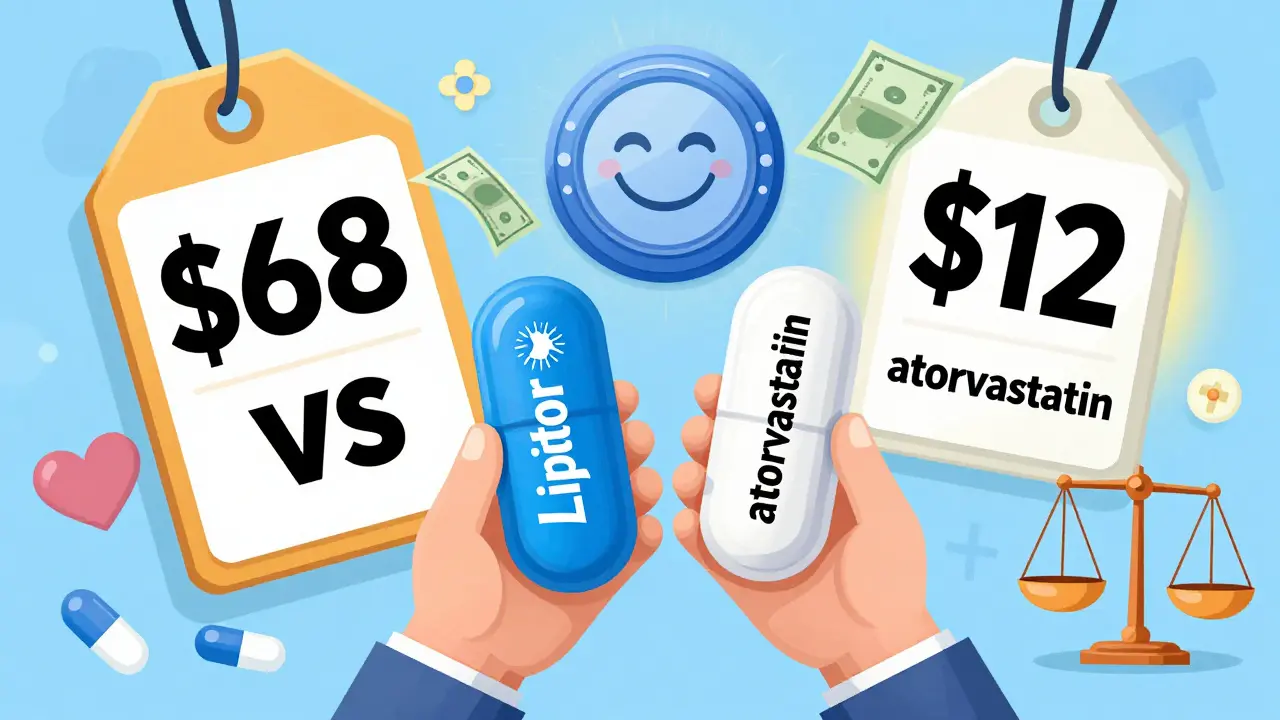
When you pick up a prescription, you might see two names on the label: one you recognize, like Lipitor, and another that looks like a chemical code, like atorvastatin. The first is the brand-name drug. The second is its generic version. They’re not different medicines - they’re the same drug, just sold under different names. And the price difference? It’s huge.
Generic drugs cost, on average, 80 to 85% less than their brand-name counterparts. That’s not a small discount. It’s the difference between paying $12 for a month’s supply and $68. For people managing chronic conditions like high blood pressure, diabetes, or high cholesterol, that savings adds up to thousands of dollars a year. And here’s the kicker: it doesn’t mean you’re getting a worse drug.
They’re the Same Drug - Here’s Why
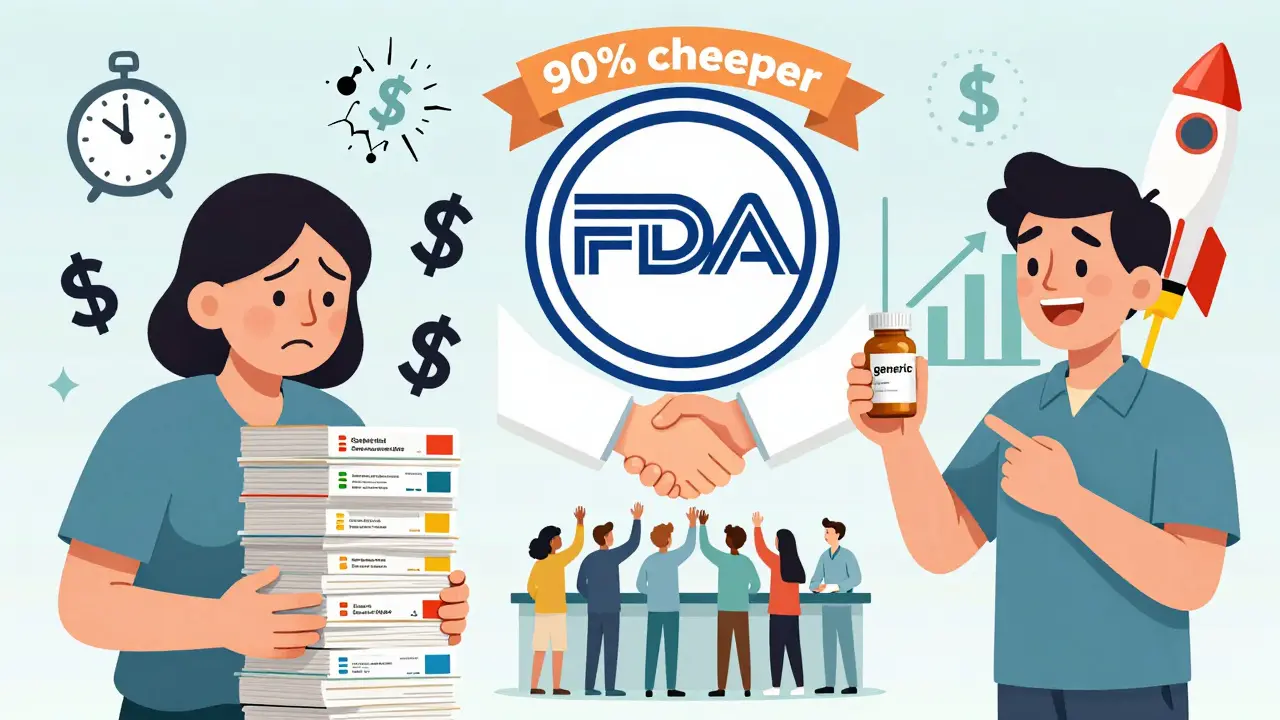
The U.S. Food and Drug Administration (FDA) doesn’t let generic manufacturers just slap a new label on an old pill. To get approved, a generic drug must contain the same active ingredient, in the same strength, same dosage form, and same way of taking it - whether that’s a pill, injection, or inhaler. It must work the same way in your body. That’s not opinion. That’s law.
The FDA requires generic drugs to prove they’re bioequivalent to the brand-name version. That means the amount of the drug that gets into your bloodstream, and how fast it gets there, has to be within 80% to 125% of the brand. For drugs where even tiny changes matter - like blood thinners or thyroid meds - the range is even tighter: 90% to 111%. The FDA tests these drugs just as rigorously as brand-name ones. In fact, many brand-name companies actually make their own generic versions.
Think of it like this: if you buy a smartphone from Apple or a company that makes a clone with the same processor, screen, and battery, it’s not a different phone. It’s the same core product, just cheaper. That’s what generics are.
What’s Different? (And What’s Not)
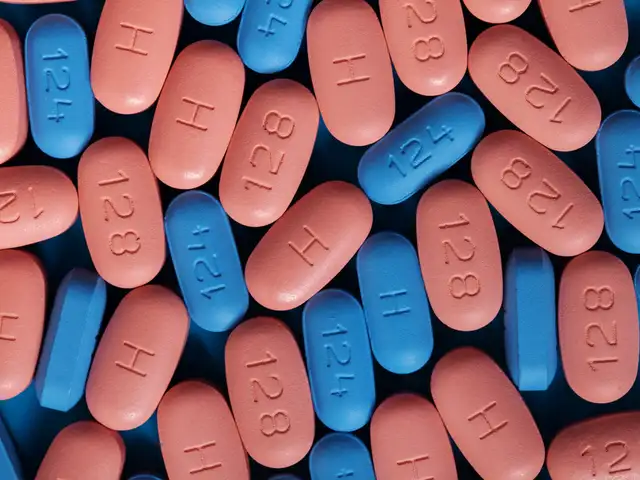
So if they’re the same, why do generics look different? Because U.S. trademark laws say they can’t look exactly like the brand-name version. That’s why your generic version of a blue pill might be white and oval instead of blue and round. It’s also why the fillers, dyes, and flavors might be different. These are called inactive ingredients. They don’t affect how the drug works - they just help hold the pill together or make it taste better.
But here’s where people get confused: if the inactive ingredients change, could that cause side effects? Sometimes. A small number of patients report feeling different after switching - headaches, nausea, or a change in how well the drug works. For most drugs, these reports are rare and not backed by science. But for a few, especially those with a narrow therapeutic index - meaning the difference between a safe dose and a dangerous one is tiny - some doctors still prefer to stick with the brand.
Drugs like warfarin (a blood thinner), levothyroxine (for thyroid), and some anti-seizure meds fall into this category. Even so, a 2019 study in JAMA Internal Medicine followed 38,000 people on levothyroxine and found no difference in outcomes between brand and generic. The FDA still requires the same strict standards for both.
Why Are Generics So Much Cheaper?
Brand-name drug companies spend years and hundreds of millions of dollars developing a new medicine. They pay for clinical trials, marketing, patents, and lobbying. Once the patent expires - usually after 12 to 14 years - other companies can step in. They don’t need to repeat those expensive trials. They just need to prove their version behaves the same in the body. That cuts development costs by 90%.
That’s why generics are so affordable. In 2022, generic drugs made up 90% of all prescriptions filled in the U.S. But they accounted for only 25% of total drug spending. Brand-name drugs? Just 10% of prescriptions, but 75% of the cost. That’s not a coincidence. It’s the result of competition.
Since 2007, generics have saved the U.S. healthcare system over $1.6 trillion. That’s $253 billion a year on average. That money doesn’t just help patients - it lowers insurance premiums and reduces pressure on public health programs.
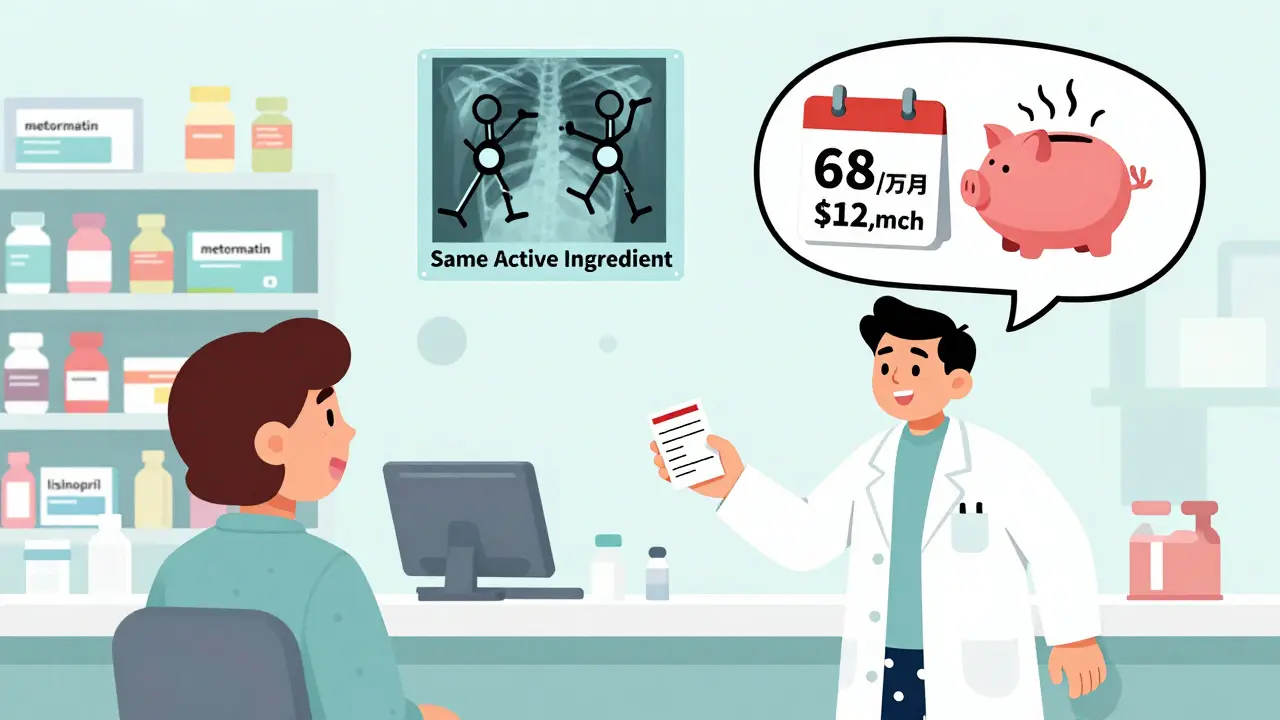
When You Can’t Get a Generic
Not every drug has a generic version. About 30% of prescriptions are still brand-only. Why? Some drugs are too complex to copy - think biologics like insulin or rheumatoid arthritis treatments. Others are still under patent. Companies sometimes use tricks called “evergreening” - making tiny changes to a drug (like a new coating or extended-release form) to extend their monopoly.
But that’s changing. Over 450 brand-name drugs are set to lose patent protection by 2028. That means more generics will hit the market, and prices will drop even further. The FDA is also speeding up its review process for generics, aiming to cut approval times to 10 months by 2027.
What Do Real People Say?
On Reddit’s r/Pharmacy community, a 2023 thread with over 140 comments showed that 86% of users reported no difference between brand and generic versions of common meds like lisinopril, metformin, and atorvastatin. One person wrote: “Switched from brand Advair to generic fluticasone/salmeterol and saved $400 a month with zero difference in asthma control.”
But 14% reported issues. One user shared: “My mom’s seizures got worse when we switched from Lamictal to generic lamotrigine. We had to go back to the brand.” These cases are rare, but they’re real. For people with conditions like epilepsy, where consistency matters, switching back and forth can be risky.
Consumer Reports’ 2022 survey of 1,247 people found that 89% believed generics were just as effective. Only 7% said they had occasional problems. Pharmacy Times’ 2023 survey showed 92% of patients preferred generics when available - mostly because of cost.
What You Should Do
If your doctor prescribes a brand-name drug, ask: “Is there a generic version?” Most of the time, there is. And if there is, your pharmacist is legally required to substitute it - unless your doctor writes “dispense as written” on the prescription. That’s the rule in 49 states.
Don’t be afraid to ask. Pharmacists are trained to help you understand your options. If you’ve had a bad experience with a generic before, tell your doctor. But don’t assume it’s the drug’s fault. Sometimes, it’s just the inactive ingredients. Try a different generic brand - they’re not all made the same.
Keep a simple list: write down both the brand and generic names of your meds. That way, if your prescription switches from one to the other, you won’t get confused. Apps like GoodRx can show you price differences in real time.
For chronic conditions, the savings from generics aren’t just nice - they’re life-changing. A person on metformin for diabetes might save $500 a year. That’s a new pair of shoes, a weekend trip, or extra groceries. For someone on multiple meds, it’s hundreds of dollars a month. That’s not a luxury. It’s access to health.
The Bottom Line
Generic drugs are not second-rate. They’re not cheap knockoffs. They’re FDA-approved, scientifically proven, and just as safe and effective as the brand-name versions. The only real difference is the price. And for most people, that’s the only difference that matters.
When you choose a generic, you’re not cutting corners. You’re making a smart, evidence-based decision. You’re saving money without sacrificing care. And you’re helping make healthcare more affordable for everyone.

Kunal Majumder
January 10, 2026 AT 20:43Just switched my dad to generic atorvastatin last month. He was paying $80 a month for Lipitor. Now it’s $12. No side effects, his cholesterol’s better than ever. Seriously, why would anyone pay extra unless they’re rich or confused?
Aurora Memo
January 11, 2026 AT 05:24I’ve been a pharmacist for 18 years. I’ve seen patients switch from brand to generic every day. The vast majority don’t notice a difference. The fear around generics is mostly from misinformation, not science.
Ian Cheung
January 11, 2026 AT 14:39Generic drugs are the unsung heroes of modern medicine man. No flashy ads no celebrity endorsements just pure science doing its job. I used to think generics were sketchy till I got hit with a $500 insulin bill then boom - generic kicked in and I didn’t have to choose between meds and rent. Fuck the pharma bros
Christine Milne
January 13, 2026 AT 09:29It is a well-documented fact that the Food and Drug Administration’s bioequivalence standards are insufficiently stringent. In many cases, the 80-125% therapeutic window permits clinically significant variability. The assertion that generics are identical to brand-name products is scientifically inaccurate and potentially dangerous.
Bradford Beardall
January 15, 2026 AT 07:42As someone from India where generics are the norm, I can say this: we’ve been using them for decades. My uncle takes generic warfarin and he’s been stable for 12 years. The fear here in the US feels more cultural than medical.
McCarthy Halverson
January 17, 2026 AT 00:00If your doctor didn’t write DAW, the pharmacy has to give you the generic. Always check the bottle. If you’re worried, ask for the manufacturer name. Some generics are better than others.
Ashlee Montgomery
January 17, 2026 AT 20:02It’s interesting how we equate price with quality. A generic isn’t inferior because it’s cheaper. It’s just stripped of the marketing overhead. We’ve been conditioned to believe that more expensive equals better. But medicine shouldn’t be about branding. It should be about function.
neeraj maor
January 18, 2026 AT 11:06They say generics are the same but what they don’t tell you is the FDA lets Chinese factories make them. I’ve seen reports of contaminants in some batches. The FDA doesn’t inspect every plant. You think they care about your health or just hitting approval quotas?
Ritwik Bose
January 18, 2026 AT 17:02Thank you for this clear and thoughtful breakdown 🙏. In my country, generics are trusted because they’re the only option - and yet they save lives daily. The stigma in the U.S. is heartbreaking. Knowledge is power, and you’ve given us both.
Paul Bear
January 20, 2026 AT 00:12While it is true that generics are bioequivalent under FDA guidelines, one must consider pharmacokinetic variance at the individual level. The 90% confidence interval for Cmax and AUC may fall within regulatory thresholds, yet subpopulations with altered hepatic metabolism or P-glycoprotein expression may experience clinically relevant deviations. Therefore, blanket substitution without therapeutic monitoring constitutes a potential risk in high-risk populations.