

Have you ever picked up a prescription and noticed the pill looks exactly like your usual brand-name drug-but the box says something completely different? No logo. No fancy name. Just the chemical name and a barcode. That’s not a mistake. That’s an authorized generic.
Most people think generics are cheaper versions of brand-name drugs made by different companies. That’s usually true. But authorized generics are different. They’re made by the same company that makes the brand-name drug. Same factory. Same ingredients. Same quality control. The only real difference? The label doesn’t have the brand name on it.
How Authorized Generics Are Made
When a brand-name drug’s patent expires, other companies can make copies. Those are traditional generics. They go through a process called ANDA-Abbreviated New Drug Application-to prove they work the same way. But authorized generics skip that step entirely. They’re produced under the original brand company’s New Drug Application (NDA). That means they’re not just similar-they’re identical.
Here’s how it works: The brand-name manufacturer either makes the authorized generic themselves and sells it under a different label, or they license the exact formula to another company to produce it. Either way, the pill inside the bottle is the same one you’d get from the brand-name version. Same active ingredient. Same inactive ingredients. Same coating. Same size. Same color.
Take Colcrys, for example. It’s a brand-name drug for gout. Its authorized generic is made by Prasco Laboratories-but it’s the exact same formula as the original. Same pills. Same packaging, just without the Colcrys name. Same goes for Concerta (methylphenidate ER), Celebrex (celecoxib), and Unithroid (levothyroxine). All have authorized generic versions that are chemically indistinguishable from the brand.
Why Do Companies Make Authorized Generics?
It’s not charity. It’s strategy.
When a patent expires, the brand-name company loses its monopoly. Traditional generics flood the market, and prices drop fast. But if the brand company launches its own generic version-right before or right after competitors enter-they can keep a chunk of the market. Patients who trust the brand might stick with it, even if it’s now labeled as a generic. Pharmacy benefit managers (PBMs) might still prefer it because it’s from a known manufacturer.
Research from Health Affairs in 2022 found that between 2010 and 2019, there were 854 authorized generic launches. In 75% of cases, they came out after traditional generics had already entered the market. That’s not random. It’s a defensive move. The brand company waits to see who’s coming in, then drops its own version to capture patients who are nervous about switching to a new manufacturer.
They also time it to hit during the 180-day exclusivity window-when only one generic company is allowed to sell after patent expiry. If the brand company launches an authorized generic during that window, they block even that one competitor from having full control of the market. It’s legal. It’s common. And it’s not always good for consumers.
Authorized Generics vs. Traditional Generics
Let’s clear up the confusion. Here’s how they stack up:
| Feature | Authorized Generic | Traditional Generic |
|---|---|---|
| Manufacturer | Same company that makes the brand-name drug | Separate company, often a generic drug maker |
| Active Ingredients | Identical to brand-name | Identical to brand-name |
| Inactive Ingredients | Identical to brand-name | May differ |
| Regulatory Path | Uses brand’s NDA; only FDA notification required | Must pass ANDA; prove bioequivalence |
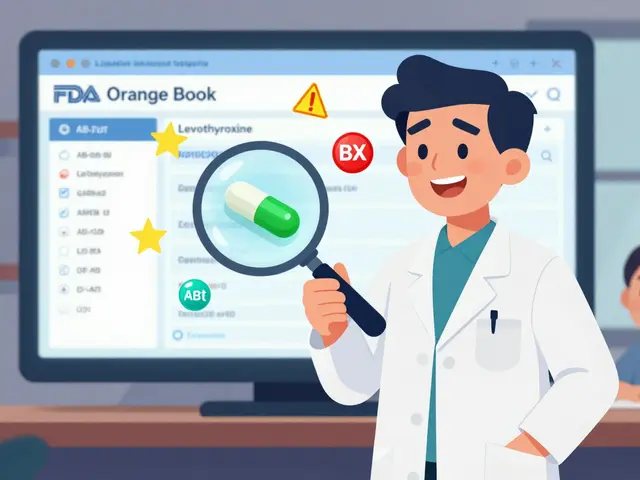
| Listed in FDA Orange Book? | No | Yes |
| Typical Price | 15-30% cheaper than brand-name | Often 70-90% cheaper than brand-name |
The big difference? Inactive ingredients. Traditional generics can use different fillers, dyes, or binders. That’s usually fine-but for some patients, those differences cause side effects. Allergies. Upset stomach. Even changes in how the drug is absorbed. Authorized generics avoid that entirely because they’re exact copies.
But here’s the catch: Authorized generics aren’t always the cheapest. Once five or six traditional generics hit the market, prices plunge. An authorized generic might still cost more than those. So if you’re price-sensitive, you might still save more with a traditional generic-unless you have a sensitivity to the fillers.

Why You Might Not Know You’re Getting One
Pharmacists don’t always tell you. In fact, most don’t even know unless they check the label closely. Authorized generics don’t appear in the FDA’s Orange Book, which is where most pharmacy systems pull their drug info from. So when your insurance system says "generic available," it might not even recognize the authorized version as a generic at all.
You might get it without knowing. You might get a pill that looks exactly like your brand-name drug-but the box says "Levothyroxine Sodium 88 mcg" instead of "Unithroid." You might think it’s the same brand, just a new batch. It’s not. It’s an authorized generic.
Some patients get confused. They see the same pill, but a different label, and worry something’s wrong. Pharmacists often have to explain: "It’s the same drug. Same company. Same everything. Just cheaper."
Are Authorized Generics Better?
It depends on what you need.
If you’ve had bad reactions to traditional generics-maybe you get headaches, nausea, or your condition seems less controlled-then an authorized generic could be a game-changer. Because the inactive ingredients are the same, your body reacts the same way. No surprises.
If you just want the lowest price and you’ve never had issues with generics, then a traditional generic is probably your best bet. Once competition kicks in, those prices drop hard. An authorized generic might save you 20%, but a traditional one could save you 80%.
And if you’re on a tight budget? Ask your pharmacist: "Is there a traditional generic available? And if so, how much cheaper is it?" Don’t assume the one on the shelf is the cheapest option.

What the FDA Says
The FDA is clear: Authorized generics are exactly the same as the brand-name drug. They’re not a lesser product. They’re not a compromise. They’re the same pill with a different label.
But they also say authorized generics aren’t listed in the Orange Book. That’s intentional. The Orange Book is for generics that went through the ANDA process. Authorized generics didn’t. They’re a different category entirely. So if you’re looking up drug equivalency, you won’t find them there.
The FDA does maintain a public list of authorized generics, updated as of October 10, 2025. It’s not easy to find, but it’s out there. Pharmacists and prescribers can use it to identify which drugs have authorized versions.
What Patients Should Do
Here’s what to do if you’re prescribed a brand-name drug:
- Ask your pharmacist: "Is there a generic version available?"
- If yes, ask: "Is it a traditional generic or an authorized generic?"
- Compare prices. Sometimes the authorized generic is cheaper than the brand but more expensive than the traditional generic.
- If you’ve had bad reactions to generics before, ask specifically for the authorized version.
- Check the label when you pick it up. If the pill looks identical to your brand-name version but the box has no brand name, you’ve got an authorized generic.
Don’t be afraid to ask. You’re not being difficult. You’re being informed.
The Bigger Picture
Authorized generics sit in a weird space between brand protection and patient access. They’re not evil. They’re not a scam. But they’re not pure competition either.
They give patients a bridge-especially those who need stability. But they also let big pharma hold onto profits longer than the original patent system was meant to allow.
As more drugs lose patents in the coming years, expect more authorized generics. They’re a tool that’s here to stay. Understanding them means you can make smarter choices-whether you’re saving money, avoiding side effects, or just trying to understand what’s in your medicine.
Next time you get a prescription, take a second look at the label. You might be holding an exact copy of a brand-name drug-and paying less for it. That’s not magic. That’s an authorized generic.
Are authorized generics the same as brand-name drugs?
Yes. Authorized generics are made by the same company using the same formula, same ingredients, same manufacturing process, and same quality controls as the brand-name drug. The only difference is the label doesn’t carry the brand name. They are not similar-they are identical.
Why do authorized generics cost less than brand-name drugs?
They cost less because they don’t carry the marketing, advertising, and research costs tied to the brand name. The manufacturer saves money by not running ads or maintaining brand loyalty programs. Those savings get passed on, usually as a 15-30% discount compared to the brand-name version.
Are authorized generics listed in the FDA’s Orange Book?
No. The Orange Book only lists traditional generics that went through the ANDA approval process and proved bioequivalence. Authorized generics are marketed under the original brand’s NDA, so they’re not included. This makes them harder to track in pharmacy systems.
Can I switch from a brand-name drug to an authorized generic safely?
Yes. Since authorized generics are chemically identical to the brand-name version, switching is safe for nearly all patients. There’s no risk of reduced effectiveness or unexpected side effects due to formulation changes. Many patients who had issues with traditional generics find authorized generics work better because the inactive ingredients are unchanged.
Why would a drug company make its own generic?
It’s a business strategy. When a patent expires, the brand company risks losing all its sales to cheaper generics. By launching its own authorized generic, it keeps a portion of the market. It can offer a trusted version at a lower price, retain relationships with pharmacies and insurers, and slow down the price drop caused by multiple competitors.
Do authorized generics work better than traditional generics?
They don’t work better-they work the same. But for patients who’ve had bad reactions to traditional generics (due to different inactive ingredients), authorized generics may feel better because they’re identical to the brand. For most people, traditional generics work just fine and cost less.
How can I tell if I’m getting an authorized generic?
Check the label. If the pill looks identical to your brand-name drug but the box says only the generic name (like "Metformin 500 mg") with no brand name, it’s likely an authorized generic. You can also ask your pharmacist directly. Some pharmacies list it in their system as "Authorized Generic" or "AG."

Peter Ronai
December 16, 2025 AT 19:58Let me tell you something-this whole ‘authorized generic’ thing is just Big Pharma’s way of keeping you hooked while pretending they’re helping. Same pill? Sure. But they’re still charging you 20% more than a real generic, and they’re gaming the system to delay true competition. This isn’t innovation-it’s exploitation dressed up as transparency.
Evelyn Vélez Mejía
December 17, 2025 AT 16:35The ethical architecture of pharmaceutical patent law has always been a paradox: innovation is incentivized, yet the moment exclusivity ends, the same actors deploy strategic market maneuvers to preserve rent-seeking behavior. Authorized generics are not anomalies-they are the logical culmination of a system where corporate fiduciary duty overrides patient autonomy. The FDA’s omission of these products from the Orange Book is not administrative oversight-it is regulatory capture made visible.
CAROL MUTISO
December 19, 2025 AT 08:04I love how this post breaks it down so clearly-but I also think we’re missing the human layer. My mom switched from brand-name Unithroid to the authorized generic after years of thyroid fluctuations, and suddenly her energy came back. She didn’t know it was the same pill-she just knew she felt better. Sometimes ‘identical’ doesn’t mean ‘the same experience.’ The inactive ingredients? They matter more than we admit. This isn’t just about cost-it’s about bodily trust.
Raven C
December 19, 2025 AT 13:29One must, of course, acknowledge the nuanced regulatory distinctions between NDA-based authorization and ANDA-based bioequivalence-yet, one cannot help but note the disingenuous marketing language employed by industry actors who label these products as ‘identical’ while simultaneously obscuring their presence in formularies. The absence from the Orange Book is not merely procedural-it is epistemological erasure.
Marie Mee
December 19, 2025 AT 21:52theyre lying to us. the government and the pharma companies. they want you to think its safe but its not. theyre just selling the same pills with a new box. and theyre making you pay more than you should. i dont trust any of it.
Salome Perez
December 21, 2025 AT 17:48As someone who’s been on levothyroxine for 14 years, I can confirm: authorized generics are the only version that never caused my heart to race or my anxiety to spike. Traditional generics? I once took one and spent three days feeling like I’d been run over by a truck. The fillers matter. Don’t let anyone tell you otherwise. Ask your pharmacist for the authorized version if you’ve had bad reactions. It’s not paranoia-it’s physiology.
Victoria Rogers
December 23, 2025 AT 13:48So let me get this straight-big pharma makes the brand, then makes a copy of it, sells it under a different label, and calls it a ‘generic’? And we’re supposed to be impressed? This isn’t capitalism. This is a magic trick where the rabbit is your wallet. And the FDA? They’re the magician’s assistant pretending not to see the sleight of hand.
Josh Potter
December 24, 2025 AT 02:57bro this is wild. i just got my concerta refill and it looked exactly like before but the box said methylphenidate. i thought my pharmacy messed up. turns out i got the authorized generic. saved me 30 bucks. no side effects. no drama. just cheaper. pharma is shady but this? this is actually a win.
Anna Giakoumakatou
December 25, 2025 AT 03:35How quaint. We’ve reduced the entire pharmaceutical industry to a game of ‘which label is cheaper?’ while ignoring that the real crisis is that we need to be playing this game at all. A society that celebrates ‘authorized generics’ as progress is a society that has given up on universal healthcare. Bravo. You’ve turned medicine into a coupon clipper’s sport.
Kent Peterson
December 26, 2025 AT 16:59Authorized generics? More like authorized exploitation. This is why America can’t have nice things. We let corporations write the rules, then act shocked when they game the system. In Germany, they’d have forced price caps. In Canada, they’d have bulk negotiation. Here? We get clever labeling and a pat on the head while our prescriptions get more expensive.
Linda Caldwell
December 27, 2025 AT 15:24Just wanted to say thank you for explaining this so clearly. I’ve been confused for years about why my pill looked the same but cost less. Now I know it’s not a mistake-it’s a gift. And if you’ve ever had a bad reaction to a generic, this might be your answer. Don’t be shy about asking for it.
Steven Lavoie
December 28, 2025 AT 01:25It’s worth noting that the distinction between authorized and traditional generics is not merely commercial-it’s clinical. For patients with narrow therapeutic indices-such as those on anticoagulants, antiepileptics, or thyroid medications-bioequivalence thresholds are insufficient. The pharmacokinetic stability of authorized generics, being chemically and physically identical, provides a level of consistency that traditional generics, with their variable excipients, simply cannot guarantee. This is not marketing-it’s pharmacology.
Jody Patrick
December 29, 2025 AT 03:23Same pill. Different box. Cheaper. Ask for it.
Naomi Lopez
December 30, 2025 AT 12:14It’s funny how people treat authorized generics like some kind of secret handshake. They’re not. They’re just the original drug with a stripped-down label. If you’re not allergic to the filler in the brand, you won’t be allergic to the authorized version. Stop overthinking it. And if you’re paying full price for a brand when the authorized generic is on the shelf? You’re being scammed.