
When your pharmacist hands you a pill bottle with a different name than what your doctor wrote on the prescription, it’s not a mistake. It’s a generic version of your medication-and you’re probably looking at one of several available options. With over 90% of prescriptions in the U.S. filled with generics, you’re not alone. But here’s the real question: how do you pick the right generic when there are five different ones on the shelf, all claiming to do the same thing?
Generics Aren’t All Created Equal-Even When They’re Supposed to Be
The FDA says generics must be identical to brand-name drugs in active ingredient, strength, dosage form, and how they work in your body. That’s the theory. In practice, the story is more complicated. All generics must prove they’re bioequivalent-meaning they release the same amount of active drug into your bloodstream at a similar speed as the brand. The FDA requires this difference to be within 80% to 125% of the brand’s performance, measured by AUC (total exposure) and Cmax (peak concentration). But here’s what most people don’t realize: that 80-125% range isn’t a guarantee of perfect consistency. It’s a statistical window. Two different generics for the same drug can both meet FDA standards, yet deliver slightly different amounts of medicine to your body. One might hit 95% of the brand’s levels. Another might hit 82%. Both are approved. But for some people, that 13% difference matters.Therapeutic Equivalence Ratings: Your Secret Decoder Ring
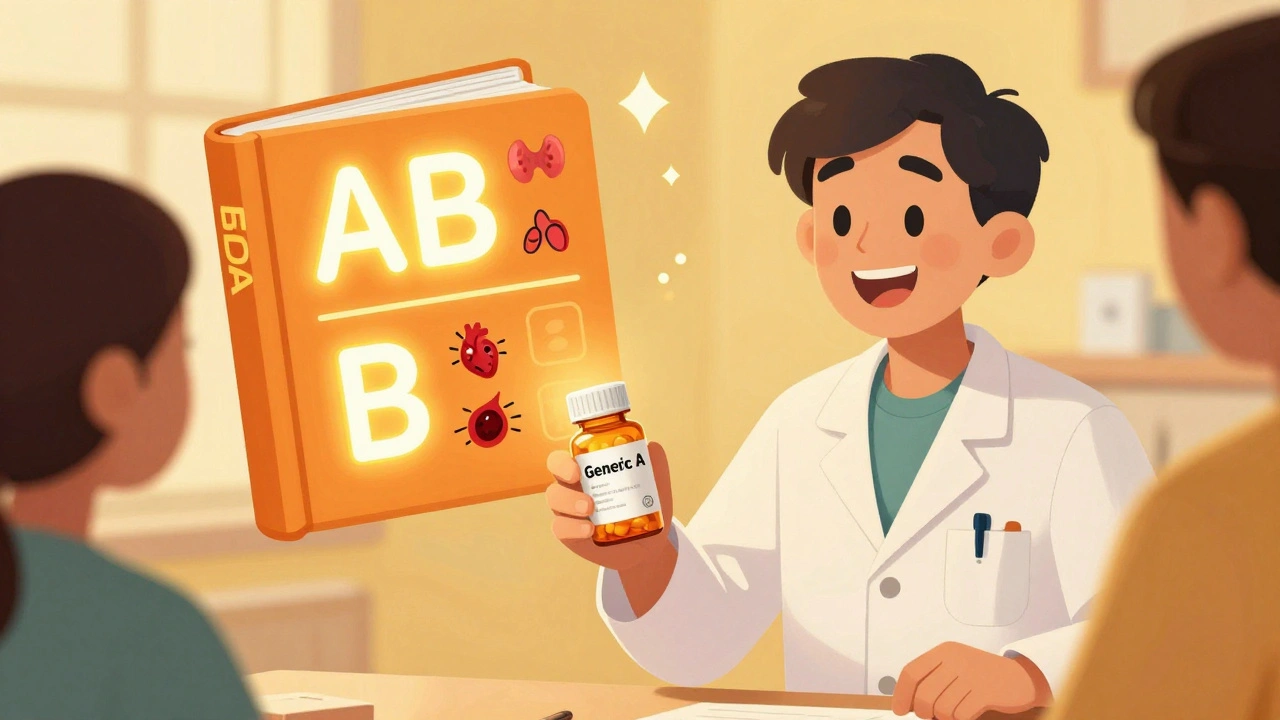
The FDA doesn’t just approve generics. It rates them. That rating lives in the Orange Book, a public database every pharmacist uses. Look for the letters next to the generic name: AB or B.- AB-rated means the generic is considered therapeutically equivalent to the brand. It’s the gold standard. You can swap it in without worry.
- B-rated means the generic meets FDA requirements, but there’s documented evidence that its performance might differ enough to matter in some cases. These aren’t unsafe-but they’re not always interchangeable.
- Warfarin (blood thinner)
- Levothyroxine (thyroid hormone)
- Digoxin (heart medication)
- Phenytoin (seizure control)
When Switching Generics Can Be Risky
A 2017 study in Circulation: Cardiovascular Quality and Outcomes looked at patients switched from brand-name candesartan to different generics. In the first month after switching, adverse events rose slightly. Not because the generic was bad-but because their bodies had to adjust to a new release pattern. Over time, the difference faded. But for someone with heart failure, those first few weeks matter. Another example: levothyroxine. In 2021, the FDA issued warning letters to multiple generic manufacturers after finding inconsistent bioequivalence. Some versions were delivering too little hormone. Others were too much. The agency tightened testing requirements in March 2022. But if you’ve been on the same generic for years and your doctor just switched you to a new one, your TSH might jump without you noticing.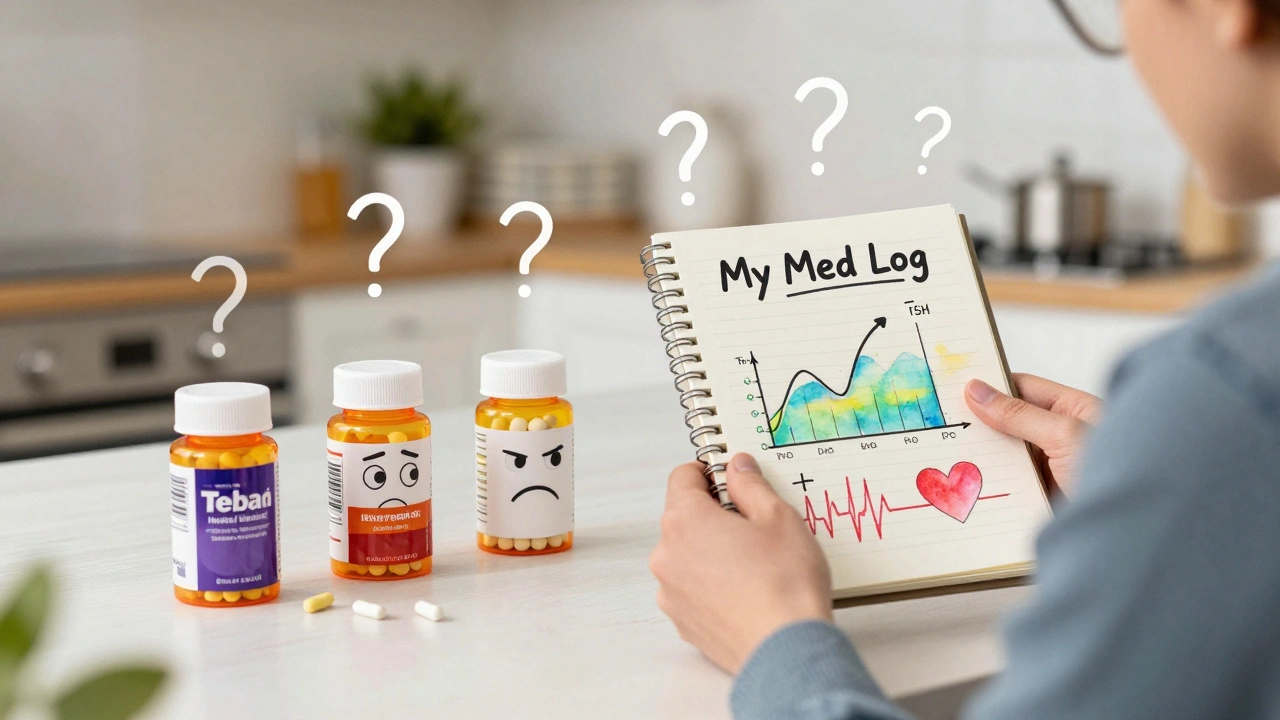
What You Can Do: A Practical Guide
You don’t need a pharmacy degree to make smart choices. Here’s how to take control:- Check the Orange Book. Ask your pharmacist for the therapeutic equivalence rating of your generic. If it’s AB, you’re good. If it’s B, ask why they’re prescribing it.
- Don’t switch unless necessary. If you’re stable on a brand or a specific generic, stick with it. Consistency beats cost savings when your health depends on precise dosing.
- Ask for the manufacturer name. Generic drugs are made by different companies-Teva, Mylan, Sandoz, Apotex. Each has its own formulation. Keep track of which one works for you. Write it down or take a photo of the bottle.
- Speak up if something feels off. Fatigue, dizziness, irregular heartbeat, mood swings-these aren’t always “just aging.” If your symptoms changed after a generic switch, tell your doctor. Get a blood test if needed.
- For new prescriptions, start with AB-rated. If you’re just starting a medication, choose the cheapest AB-rated generic. No need to pay more for brand unless there’s a reason.
Why Your Pharmacist Might Push a Different Generic
It’s not always about your health. Insurance companies often have preferred generics. Some pharmacies get kickbacks from certain manufacturers. Others just stock what’s cheapest that week. That’s why you might get a different generic every refill-even if nothing changed on your prescription. In 49 states, pharmacists can swap generics without asking you. In 28 states, they’re required to notify your doctor if they switch to a different manufacturer than what you’ve been using. That’s a good thing. But it doesn’t mean they always do. Ask: “Is this the same manufacturer as last time?” If they say “I don’t know,” ask them to check. If they resist, go elsewhere. Your health isn’t a commodity.
What’s Changing in 2025
The FDA is cracking down on complex generics-like extended-release pills, inhalers, and topical creams. These are harder to copy exactly. As of September 2023, there are over 1,000 product-specific bioequivalence guidelines published by the FDA, up 47% from the year before. Also, a proposed law called the Generic Drug Labeling Act would require each generic manufacturer to have its own unique NDC code. Right now, many generics share the same code, making it impossible to trace which version caused a problem. If this passes, you’ll see clearer labels-and doctors will finally be able to track which generic caused a reaction.Bottom Line: Trust, But Verify
Generics save the U.S. healthcare system over $370 billion a year. That’s huge. But savings shouldn’t come at the cost of safety. For most people, AB-rated generics are safe, effective, and worth the discount. But for those on narrow therapeutic index drugs, consistency is non-negotiable. Don’t let cost or convenience override your body’s needs. If you’re on a medication where small changes matter, write down your generic’s manufacturer. Keep a log of how you feel after each refill. Bring it to your next appointment. You know your body better than any algorithm or insurance form.Frequently Asked Questions
Are all generic drugs safe?
Yes-by FDA standards. All generics must prove they’re bioequivalent to the brand. But safety isn’t just about approval. Some generics, especially for drugs with narrow therapeutic windows like warfarin or levothyroxine, can cause problems if you switch between manufacturers. Consistency matters.
Can I ask my pharmacist to give me the same generic every time?
Absolutely. You have the right to request a specific manufacturer’s version. Some pharmacies may push back because of cost or availability, but you can insist. Ask for the name of the manufacturer on the bottle and tell them you want that one every refill.
What if I can’t afford the brand-name drug?
Most people don’t need the brand. For most medications, an AB-rated generic works just as well. If you’re on a narrow therapeutic index drug and can’t afford the brand, stick with one generic manufacturer and ask your doctor to write "dispense as written" on the prescription. Some pharmaceutical companies also offer patient assistance programs for brand-name drugs if you qualify.
Why do some generics cost more than others?
It’s not about quality-it’s about supply and demand. If only one company makes a generic, they can charge more. Once more manufacturers enter the market, prices drop. Sometimes, a slightly more expensive generic is just the one with fewer competitors. Check the manufacturer and compare prices. Often, the cheapest one is fine.
Should I avoid generics altogether?
No. Over 90% of prescriptions in the U.S. are filled with generics, and they’ve saved trillions. For most people, they’re safe and effective. The issue isn’t generics-it’s switching between them without monitoring, especially for critical medications. Stick with one version once you find what works.


Ollie Newland
December 3, 2025 AT 19:23Man, I didn’t realize generics could vary that much in bioequivalence. I’ve been switching between Teva and Mylan for my statin like it’s nothing. Guess I’m lucky my LDL hasn’t gone rogue yet. But now I’m gonna check the Orange Book before I refill. Thanks for the heads-up.
Rebecca Braatz
December 3, 2025 AT 19:35THIS. RIGHT HERE. STOP LETTING PHARMACISTS SWITCH YOUR MEDS WITHOUT ASKING. I was on levothyroxine for 5 years on the same generic, felt amazing. Then they switched me to a cheaper one without telling me. My TSH spiked to 8.5. I ended up in the ER. Don’t be a statistic. Demand consistency. Your thyroid doesn’t care about your insurance plan.
Benjamin Sedler
December 3, 2025 AT 23:51So you’re telling me the FDA’s 80-125% window is basically a legal loophole for pharmaceutical companies to sell junk? That’s not science, that’s capitalism with a lab coat. And now we’re supposed to trust some pharmacist who got paid to stock the cheapest bottle? I’m not even mad, I’m just disappointed. Also, who wrote this? A corporate lawyer with a conscience?
Alex Piddington
December 5, 2025 AT 12:55It is imperative to note that therapeutic equivalence ratings, as delineated in the FDA’s Orange Book, represent a critical framework for pharmaceutical decision-making. One must exercise due diligence by verifying the AB-rating prior to acceptance of any generic substitution. Furthermore, patient adherence and symptom tracking are indispensable components of safe pharmacotherapy. Respectfully, I urge all individuals to engage proactively with their healthcare providers.
Ben Choy
December 6, 2025 AT 23:03My mom’s on warfarin and they switched her generic last year. She started getting dizzy and bruising like crazy. We caught it because she kept a journal - literally wrote down every pill she took and how she felt. We brought it to her cardiologist and they switched her back. I’m so glad we did. If you’re on something critical, keep a log. It’s not paranoia, it’s power.
Emmanuel Peter
December 8, 2025 AT 10:22Wow. So basically you’re saying if you’re poor, you get to risk your life for cheaper meds? Congrats, America. You’ve turned healthcare into a fucking lottery. And now you want me to believe that some guy at CVS who got a bonus for pushing Sandoz over Teva is looking out for my INR? This system is designed to fail people like me. And you’re just giving me a checklist? That’s not advice - that’s a Band-Aid on a hemorrhage.
Chad Handy
December 9, 2025 AT 04:16Look, I’ve been on phenytoin for 22 years. I’ve been on every damn generic under the sun - Mylan, Teva, Apotex, Ranbaxy, you name it. I’ve had seizures. I’ve had tremors. I’ve had months where I couldn’t hold a spoon. I’ve kept a log since 1999. I’ve got binders. I’ve got spreadsheets. I’ve got graphs. I’ve got blood work from every pharmacy I’ve ever been to. I know which one works. I know which one doesn’t. And I will NOT let anyone switch me without my permission. You think this is about money? No. It’s about survival. If you’re on an NTI drug and you’re not tracking this shit, you’re playing Russian roulette with your brain. And I’m not being dramatic. I’ve watched friends die because someone thought ‘it’s just a generic.’ It’s not. It’s your life.
Chase Brittingham
December 9, 2025 AT 17:54Thanks for this. I’m on levothyroxine and I didn’t even know about the Orange Book. Just checked mine - it’s AB-rated, thank god. But now I’m taking a photo of the bottle every time I refill. Also, I asked my pharmacist if they could hold my specific manufacturer. She looked surprised but said yes. Turns out, it’s not that hard to ask. Small steps, right?
Bill Wolfe
December 11, 2025 AT 00:35Wow. So the average person is just… trusting? Unbelievable. You people don’t even know what bioequivalence means, yet you’re popping pills like candy. I’ve read the FDA’s guidance documents. I’ve cross-referenced the 2022 updates. I’ve analyzed the Cmax curves for five different manufacturers. And let me tell you - most of you are one switch away from a hospitalization. If you’re not tracking your lab values monthly, you’re not managing your health - you’re gambling. And if you think ‘it’s just a generic,’ you’re not just ignorant - you’re irresponsible. 📊💊
Carolyn Ford
December 12, 2025 AT 01:42Wait-so you’re telling me that people are switching generics for blood thinners… and not even monitoring their INR?!!! That’s not just negligent-that’s criminal. And you think a checklist is enough? No. You need a blood test every 2 weeks when you switch. And if your doctor won’t order it? Find a new one. And if your pharmacist won’t tell you the manufacturer? Walk out. And if your insurance won’t cover the brand? Sue them. You don’t get to risk someone’s life because of a $0.20 difference in cost. This isn’t ‘healthcare.’ It’s a horror movie.
Jordan Wall
December 13, 2025 AT 09:09Man, I just checked my last bottle - it’s Apotex. I didn’t even know the name mattered. I thought all generics were the same. I’m on digoxin. I’ve been feeling off since last refill. Now I’m terrified. Also, I think I spelled ‘bioequivalence’ wrong in my notes. Oops. 😅
Martyn Stuart
December 14, 2025 AT 08:02Great post. One thing to add: if you’re on an NTI drug and you get a new generic, ask your doctor for a follow-up blood test 2–4 weeks after the switch. That’s the golden window where differences show up. Also, write the manufacturer name on your prescription slip - some doctors will honor that. And if your pharmacy says ‘we don’t stock that,’ ask them to order it. You’re not being difficult - you’re being smart.
Jessica Baydowicz
December 14, 2025 AT 16:11OMG I just realized I’ve switched generics 3 times on my blood pressure med and never even noticed! I thought I was just ‘getting older.’ Now I’m gonna check my Orange Book and take a pic of my bottle every time. Also, my pharmacist gave me a free sticker with my med name on it 🤭 I’m so proud. We got this, y’all!