
HAS-BLED Bleeding Risk Calculator
Bleeding Risk Assessment
The HAS-BLED score helps identify patients at increased risk of bleeding while on blood thinners. A score of 3 or higher indicates high risk requiring extra monitoring.
What does your score mean?
The HAS-BLED score is a tool to identify patients at increased risk of bleeding while on anticoagulants. Higher scores indicate greater risk, with scores of 3 or higher requiring extra monitoring and potential dose adjustments.
Risk Assessment Summary
| Score | Risk Level | Recommended Action |
|---|---|---|
| 0-1 | Low Risk | Standard monitoring |
| 2-3 | Medium Risk | More frequent monitoring, consider dose adjustment |
| ≥4 | High Risk | Additional risk mitigation strategies, consider alternative therapy |
Severe bleeding on blood thinners isn’t rare - it’s predictable, and too often, ignored until it’s too late.
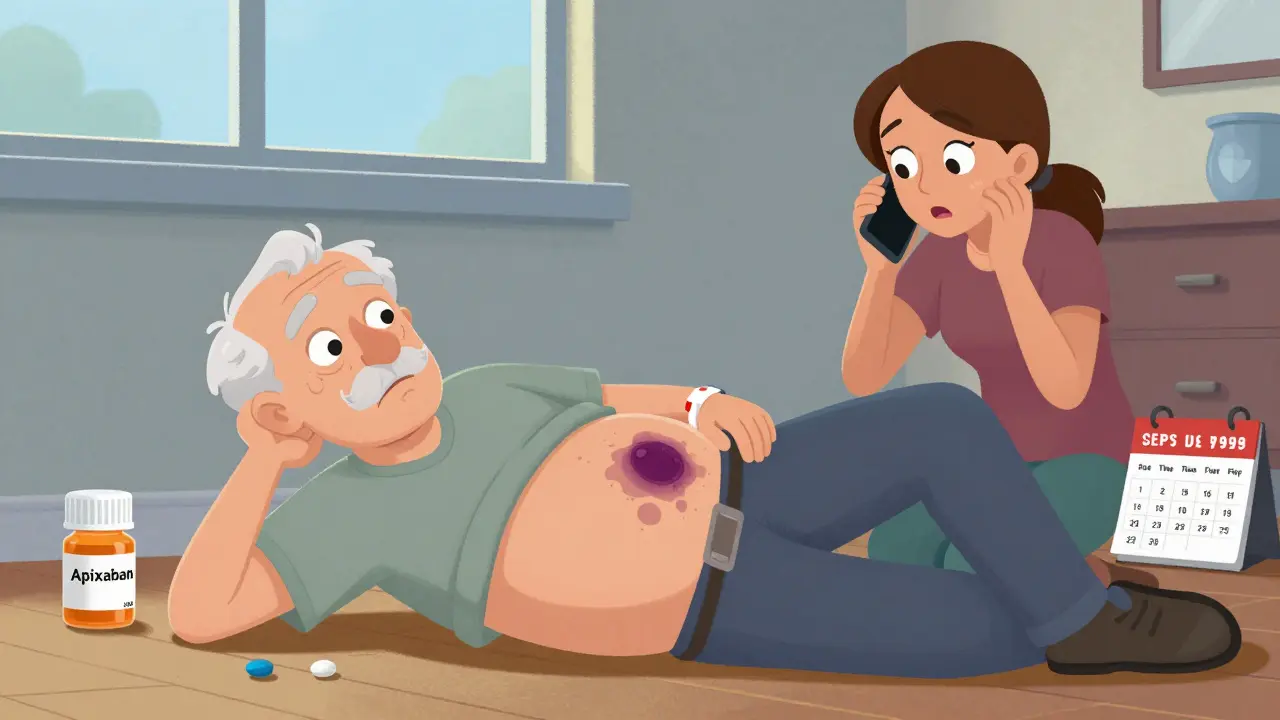
Every year in the UK, thousands of people on medications like apixaban, rivaroxaban, or warfarin end up in emergency rooms because of uncontrolled bleeding. Some had no idea their nosebleed was dangerous. Others ignored black stools, thinking it was just diet. A 78-year-old man in Birmingham lost consciousness after a minor fall - he didn’t realize the bruise spreading across his abdomen was internal bleeding from his daily apixaban. He survived, but only because his daughter recognized the signs and called 999. Too many don’t.
These medications prevent strokes and clots. That’s good. But they also make your blood less able to clot when you need it to. And when bleeding goes unchecked, it can kill. The risk isn’t just theoretical. Studies show that 3.1% of atrial fibrillation patients on direct oral anticoagulants (DOACs) suffer a major bleed in the first year. Half of those cases happen in people taking lower doses - not because the drug failed, but because their bodies couldn’t handle even the reduced amount.
What counts as severe bleeding?
Not all bleeding is the same. A small cut that stops after a few minutes? Normal. A nosebleed that lasts 20 minutes? Not normal. Here’s what doctors consider severe:
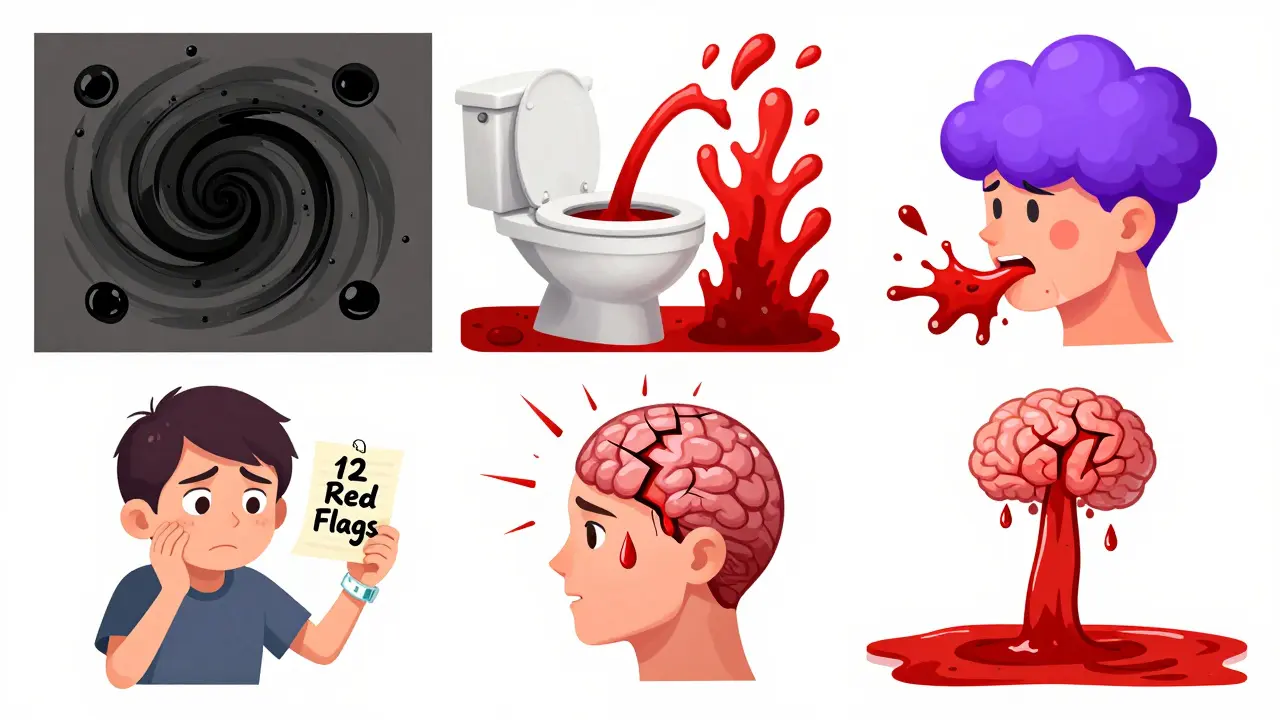
- Black, tarry stools - a sign of internal bleeding in your gut
- Blood in urine - bright red or dark brown, not just a few streaks
- Vomiting blood or coughing up blood
- Unexplained bruising, especially large purple patches
- Severe headache, confusion, or vision changes - possible brain bleed
- Joint swelling or pain after minor injury - bleeding into the joint
- Heavy menstrual bleeding that soaks through a pad in under an hour
- A cut that won’t stop bleeding after 15 minutes of pressure
These aren’t "maybe" signs. They’re red flags. The NIH says major bleeding events kill between 5% and 15% of people who experience them - especially if it’s in the brain or gut. And here’s the kicker: 61% of bleeding episodes happen in the first three months of starting the medication. That’s when you’re most vulnerable.
Who’s at highest risk?
It’s not just about the drug. It’s about your body.
- Age over 75: People over 80 have more than four times the bleeding risk of those under 60.
- History of bleeding: If you’ve had a bleed before, your risk of another is over four times higher.
- Kidney problems: Poor kidney function doubles or triples your bleeding risk. DOACs are cleared through your kidneys - if they’re not working well, the drug builds up.
- On multiple blood thinners: Taking aspirin or clopidogrel with your anticoagulant? Your risk doubles.
- High drug levels: New data from 2024 shows patients with the highest blood levels of DOACs in the first month are over three times more likely to bleed.
That’s why the NHS now uses the HAS-BLED score to assess risk before prescribing. A score of 3 or higher means you need extra monitoring - not just a prescription and a leaflet.
Which blood thinner is safest?
Not all anticoagulants are created equal. Here’s how they compare based on real-world data:
| Medication | Annual Major Bleeding Rate | Key Advantage | Key Risk |
|---|---|---|---|
| Apixaban (Eliquis) | 2.13% | Lowest bleeding risk among DOACs | Still risky if kidney function is poor |
| Warfarin | 3.09% | Reversible with vitamin K | Requires frequent blood tests (INR) |
| Dabigatran (Pradaxa) | 3.11% | Has specific antidote (idarucizumab) | Higher GI bleed risk |
| Rivaroxaban (Xarelto) | 3.6% | Once-daily dosing | 31% higher GI bleed risk than apixaban |
| Edoxaban (Savaysa) | ~3.2% | Lower GI bleed risk than rivaroxaban | Less real-world data available |
For someone with a history of stomach bleeding, apixaban is the clear choice. For someone with kidney disease, apixaban or edoxaban are better than rivaroxaban. Warfarin still has a place - especially if you need quick reversal or can’t afford DOACs - but it demands strict monitoring. The bottom line: your doctor should pick the drug based on your history, not convenience.
What to do if you start bleeding
Time matters. Delaying care increases death risk. Here’s what to do immediately:
- Stop taking your medication - don’t wait for a doctor’s call. If you’re bleeding heavily, keep taking your next dose.
- Call 999 - don’t drive yourself. Say: "I’m on a blood thinner and I’m bleeding heavily."
- Apply pressure - if it’s a cut or nosebleed, press firmly for at least 10 minutes. Don’t check every 30 seconds.
- Bring your medication list - include names, doses, and when you last took it. Emergency staff need this fast.
- Don’t take aspirin, ibuprofen, or NSAIDs - they make bleeding worse.
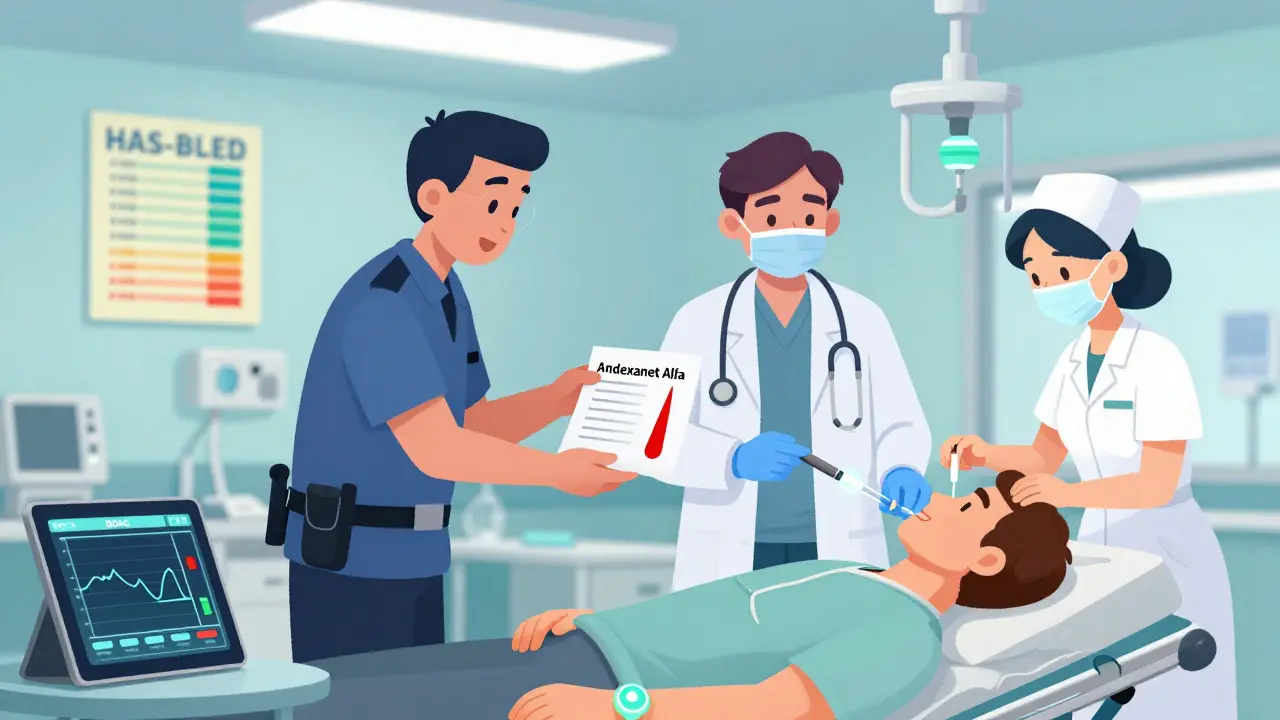
If you’re in the hospital, they’ll test your blood and may give you a reversal agent. For dabigatran, it’s idarucizumab. For rivaroxaban or apixaban, it’s andexanet alfa. These cost thousands - but they save lives. The NHS has them in major hospitals. If you’re unsure, ask: "Do you have a reversal agent for my drug?"
How to prevent bleeding before it starts
Most bleeding episodes are preventable - if you’re prepared.
- Get a HAS-BLED score - ask your GP for it when you start the drug. If it’s 3 or above, you need a safety plan.
- Know your symptoms - memorize the 12 red flags from the American Heart Association. Write them down and keep them on your fridge.
- Wear a medical alert bracelet - it says "on anticoagulant" and lists your drug. Paramedics look for this.
- Get your first DOAC level checked - if you’re over 75 or have kidney issues, ask for a blood test 2-4 weeks after starting. High levels mean higher risk.
- Avoid falls - use grab bars, remove rugs, install night lights. A minor fall can become a major bleed.
- Review all meds - even over-the-counter painkillers like ibuprofen can be dangerous. Always check with your pharmacist.
One patient in Birmingham told me: "I didn’t know my tarry stools were bleeding. I thought it was just my diet." He waited three days. By then, he needed two units of blood and a hospital stay. He’s alive - but he won’t make that mistake again.
What’s changing in 2026?
There’s new hope on the horizon. In January 2024, the FDA approved the first point-of-care test that can measure DOAC levels in under 20 minutes - no lab needed. Clinics can now check your drug level during your appointment. If it’s too high, they can adjust your dose before you bleed.
Two new drugs - milvexian and asundexian - are in late-stage trials. Early results show they prevent clots just as well as current drugs, but with 20-25% less bleeding. They’re not available yet, but they’re coming fast.
And there’s a push to make reversal agents cheaper and more widely available. Right now, only big hospitals have them. In rural areas, patients are sent hours away. That’s changing.
The message is clear: blood thinners save lives. But they’re not harmless. The key isn’t avoiding them - it’s understanding them. Knowing your risk. Recognizing the signs. Acting fast. That’s how you survive.
Can I take aspirin while on a blood thinner?
No, unless your doctor specifically says so. Aspirin is an antiplatelet drug, and combining it with anticoagulants like apixaban or warfarin doubles your bleeding risk. Even low-dose aspirin (75mg) can cause serious internal bleeding. Always check with your GP or pharmacist before taking any new medication, including over-the-counter painkillers.
How often should I get my blood tested on DOACs?
Unlike warfarin, DOACs like apixaban or rivaroxaban don’t require routine blood tests. But if you’re over 75, have kidney problems, or have had a bleed before, your doctor may order a special test to check your drug level - especially in the first month. The new point-of-care tests make this easier and faster. Ask your GP if you’re at higher risk.
What if I forget my medication and then have a bleed?
If you miss a dose and then start bleeding, don’t take the missed dose. Call 999 immediately. The bleeding isn’t caused by missing a pill - it’s caused by the drug still being in your system. Taking more could make it worse. Emergency staff need to know exactly when you last took your medication and your full dosing history.
Can I drink alcohol while on blood thinners?
Moderate alcohol (one drink a day) is usually okay, but heavy drinking increases bleeding risk. Alcohol can irritate your stomach lining and make you more likely to bleed internally. It can also affect how your liver processes the drug. If you drink regularly, tell your doctor - they may adjust your dose or switch you to a safer option.
Is there a way to reverse the effects of DOACs at home?
No. There are no home remedies, supplements, or over-the-counter drugs that can reverse DOACs. Only hospital-based reversal agents like idarucizumab or andexanet alfa work. Trying to treat bleeding at home - even with ice, pressure, or herbal teas - can delay life-saving care. If you’re bleeding severely, call 999 immediately.
What to do next
If you’re on a blood thinner, do this today:
- Check your medication name and dose - write it down.
- Ask your GP: "What’s my HAS-BLED score?"
- Print or save the 12 bleeding warning signs on your phone.
- Get a medical alert bracelet - they cost under £10 online.
- Call your pharmacist and ask: "Do I have any drug interactions?"
Bleeding on blood thinners isn’t a mystery. It’s a known risk - and one you can manage. Knowledge saves lives. Don’t wait until you’re bleeding to learn how to stop it.



jonathan soba
January 30, 2026 AT 01:31Stop pretending DOACs are 'safer.' They're just less monitored.
matthew martin
February 1, 2026 AT 00:43Also - get the damn medical bracelet. I saw a guy in the ER last year who didn’t know what he was on. Took them 45 minutes to figure it out. He was lucky. I’m not betting on luck.
Chris Urdilas
February 2, 2026 AT 15:40Meanwhile, my cousin’s grandma took warfarin for 15 years, got her INR checked every week, and never had a bleed. Maybe the problem isn’t the drugs - it’s the healthcare system pretending complexity equals safety.
Irebami Soyinka
February 3, 2026 AT 15:01Stop acting like this is a tech problem. It’s a human problem.
doug b
February 4, 2026 AT 08:35Mindee Coulter
February 6, 2026 AT 05:02Rhiannon Bosse
February 6, 2026 AT 17:19Also - why do I have to wear a bracelet? Why doesn’t the government just make all blood thinners require a fingerprint scan to dispense? That’d be safer.
James Dwyer
February 8, 2026 AT 12:57Jeffrey Carroll
February 9, 2026 AT 13:57Phil Davis
February 11, 2026 AT 00:42