

High blood pressure doesn’t come with warning signs. You might feel fine, but silently, it’s straining your heart, damaging your arteries, and raising your risk of stroke or heart attack. That’s why managing it isn’t optional-it’s essential. The good news? You don’t have to choose between pills and natural methods. The most effective approach combines both, carefully and consistently.
What Counts as High Blood Pressure?
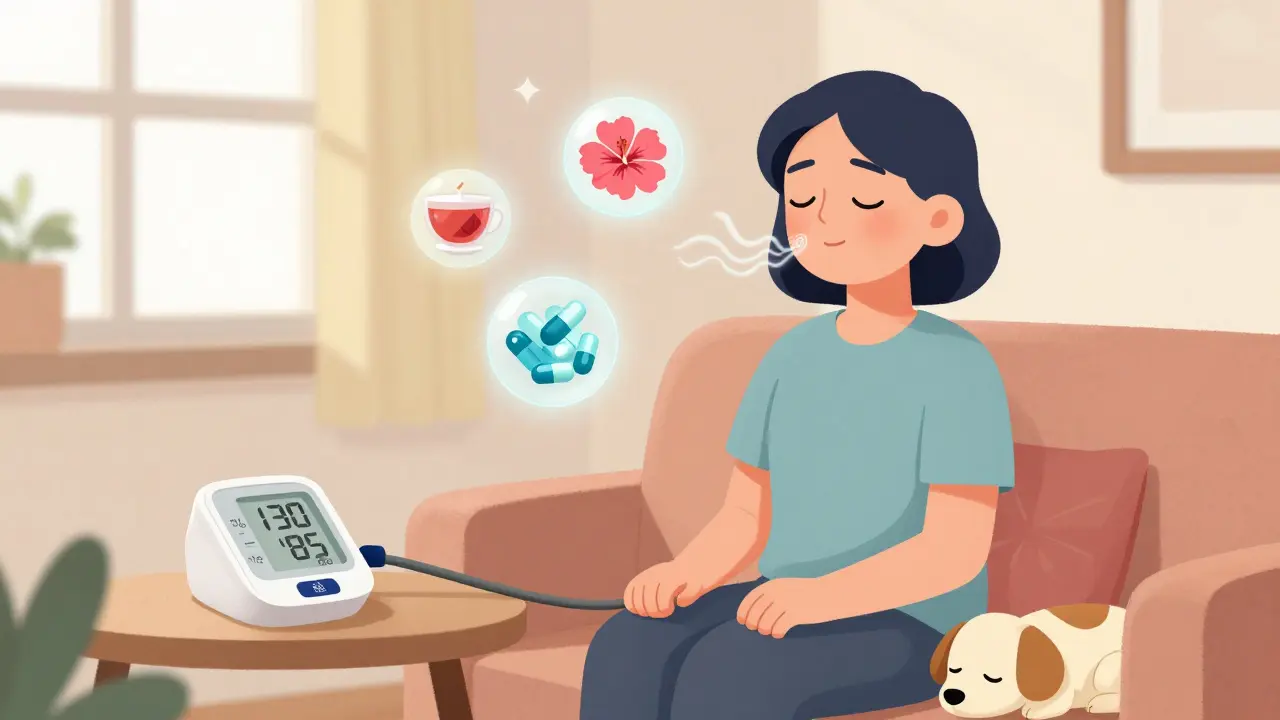
According to the latest guidelines, hypertension starts at 130/80 mm Hg. That’s not some distant number-it’s the threshold where your risk begins to climb. About one in four adults globally has this condition. In the UK, it’s even higher, with nearly half of people over 60 affected. Most don’t know they have it until something serious happens. That’s why regular checks matter, whether at the pharmacy, your GP’s office, or with a home monitor.
It’s not just about the number on the device. It’s about what happens over time. Consistently high readings mean your heart is working too hard, your blood vessels are stiffening, and your kidneys are under pressure. Left unchecked, it can lead to heart failure, kidney disease, or vision loss. The goal isn’t just to lower the number-it’s to protect your body for the long haul.
Medications: The Foundation of Control
If your doctor prescribes medication, it’s not because they don’t trust natural approaches. It’s because they work-fast and reliably. First-line drugs like ACE inhibitors, ARBs, calcium channel blockers, and diuretics can drop systolic pressure by 15-20 mm Hg within weeks. That’s the difference between a dangerous reading and a safe one.
Take amlodipine, for example. A typical dose reduces systolic pressure by 20-25 mm Hg. That’s more than most natural remedies can achieve alone. For someone with stage 2 hypertension (140/90 or higher), skipping medication isn’t a lifestyle choice-it’s a gamble with your health.
But medications aren’t perfect. Side effects like dizziness, fatigue, or dry cough are common. Some people can’t tolerate them. Others worry about long-term use. That’s where natural strategies come in-not as replacements, but as partners.
The DASH Diet: Proven, Practical, Powerful
The DASH diet isn’t a fad. It was developed by the National Heart, Lung, and Blood Institute in the 1990s and tested in clinical trials with thousands of people. When followed strictly, it lowers systolic blood pressure by 8-14 mm Hg in just 14 days. That’s comparable to many medications.
Here’s what it actually looks like:
- At least 4-5 servings of vegetables daily-spinach, broccoli, carrots, tomatoes
- 4-5 servings of fruit-bananas, oranges, berries, apples
- Whole grains like oats, brown rice, quinoa instead of white bread or pasta
- Low-fat dairy: milk, yogurt, cheese
- Lean proteins: chicken, fish, beans, lentils
- Nuts and seeds: almonds, walnuts, flaxseeds
- Sodium capped at 2,300 mg per day, ideally 1,500 mg
Most people eat around 3,400 mg of sodium daily. Cutting that in half isn’t easy, but it’s doable. Skip processed snacks, canned soups, takeaway meals, and soy sauce. Cook at home. Use herbs, lemon, garlic, and black pepper instead of salt. One study found that people who reduced sodium to 1,500 mg saw a 5-6 mm Hg drop in systolic pressure-without any pills.
And it’s not just about salt. DASH is rich in potassium, magnesium, and calcium-all minerals that help relax blood vessels. You get these naturally from food, not supplements. A banana gives you 400 mg of potassium. A cup of spinach gives you 150 mg of magnesium. These aren’t magic bullets-they’re daily habits that add up.
Natural Supplements That Actually Work
Not every herbal remedy or supplement helps. Some do nothing. Others can be dangerous. But five have solid evidence behind them.
Coenzyme Q10 (CoQ10): At 100-225 mg daily, it can lower systolic pressure by 11-17 mm Hg. It’s especially helpful if you’re on statins, which can deplete your body’s natural CoQ10. Take it with a meal that has fat-like avocado or olive oil-for better absorption.
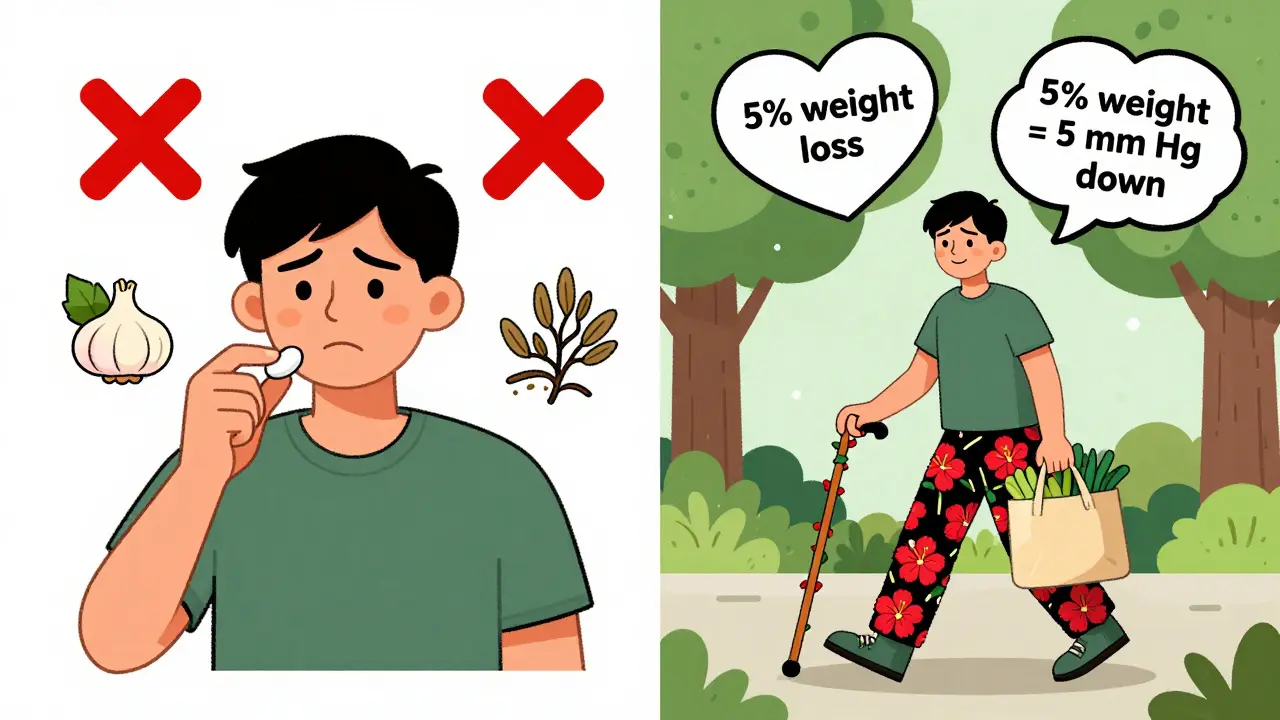
Aged Garlic Extract: 600-1,200 mg daily reduces systolic pressure by 7-10 mm Hg. Don’t use raw garlic or cheap supplements. Look for aged extract-it’s standardized and doesn’t cause bad breath. But be careful: garlic can thin your blood. If you’re on warfarin or aspirin, talk to your doctor first.
Hibiscus Tea: Drink 3-4 cups daily of unsweetened hibiscus tea. Studies show it lowers systolic pressure by 7.2 mm Hg after six weeks. It’s like a natural ACE inhibitor. Many people report feeling calmer, too. Brew it strong, let it cool, and drink it cold. It’s refreshing and works.
Magnesium: 368 mg daily (preferably glycinate or citrate) can drop systolic pressure by 2 mm Hg and diastolic by 1.8 mm Hg. It helps muscles relax, including those in your blood vessels. If you get leg cramps at night, magnesium might help with that too.
Fish Oil: Omega-3s from fish oil reduce inflammation and slightly lower blood pressure. Aim for 1,000-2,000 mg of EPA and DHA daily. Look for third-party tested brands to avoid contaminants.
These aren’t quick fixes. They take 4-8 weeks to show results. But they’re safe when used correctly. And they don’t replace medication-they support it.
Exercise and Weight Loss: The Silent Game-Changers
You don’t need to run marathons. Just move more. Aim for 150 minutes a week of brisk walking, cycling, or swimming. That’s 30 minutes, five days a week. Even breaking it into 10-minute chunks helps.
Exercise lowers blood pressure by 5-8 mm Hg. It strengthens your heart so it doesn’t have to pump as hard. It also helps with weight loss-and that’s huge. Losing just 5% of your body weight can drop systolic pressure by 5-20 mm Hg. Each kilogram lost equals about 1 mm Hg reduction. If you weigh 90 kg and lose 5 kg, you could see a 5 mm Hg drop-just from shedding weight.
And it’s not just about the scale. Reducing belly fat matters most. Visceral fat around your organs releases chemicals that raise blood pressure. Walking after dinner, taking the stairs, parking farther away-these small changes build up.
Mind-Body Practices: Calm Your Nervous System
Stress doesn’t cause chronic high blood pressure, but it keeps it high. When you’re tense, your body releases adrenaline. Your heart races. Your blood vessels tighten. Over time, that wears you down.
Transcendental meditation has been shown to lower systolic pressure by 4.7-5.5 mm Hg. That’s not a placebo. It’s measurable. You sit quietly, repeat a word or sound, and let your mind settle. Even 20 minutes twice a day helps.
Deep breathing works too. Try this: inhale for 4 seconds, hold for 4, exhale for 6. Repeat five times. Do it before bed, before a stressful meeting, or when you check your blood pressure and it’s high. It calms your nervous system fast.
Yoga and tai chi also help. They combine movement, breath, and focus. No need to be flexible. Just show up and breathe.
What Doesn’t Work-And What’s Dangerous
Not everything you hear online is safe. Some supplements can actually raise your blood pressure.
- Licorice root: Increases blood pressure and lowers potassium. Avoid if you’re on diuretics.
- Ephedra or ma huang: Illegal in the UK and US. Can cause stroke or heart attack.
- St. John’s wort: Interacts with many medications, including blood pressure pills.
- Yohimbine: Used in some weight-loss supplements. Can spike blood pressure dangerously.
And don’t assume “natural” means safe. Supplements aren’t regulated like drugs. A 2022 FDA review found 15 companies making false claims about blood pressure products. Labels lie. Ingredients are missing. Heavy metals show up. Buy from trusted brands. Look for USP or NSF certification.
How to Combine Natural and Medical Approaches
The smartest path isn’t pills OR natural methods. It’s pills AND natural methods.
Here’s how to do it right:
- Get your blood pressure checked regularly-home monitoring is best.
- Follow your doctor’s medication plan. Don’t skip doses.
- Start the DASH diet. Cut salt. Eat more plants.
- Add 150 minutes of walking per week.
- Try hibiscus tea or CoQ10. Track your numbers.
- Don’t stop meds without talking to your doctor.
- Always tell your doctor what supplements you’re taking.
One study found that people who combined lifestyle changes with reduced medication doses had the same blood pressure control as those on full doses-but with 32% fewer side effects. That’s the sweet spot.
Real People, Real Results
On Reddit’s hypertension community, users share what works. One man drank hibiscus tea daily for six weeks. His systolic dropped from 148 to 135. Another took magnesium and noticed fewer leg cramps and steadier pressure. A woman switched to the DASH diet and lost 12 kg. Her doctor cut her medication in half.
But there are warnings too. One person took garlic supplements with lisinopril and got dizzy. Another used hawthorn berry and saw no change. Supplements aren’t one-size-fits-all. Your body responds differently.
What’s consistent? The people who succeeded didn’t chase quick fixes. They made small, steady changes. They tracked their progress. They talked to their doctor. And they didn’t give up when results took time.
What to Do Next
Start today. Not tomorrow. Not next week.
- Buy a home blood pressure monitor. Check it twice a week.
- Swap one processed snack for fruit or nuts.
- Walk for 15 minutes after dinner.
- Make one pot of hibiscus tea this week.
- Write down every supplement you take. Show it to your doctor.
Hypertension isn’t a life sentence. It’s a signal. Your body is asking you to slow down, eat better, move more, and take care. You don’t need to be perfect. You just need to be consistent. The best treatment isn’t a pill or a potion-it’s a lifestyle you can live with, every day.
Can I stop taking blood pressure medication if I use natural remedies?
No. Natural strategies like diet, exercise, and supplements can help lower blood pressure, but they should not replace prescribed medication unless your doctor says so. Stopping medication suddenly can cause dangerous spikes in blood pressure. For stage 2 hypertension (140/90 or higher) or if you have heart disease, medication is essential. Natural methods work best as a complement-not a substitute.
How long does it take for natural methods to lower blood pressure?
Most natural approaches take 4 to 8 weeks to show measurable results. The DASH diet can start working in as little as 14 days, but full benefits take 30 days. CoQ10, garlic, and hibiscus tea typically require 6 weeks of consistent use. Exercise and weight loss show gradual improvements over time. Unlike medications, which often work in 2-4 weeks, natural methods build slowly but offer long-term benefits with fewer side effects.
Which supplements are safest for high blood pressure?
The safest and most evidence-backed supplements for hypertension are coenzyme Q10 (100-225 mg/day), aged garlic extract (600-1,200 mg/day), hibiscus tea (3-4 cups daily), magnesium (368 mg/day), and omega-3 fish oil (1,000-2,000 mg/day). These have been studied in clinical trials and show modest but real benefits. Always choose third-party tested brands and avoid products with unverified claims or stimulants like ephedra.
Does the DASH diet really work for lowering blood pressure?
Yes. The DASH diet has been tested in multiple large studies and is endorsed by the American Heart Association and the National Institutes of Health. It lowers systolic blood pressure by 8-14 mm Hg when followed strictly. It works by increasing potassium, magnesium, and calcium while reducing sodium. People who stick with it for 30 days see the best results. It’s not a short-term fix-it’s a sustainable eating pattern that supports long-term heart health.
Can stress cause high blood pressure?
Stress doesn’t cause chronic hypertension, but it can keep blood pressure elevated. When you’re stressed, your body releases hormones like adrenaline and cortisol, which tighten blood vessels and raise heart rate. Over time, this can damage your arteries. Practices like meditation, deep breathing, yoga, and regular exercise help calm your nervous system and reduce these spikes. Managing stress isn’t a cure-but it’s a critical part of control.
Are there any natural remedies I should avoid?
Yes. Avoid licorice root, ephedra, yohimbine, and St. John’s wort. These can raise blood pressure or interfere with medications. Licorice can cause potassium loss and worsen diuretic side effects. Ephedra is banned in the UK and US because of heart risks. St. John’s wort can reduce the effectiveness of many blood pressure drugs. Always check with your doctor before trying any new supplement, even if it’s labeled “natural.”
How much weight loss is needed to see a drop in blood pressure?
Losing just 5% of your body weight can lower systolic blood pressure by 5-20 mm Hg. Each kilogram (2.2 pounds) lost typically reduces systolic pressure by about 1 mm Hg. For someone weighing 90 kg, losing 5 kg could mean a 5 mm Hg drop-enough to move from a high-normal range into a safer zone. Weight loss also reduces inflammation and improves how your body responds to medication.
Can I use hibiscus tea instead of my blood pressure pill?
No. Hibiscus tea can help lower blood pressure-studies show an average 7.2 mm Hg systolic reduction-but it’s not strong enough to replace medication for moderate to severe hypertension. It’s best used as a supportive tool alongside your prescribed treatment. Some people report better results when combining it with medication, but never stop or change your pills without medical advice. Hibiscus tea is safe for most, but it can interact with diuretics and some blood pressure drugs.


Wren Hamley
January 3, 2026 AT 17:28So let me get this straight-you’re telling me hibiscus tea is basically a natural ACE inhibitor? That’s wild. I’ve been drinking it for months and my BP dropped 12 points, but my doc still wants me on lisinopril. Guess I’m just too lazy to quit the meds. Also, anyone else notice how CoQ10 fixes statin-induced fatigue? It’s like my body finally remembered how to make energy.
And DASH diet? I tried it for 30 days. Lost 8 lbs, stopped craving chips, and my wife said I stopped growling at the microwave. Worth it.
Shanahan Crowell
January 4, 2026 AT 08:15YES! YES! YES! This is the kind of info we NEED more of-no fluff, no fear-mongering, just science-backed, real-life, doable changes! You don’t need to be perfect-you just need to be consistent! One step, one tea, one walk at a time! Your body is begging you to listen-so LISTEN! You’ve got this!! 🙌💪❤️
Angela Fisher
January 4, 2026 AT 18:38Okay but have you seen the FDA’s 2022 report? 15 companies lying about supplements? And guess who owns most of them? Big Pharma. They don’t want you to know hibiscus tea works better than lisinopril. Why? Because tea doesn’t cost $120/month. They’re hiding the truth. They’ve been poisoning us with sodium-laden processed food since the 70s to keep us dependent. The DASH diet? It’s not a diet-it’s a rebellion. And CoQ10? That’s what they tried to ban in 2014. I’ve got the PDFs. DM me.
Also, your doctor is probably on their payroll. Just saying.
PS: I stopped my meds. My BP is 118/76 now. No side effects. No pills. Just tea, garlic, and rage.
Neela Sharma
January 5, 2026 AT 11:59Life is not a battle to be won with pills alone
It is a rhythm to be found-in breath, in greens, in quiet walks after dusk
Medicine holds the door open
But you must walk through it yourself
One step. One cup. One day at a time.
You are not broken. You are becoming.
Shruti Badhwar
January 6, 2026 AT 15:39While I appreciate the comprehensive overview, I must emphasize the critical importance of clinical supervision when integrating supplements with pharmacological regimens. The pharmacokinetic interactions between aged garlic extract and anticoagulants, for instance, are not trivial. Furthermore, the variability in supplement bioavailability renders many of the cited efficacy claims statistically unreliable without standardized dosing protocols. I recommend peer-reviewed meta-analyses from the Journal of Clinical Hypertension for substantiated conclusions.
Liam Tanner
January 8, 2026 AT 06:58Love this breakdown. I’ve been doing DASH + walking for 6 months. Lost 15 lbs, BP down 18 points. Still on a low-dose pill. My doc was skeptical until my logs showed the trend. Now he’s the one asking me for recipe ideas. Bottom line: you don’t have to choose. You can have both. Just keep track. And talk to your doctor. No heroics.
Sarah Little
January 9, 2026 AT 17:35Wait-so you’re saying I can just drink hibiscus tea and stop my amlodipine? My sister did that and ended up in the ER. She thought ‘natural’ meant ‘safe.’ Spoiler: it doesn’t. I’ve seen too many people self-experiment and then blame the system when their kidneys fail. This isn’t a wellness blog. This is your life. Don’t gamble with it.
JUNE OHM
January 10, 2026 AT 20:24USA is the only country that doesn’t ban MSG in soup. That’s why we’re all hypertensive. China’s been eating fermented soy and green tea for 5,000 years. We got our brains hacked by Big Salt. I stopped all meds. Now I drink hibiscus tea, do 100 squats a day, and only eat food my grandma would recognize. My BP is 115/72. The government is scared of me now. 🇺🇸🍵💪
Philip Leth
January 11, 2026 AT 18:50My abuela used to brew hibiscus tea every morning. Called it ‘flor de Jamaica.’ Said it kept the blood flowing clean. Didn’t know it had science behind it. Just knew it tasted good and didn’t make her jittery like the pills. Now I make it for my kids. They hate it at first. Then they ask for seconds. That’s the real win.
Also-no, garlic supplements don’t make you smell like a dumpster. Aged extract? Clean. Like a fresh breeze.
Kerry Howarth
January 12, 2026 AT 17:30Consistency > perfection. Medication + DASH + 150 minutes weekly + hydration = sustainable control. No exceptions. No shortcuts. Track your numbers. Talk to your provider. Avoid unregulated supplements. This is not a trend. It’s medicine.
Joy F
January 14, 2026 AT 02:08Let’s be real: this whole ‘natural remedies’ narrative is just Big Wellness trying to sell you $80 bottles of powdered hibiscus while your insurance pays for your $5 generic. You think your CoQ10 is helping? It’s placebo. The real fix? You stopped eating fried chicken. You walked. You slept. You didn’t binge Netflix while scrolling Instagram. The tea? A pretty distraction. The pill? The only thing keeping you alive. Don’t romanticize your hypertension. It’s not a spiritual awakening. It’s a chronic disease. Treat it like one.