
When a brand-name drug’s patent runs out, most people assume the company will lose its market overnight. But that’s not what usually happens. Instead, you’ll often see the same drug-same pills, same dose, same manufacturer-hit store shelves with a new label and a much lower price. That’s an authorized generic. And it’s not a mistake. It’s a calculated move.
What Exactly Is an Authorized Generic?
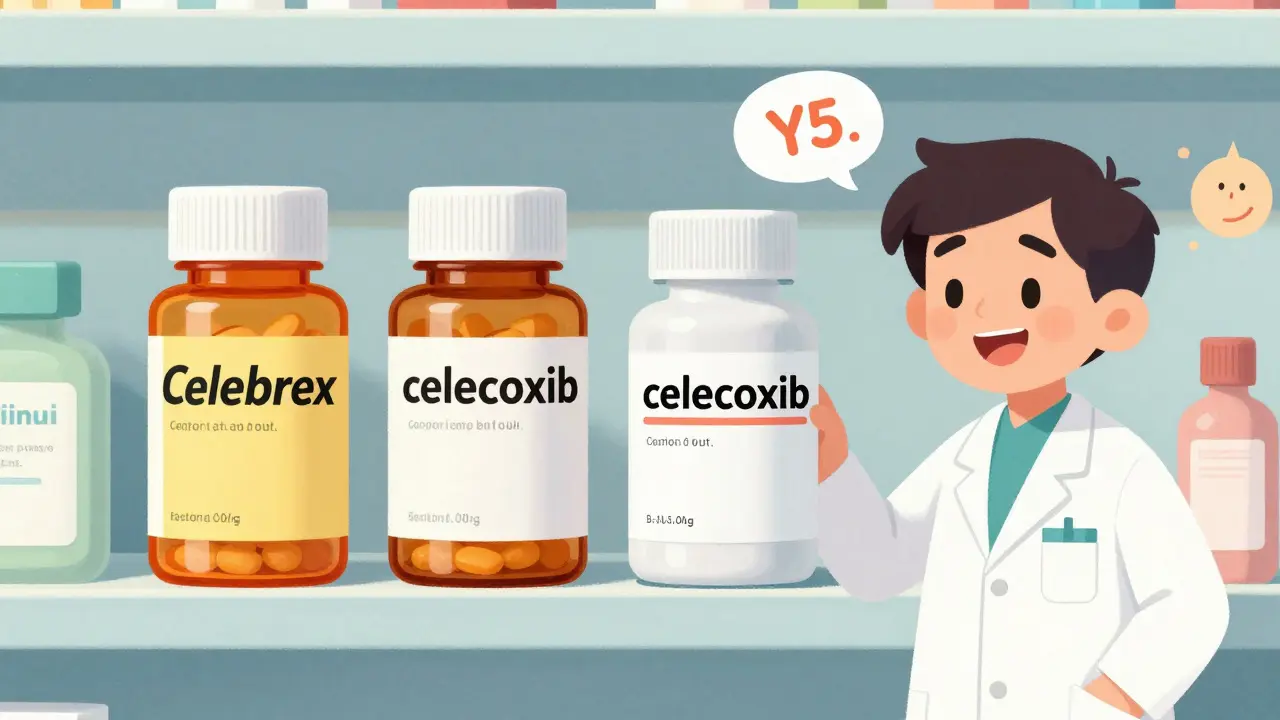
An authorized generic is the exact same drug as the brand-name version. Same active ingredient. Same inactive ingredients. Same manufacturing process. The only differences? The box, the name, and the price. It’s sold under the original brand’s FDA approval (called an NDA), not the generic company’s (ANDA). That means no extra testing, no delays. The brand company just rebrands its own product. For example, if you’ve taken Celebrex for arthritis, you might later find celecoxib-identical in every way-on the shelf for half the price, made by the same factory, just labeled as an authorized generic. Same drug. Same pills. Different label.Why Do Brand Companies Do This?
It sounds counterintuitive. Why would a company help destroy its own profits? The answer is simple: they don’t want to lose everything. When a patent expires, generic competitors rush in. The first one gets 180 days of exclusive rights under the Hatch-Waxman Act. During that time, they can charge high prices-sometimes nearly as high as the brand. That’s a windfall. But the brand company? They watch their sales drop 80-90% in a year. By launching their own authorized generic during that 180-day window, they turn the tables. Instead of letting one generic company monopolize the low-price market, they step in and compete directly. They undercut the first generic’s price. And suddenly, that $500 bottle of brand-name drug becomes a $20 authorized generic, while the first generic’s price plummets too. The Federal Trade Commission found in 2011 that when brand companies launched authorized generics during exclusivity, prices dropped faster and stayed lower. Patients won. The first generic? They lost their monopoly profit. The brand? They kept some revenue.It’s Not Just About Price-It’s About Control
Brand companies aren’t just trying to save money. They’re trying to keep control. Traditional generics don’t have to match the brand’s inactive ingredients. That’s a big deal for some drugs. Take colchicine, used for gout. If a generic changes the filler or coating, it can affect how fast the drug is absorbed. For drugs with a narrow therapeutic index-where tiny differences matter-this can be risky. An authorized generic solves that. It’s the exact same formulation. Doctors know it. Pharmacists trust it. Patients don’t have to worry about switching. That’s why over 80% of Americans, according to a 2005 Roper study, said they wanted the option of an authorized generic. They don’t want a different version. They want the same one, just cheaper.
Two Markets, One Company
This isn’t just a fight against generics. It’s a pricing strategy. Brand companies now run two markets at once:- The premium market: The branded version, sold to patients who don’t mind paying more-or whose insurance requires it.
- The value market: The authorized generic, sold to cost-conscious buyers, Medicaid, mail-order pharmacies, or cash-paying patients.
Timing Is Everything
In the past, most authorized generics launched after generics were already on the market. But things have changed. Between 2010 and 2019, 75% of authorized generics came out after generic competition started. But by 2020-2023, that flipped. More and more brand companies now launch their authorized generic before the first generic hits-or right at the same time. Why? To scare off competitors. If a generic company knows the brand maker is ready to undercut them on day one, they might think twice about investing millions to enter the market. It’s a warning shot. Some companies even use different distribution channels. The brand version stays in regular pharmacies. The authorized generic goes only through mail-order or specific chains. That keeps the prices from being directly compared on the same shelf.Who Benefits?
Patients win. Prices drop faster. More people can afford their meds. Pharmacists win. They can offer a trusted, identical product at a lower cost. Payers-insurance companies, Medicare, Medicaid-win. They spend less. The brand company? They don’t win big, but they don’t lose everything. They keep a foothold. They protect their manufacturing plants. They keep their workforce employed. And they build goodwill by keeping patients on a stable medication.
What’s Next?
This strategy is spreading. The next frontier? Biologics. Drugs like Humira, Enbrel, and Remicade are biologics-complex, expensive, made from living cells. Their patents are expiring now. But unlike small-molecule drugs, there’s no direct equivalent to an authorized generic. Instead, there are biosimilars-similar, but not identical. Some brand companies are already testing the waters. They’re working on their own biosimilars, under their own name, with their own manufacturing. It’s not called an authorized generic yet. But it’s the same idea: control the copy before someone else does. The FDA hasn’t officially recognized the concept yet. But the trend is clear. As more high-cost drugs lose patent protection, brand companies will keep adapting. Authorized generics aren’t going away. They’re getting smarter.Real Examples You’ve Probably Seen
- Celebrex → celecoxib (made by Greenstone, a Pfizer subsidiary)
- Colcrys → colchicine (made by Prasco Laboratories)
- Concerta → methylphenidate ER (made by Watson/Actavis)
- Propecia → finasteride (authorized generic sold by Merck)
Final Thought: It’s Not Cheating. It’s Business.
Some people call authorized generics a trick. A way for big pharma to keep profits. But look closer. The result? Lower prices. More access. Fewer patients skipping doses because they can’t afford their meds. The brand company doesn’t get to keep its monopoly. But it doesn’t vanish either. And that’s the point. They’re not trying to stop competition. They’re trying to shape it. In a world where drug prices are under fire, authorized generics are one of the few tools that actually lower costs without breaking the system.Are authorized generics the same as regular generics?
No. Regular generics only need to match the active ingredient. Authorized generics match everything-the active ingredient, the inactive ingredients, the size, the shape, and how the drug is made. They’re the exact same product, just sold under a different label.
Why are authorized generics cheaper if they’re identical?
Because they don’t have the marketing, advertising, and brand-building costs that the original drug had. The brand company already paid those costs. The authorized generic is just the product, sold without the brand name. No fancy packaging. No TV ads. Just the medicine at cost.
Can I ask my pharmacist for an authorized generic?
Yes. Ask if there’s an authorized generic available for your prescription. Many pharmacies stock them, especially for popular drugs like Celebrex, Concerta, or Colcrys. They’re often cheaper than both the brand and regular generics.
Do authorized generics affect the quality of my medication?
No. In fact, they’re often more consistent than regular generics because they’re made in the same factory, with the same equipment, using the same process as the brand. If you’ve had side effects from a regular generic, switching to the authorized version might help.
Why don’t all brand companies launch authorized generics?
It’s expensive to set up. You need the manufacturing capacity, the regulatory setup, and the distribution channels. Smaller companies may not have the resources. Also, if the drug isn’t profitable enough, it’s not worth the effort. But for blockbuster drugs with high sales, it’s a smart financial move.
If you’re taking a brand-name drug that’s about to go generic, check with your pharmacist. You might be able to switch to the authorized version and save hundreds a year-without changing a thing about your treatment.
Chinmoy Kumar
February 3, 2026 AT 10:35whoa this is wild i had no idea big pharma was doing this kinda move
so they just slap a new label on their own pills and call it a day?
kinda sneaky but honestly if it cuts my bill in half im not mad
why dont more people know about this?
Brett MacDonald
February 3, 2026 AT 11:51its not a trick its capitalism with a conscience
the brand company still makes money but patients get relief
the system is broken but this is one of the few patches that actually works
we should be celebrating this not calling it shady
Solomon Ahonsi
February 4, 2026 AT 23:57oh so this is how the pharma giants stay alive after patents expire
brilliant. absolutely brilliant. theyre not just surviving theyre dominating the discount market too
and you wonder why drug prices never really drop
theyre just moving the cheese around so you think youre getting a deal
its a fucking con and you guys are applauding it
George Firican
February 5, 2026 AT 11:09the beauty of this strategy lies in its quiet elegance
instead of fighting the tide of generic competition they become the tide themselves
they leverage their own infrastructure to undercut the very disruptors they fear
and in doing so they preserve continuity for patients who rely on absolute consistency in their medication
the inactive ingredients matter more than most realize
one change in coating or filler can alter absorption rates dramatically for drugs with narrow therapeutic windows
and yet the market treats all generics as equal
authorized generics dont just lower price they preserve trust
thats not greed thats responsibility wrapped in a business model
Hannah Gliane
February 5, 2026 AT 13:23oh wow so big pharma is now the hero of cheap meds?? 😒
youre telling me the same company that jacked up prices for 15 years is now our savior because they put a new label on their pills?
imagine if you robbed a bank then opened a free coffee stand across the street and called yourself a philanthropist
youre not helping youre just doing damage control with a smile 😤
Murarikar Satishwar
February 6, 2026 AT 21:11great breakdown and i think this deserves more attention
authorized generics are one of the few win-win-win scenarios in pharma
patients get affordable meds
pharmacists get a reliable product
and companies avoid mass layoffs
the real tragedy is that this isnt standard practice across all drugs
why should only blockbuster drugs get this treatment?
we need policy to encourage this for all patent-expired meds
Dan Pearson
February 7, 2026 AT 09:31youre telling me america lets big pharma do this and you call it smart?
in russia theyd jail these guys
in china theyd make them apologize on tv
but here we cheer while they pocket half the profit and call it a public service
we are so gullible its embarrassing
and dont even get me started on how they hide the authorized version in mail-order only
so you dont even know youre getting the same damn pill
Marc Durocher
February 7, 2026 AT 21:02honestly i didnt even know this was a thing until last month
switched my celebrex to the generic and saved $180/month
then found out it was made in the same factory
same pills same everything
the only difference? no logo on the bottle
now i just ask my pharmacist for the authorized version every time
why arent more people doing this?
its like weve been trained to think branded = better
but its just branding
larry keenan
February 9, 2026 AT 06:43the regulatory framework underpinning authorized generics is noteworthy
they operate under the original NDA rather than an ANDA
thus avoiding bioequivalence studies and formulation adjustments
this preserves pharmacokinetic fidelity
critical for narrow-therapeutic-index agents such as warfarin or levothyroxine
the clinical implications of formulation variability are underappreciated in public discourse
authorized generics mitigate this risk while simultaneously enabling price competition
an elegant regulatory workaround
Gary Mitts
February 11, 2026 AT 02:24same pill cheaper no brainer
why are we even debating this
clarissa sulio
February 12, 2026 AT 22:31imagine if we applied this logic to everything
you buy a $500 iphone then the company releases a $100 version made in the same factory
youd think it was a scam right?
but when its a pill we call it genius
we are so easily manipulated by medical branding
and dont even get me started on how they use this to avoid transparency
its not innovation its manipulation
Anthony Massirman
February 14, 2026 AT 04:23theyre not evil theyre just smart
if you can keep your factory running and your workers paid while giving people cheaper meds
why wouldnt you do it?
the real villain is the system that lets one company own a drug for 20 years
not the one trying to make the best of a bad situation
and yeah i know its still pharma
but this is the closest thing to ethical capitalism in this industry