Acne Medication Safety Checker
Washout Period Calculator
If you are switching from a Tetracycline to Isotretinoin, calculate your safe start date based on medical guidelines.
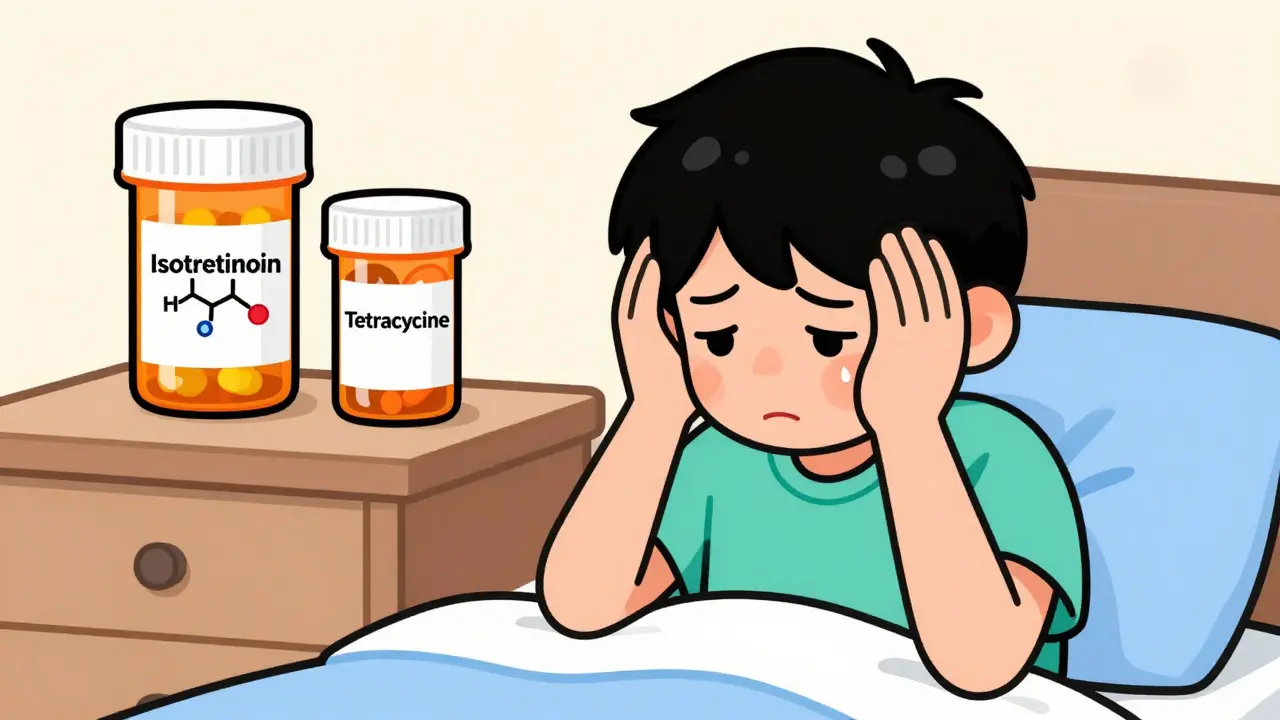
Imagine taking a pill to clear up your skin, only to end up with a blinding headache and blurred vision that feels like a stroke. It sounds like a nightmare, but for a small number of people, this is the reality of combining certain acne medications. When Isotretinoin is taken alongside Tetracyclines, it can trigger a dangerous spike in brain pressure. This isn't just a mild side effect; it's a medical emergency that can lead to permanent blindness if ignored.
The core problem is a rare but severe condition called Pseudotumor Cerebri (PTC), also known as idiopathic intracranial hypertension. Despite the name, there is no actual "tumor." Instead, the pressure of the fluid surrounding your brain and spinal cord builds up to dangerous levels. While both drugs can cause this on their own, taking them together creates a synergistic effect-meaning the risk doesn't just double; it multiplies.
What Exactly is Pseudotumor Cerebri?
Think of your brain as being cushioned by cerebrospinal fluid (CSF). In a healthy system, this fluid is produced and absorbed at a steady rate. Pseudotumor Cerebri occurs when that balance is disrupted, and the fluid builds up. Because your skull is a hard container, there is nowhere for the extra pressure to go, so it pushes against the brain and the optic nerves.
The warning signs often start subtly but escalate quickly. You might experience severe, persistent headaches that don't respond to over-the-counter painkillers. Many patients also report pulsatile tinnitus-a rhythmic thumping or whooshing sound in the ears that matches their heartbeat. The most critical danger, however, is visual disturbance. As the pressure pushes on the optic nerve (papilledema), you may see blind spots or experience temporary "blackouts" in your vision. If the pressure isn't relieved, the nerve can be permanently damaged, leading to total vision loss.
The Dangerous Duo: How These Drugs Interact
To understand why this happens, we have to look at the chemistry. Isotretinoin (found in brands like Claravis and Amnesteem) is a powerful retinoid used for severe, nodular acne. It is highly lipophilic, meaning it dissolves easily in fats and can cross the blood-brain barrier. On the other side, we have Tetracyclines-a class of antibiotics that includes Doxycycline and Minocycline.
While it's still not 100% clear why they clash, recent research in the Journal of Investigative Dermatology suggests the combination upregulates aquaporin-4 in astrocytes. In plain English: it changes how water moves in the brain, likely increasing the production or decreasing the absorption of CSF. While a tiny fraction of people (roughly 0.1%) might get PTC from doxycycline alone, adding isotretinoin into the mix makes the reaction far more likely and severe.
| Treatment Type | Estimated Risk Level | Primary Danger |
|---|---|---|
| Tetracycline Monotherapy | Low (~1 case per 1,000 patient-years) | Mild to moderate pressure increase |
| Isotretinoin Monotherapy | Very Low (0.02-0.1% of users) | Rare isolated occurrences |
| Combined Therapy | High (Estimated 10-fold increase) | Rapid onset, potential permanent blindness |

Real-World Consequences and Clinical Evidence
This isn't just theoretical. Since the early 90s, dozens of case reports have documented this interaction. One harrowing example from the Journal of Neuro-Ophthalmology describes a 16-year-old girl who took doxycycline and isotretinoin for just 18 days. By the time the medications were stopped, she was left with permanent visual field defects. The speed at which this can happen is terrifying-some patients report vision changes after only 10 days of combined therapy.
Even with strict FDA warnings issued back in 1998, mistakes still happen. A study from Loyola University Medical Center found that nearly 4% of isotretinoin prescriptions were co-prescribed with tetracyclines within a 30-day window. Alarmingly, this happened more often in teenagers (ages 12-17) than in adults, likely because these patients often switch medications quickly as they move from a "standard" antibiotic approach to a more aggressive retinoid treatment.
How to Avoid the Interaction: Safety Protocols
Because the risk is so high, the American Academy of Dermatology (AAD) and the European Academy of Dermatology and Venereology (EADV) treat this as an absolute contraindication. That means: do not do it. There is no "safe dose" or "short window" where this combination is acceptable.
If you are switching from a tetracycline antibiotic to isotretinoin, you cannot simply start the new drug the day after the old one ends. Your body needs a "washout period" to clear the antibiotics from your system. While some doctors suggest a one-week gap, more conservative institutions, like the Mayo Clinic, recommend a full two-week interval. This ensures the antibiotic is completely gone before the retinoid begins affecting your brain's fluid dynamics.
Modern medicine is fighting this through technology. Many hospitals now use electronic health record systems like Epic or Cerner that trigger a "hard stop." If a doctor tries to prescribe both, the computer literally prevents the order from going through. This has helped drop co-prescription rates significantly in some clinics, moving from around 3.7% down to less than 0.5%.

Safe Alternatives for Inflammatory Acne
If your acne is too severe for just one medication, but you can't use tetracyclines with isotretinoin, what's left? Dermatologists are increasingly moving toward non-antibiotic anti-inflammatories. For instance, dapsone gel has seen a surge in use because it provides the anti-inflammatory benefits needed to treat acne without the risk of increasing intracranial pressure.
Another shift is the move toward isotretinoin monotherapy. Instead of trying to "bridge" the gap with antibiotics, doctors are starting the retinoid treatment sooner. This not only avoids the PTC risk but often leads to better long-term results since the patient isn't cycling through multiple different classes of drugs that can cause antibiotic resistance.
What are the first signs of Pseudotumor Cerebri?
The most common early signs are severe, "pressure-like" headaches, a whooshing sound in the ears (pulsatile tinnitus), and brief episodes of blurred or lost vision, especially when changing positions. If you experience these while on acne medication, seek immediate medical attention.
Which antibiotics specifically are dangerous with isotretinoin?
Any antibiotic in the tetracycline class is risky. This includes common names like doxycycline, minocycline, tetracycline, and sarecycline. Always double-check your medication list with your pharmacist.
Is there a safe way to take both if my acne is very severe?
No. Major dermatology guidelines from the AAD and EADV state that this combination is an absolute contraindication. The risk of permanent vision loss outweighs the potential benefits of combined therapy.
How long should I wait after stopping doxycycline before starting Accutane/Isotretinoin?
While a one-week washout period is often cited, many experts and top medical centers recommend waiting at least two weeks to ensure the antibiotic is completely cleared from your system.
Can this happen if I use a topical tetracycline cream?
The risk is primarily associated with systemic (oral) medications. However, you should always disclose all topical treatments to your dermatologist to ensure there are no other conflicting interactions.
Next Steps for Patients and Caregivers
If you are currently taking a tetracycline antibiotic and your doctor suggests starting isotretinoin, your first step should be to confirm the washout period. Ask your provider: "Exactly how many days must I be off the antibiotic before I take the first dose of the retinoid?"
For those already on the combination and experiencing headaches, do not wait for your next appointment. Go to an urgent care center or emergency room and specifically tell them you are taking both a tetracycline and a retinoid. This information is vital because a standard CT scan might look normal, but a neurologist needs to check for papilledema (swelling of the optic disc) and potentially perform a lumbar puncture to relieve the pressure.