COPD Medication: What Works, What to Watch For, and How to Stay on Track
When you have chronic obstructive pulmonary disease, a long-term lung condition that makes breathing difficult due to damaged airways and lungs. Also known as COPD, it’s not just about coughing—it’s about staying alive and active with less oxygen. COPD medication doesn’t cure it, but it can keep you out of the hospital and breathing easier every day. The right mix of drugs can mean the difference between staying home and ending up in the ER.
The core of COPD treatment is bronchodilators, medications that relax the muscles around your airways so you can breathe more freely. These come in short-acting forms for quick relief when you’re wheezing, and long-acting ones you take daily to prevent flare-ups. Many people use them through inhalers—some with a single drug, others with two or three combined. You might hear names like salmeterol, formoterol, or tiotropium. They’re not flashy, but they’re the backbone of daily control.
Then there’s inhaled steroids, anti-inflammatory drugs that reduce swelling in the airways, often paired with bronchodilators for people with frequent flare-ups. These aren’t for everyone—only if you’ve had two or more exacerbations in a year. Too much steroid can raise your risk of oral thrush or pneumonia, which is why doctors don’t hand them out like candy. And if you’re on long-term oral steroids? That’s a red flag. Those come with serious side effects: bone loss, weight gain, high blood sugar. They’re a last resort, not a first choice.
What’s missing from most people’s routine? Proper inhaler technique. Studies show over 80% of COPD patients don’t use their inhalers right. If the medicine doesn’t reach your lungs, it’s just expensive air. That’s why many posts here focus on how to use devices correctly, how to clean them, and how to tell if you’re getting the full dose. It’s not about willpower—it’s about mechanics.
And then there’s the hidden problem: depression. People with COPD are twice as likely to feel hopeless. When you’re out of breath just walking to the bathroom, it’s hard to care about taking pills. That’s why one of our top posts digs into how depression breaks medication adherence—and what to do about it. If you’re skipping doses because you’re tired of feeling bad, you’re not weak. You’re human. And there are tools to help.
You’ll also find posts about drug interactions. Many people with COPD take blood thinners, diuretics, or heart meds. Mixing those with COPD drugs can mess with your electrolytes, raise your blood pressure, or increase bleeding risk. One article breaks down how common combinations like diuretics and inhaled beta-agonists can drain your potassium. Another shows how fish oil and aspirin might add up when you’re already on a blood thinner.
And if you’ve ever wondered why your generic COPD inhaler suddenly costs more or isn’t working the same? There’s a whole section on why generic drug shortages happen—and how manufacturing issues in just two countries can leave you without your daily medicine. It’s not random. It’s broken economics.
What you won’t find here is fluff. No vague advice like "stay active" or "eat healthy"—though those help. Instead, you’ll get real, practical info: how to read your inhaler’s dose counter, when to ask for a spacer, what to do if your fingers shake too much to press the inhaler, and how to track your symptoms so your doctor doesn’t guess what’s wrong.
Below are real stories, real data, and real fixes from people who’ve been where you are. Whether you’re newly diagnosed or have been managing COPD for years, you’ll find something that helps you breathe easier—not just today, but tomorrow too.
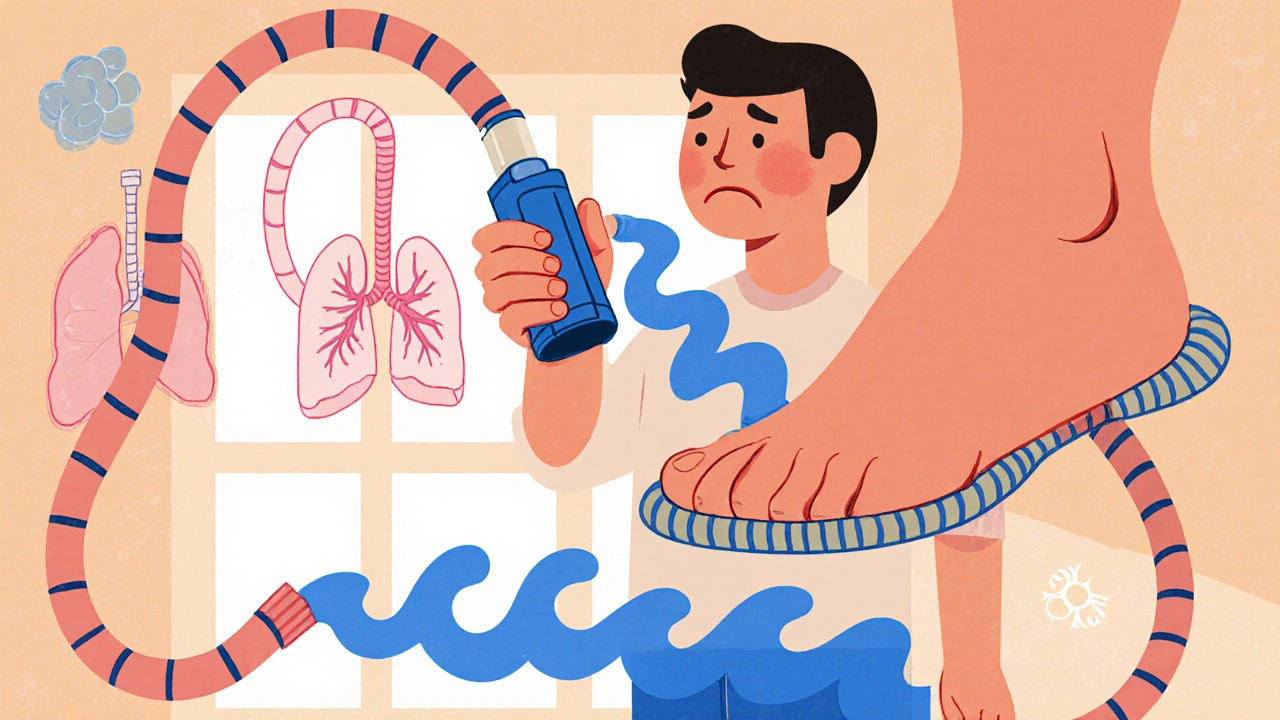
Bronchodilators and Corticosteroids: How Respiratory Medications Work
Bronchodilators open airways for quick relief; corticosteroids reduce inflammation for long-term control. Learn how they work together, why timing matters, and how to use them safely to manage asthma and COPD.
Recent-posts

Budecort Inhaler vs. Top Asthma Inhaler Alternatives - Full Comparison

Fexofenadine and Anxiety: Is there a Connection?

Endometriosis and Weight Gain: Causes and Solutions

Economic Impact of Patent Expiration: When Drug Prices Drop