

By the end of 2025, over 270 generic drugs were still in short supply across the U.S. - some of them life-saving injections, antibiotics, and chemotherapy agents. These aren’t random glitches. They’re the result of a broken system built on thin margins, overseas dependency, and fragile manufacturing. If you’ve ever waited weeks for a basic IV fluid or been handed a different cancer drug because the original wasn’t available, you’ve seen this system fail firsthand.
Why Generic Drugs Are the First to Go Missing
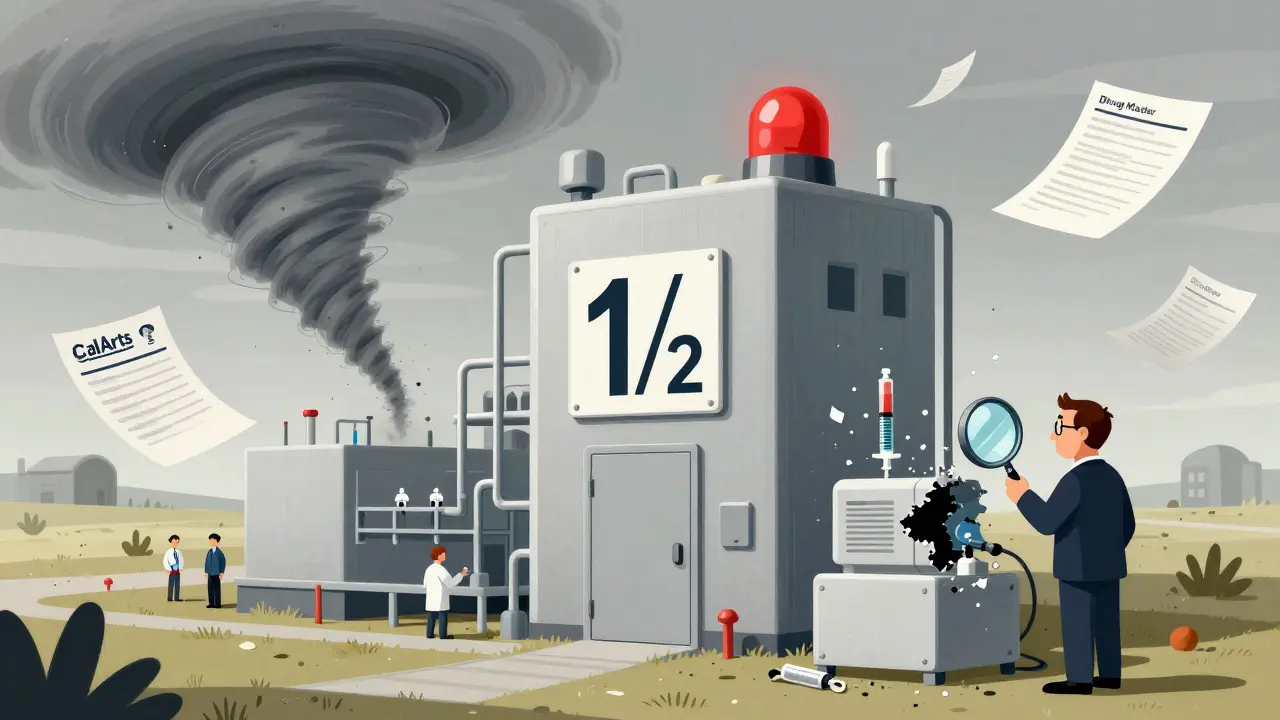
Generic drugs make up 90% of all prescriptions filled in the U.S., but they account for just 13% of total drug spending. That’s because they’re cheap - often under $5 per dose. And that’s exactly the problem. Manufacturers can’t afford to stockpile inventory, upgrade equipment, or diversify suppliers when profit margins are razor-thin. When a factory in India has a quality issue or a storm knocks out a plant in Kentucky, there’s no financial cushion to keep production going. Brand-name drugmakers have billions in revenue to absorb these shocks. Generic makers don’t.Sterile injectables - things like epinephrine, heparin, IV saline, and chemotherapy drugs - are hit hardest. Why? Because making them requires clean rooms, specialized machinery, and weeks of testing. One FDA violation can shut down a whole line for months. In 2023, a tornado damaged a Pfizer facility, cutting off 15 essential medications. In 2024, a quality failure at an Indian plant halted cisplatin production nationwide. Patients with cancer had to delay treatment. Hospitals rationed doses. Nurses spent hours tracking down alternatives.
Where the Ingredients Come From - and Why It’s Dangerous
Less than 30% of the active pharmaceutical ingredients (APIs) used in U.S. drugs are made here. About 40% come from China. Another big chunk comes from India. These countries produce APIs at a fraction of the cost. But that cost advantage comes with risk. The FDA has documented years of inconsistent inspections and unreliable manufacturing practices from some overseas suppliers. Many companies avoid submitting Drug Master Files (DMFs) for Chinese facilities because they fear quality failures will trigger recalls or shutdowns.It’s not just about geography - it’s about concentration. For many older generic drugs, there are only one or two manufacturers left. If one shuts down, there’s no backup. The USP 2025 Drug Shortage Report showed that 60% of active shortages involved drugs made by just one company. That’s a single point of failure in a system that’s supposed to be reliable.
How the System Got This Way
This didn’t happen overnight. Over the past 30 years, U.S. drugmakers shifted production overseas to cut costs. Regulators didn’t keep pace with inspections. Congress didn’t enforce rules that would have required buffer stocks or diversified sourcing. The result? A supply chain optimized for low prices, not resilience.The pandemic didn’t cause this crisis - it exposed it. When global shipping slowed and factories closed, shortages spiked. But even before 2020, the FDA was already tracking over 300 drugs at risk. In Q1 2024, the number hit 323 - the highest ever recorded. Hospitals reported spending 20 to 30% of pharmacists’ time just managing shortages: finding substitutes, compounding meds, or calling other facilities to borrow stock. One pharmacist told Pharmacy Times, “It’s not just inconvenient. It’s dangerous.”
Who Gets Hurt the Most
It’s not just patients who suffer. Doctors and nurses face impossible choices. A patient with sepsis needs antibiotics - but the only available version has a different dosing schedule. A cancer patient’s treatment plan gets rewritten because the preferred chemo drug is out of stock. Elderly patients on IV fluids for dehydration are switched to oral versions that don’t work as well. Internal medicine specialists say shortages are now part of daily practice, not an emergency.And it’s not just about availability. When a drug is scarce, prices spike. Hospitals pay more for alternatives. Insurance companies raise copays. Patients skip doses or go without. The Association of Accessible Medicines found that some generic drugs saw price increases of over 500% during shortages - even though they’re supposed to be low-cost.
Why Tariffs Won’t Fix This
Some lawmakers have pushed for tariffs on imported APIs - up to 200% - to force manufacturing back to the U.S. But experts warn this would make things worse. Tariffs raise the cost of APIs, which raises the cost of generic drugs. Manufacturers who already operate on pennies per dose may quit the market entirely. That means even fewer suppliers. Fewer suppliers mean more shortages.The CSIS analysis found that imposing tariffs could trigger “higher costs, delayed treatment, and increased shortages.” It’s like trying to fix a leaky roof by removing the shingles. The problem isn’t that drugs are made overseas - it’s that we have no safety net when those overseas sources fail.
What’s Actually Being Done
There are proposals on the table. S.2062, introduced in late 2025, calls for mandatory six-month reserves of critical generic drugs in the Strategic National Stockpile. The American Hospital Association supports this. So does the American Society of Health-System Pharmacists. But funding hasn’t passed. Federal agencies like the FDA are understaffed. Budget cuts have reduced domestic inspections while increasing pressure on foreign facilities - creating gaps in oversight.Some companies are trying to build domestic capacity. But rebuilding a single sterile injectable plant takes 5 to 7 years and $2 billion to $3 billion. Few private investors will risk that on a product that sells for $3 a vial. Public-private partnerships are being discussed, but progress is slow. Transparency efforts - like requiring labels that show where APIs come from - are also being considered. But without financial incentives, manufacturers won’t volunteer that information.
What Needs to Change
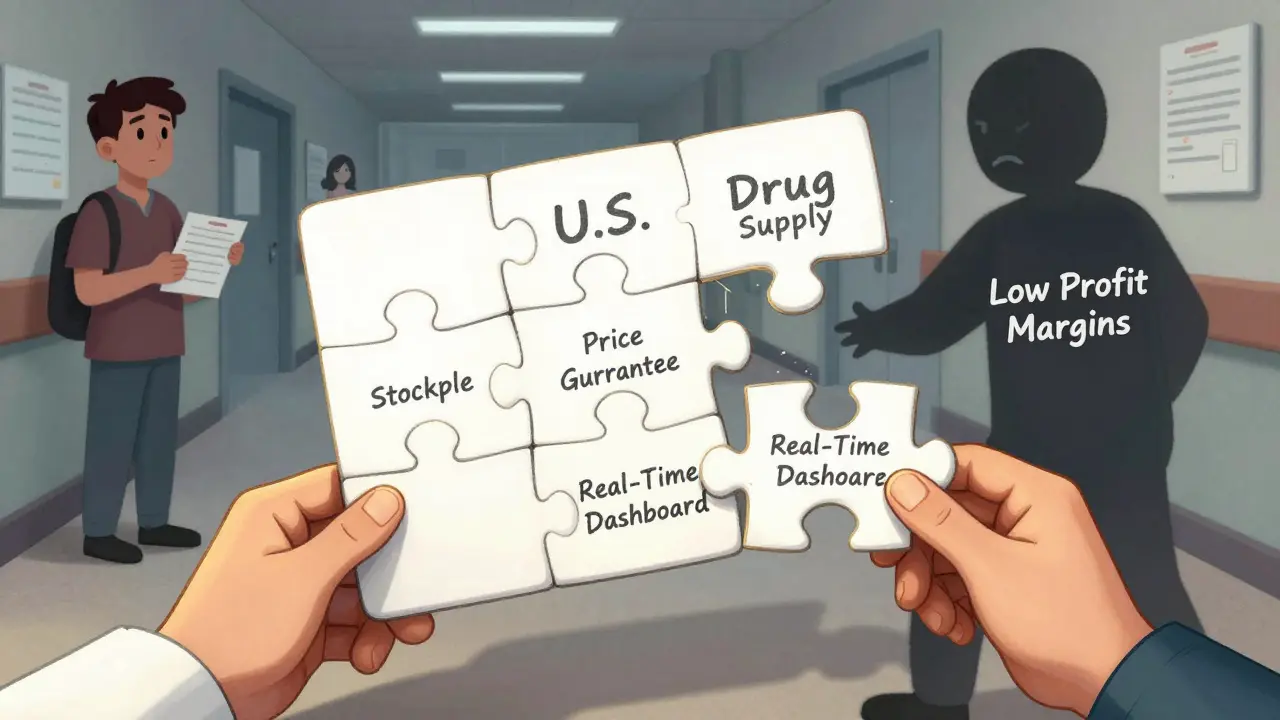
There’s no silver bullet. But three things would help right away:- Minimum stock requirements - Require manufacturers to keep 3 to 6 months of inventory for critical generics. Not optional. Not voluntary. Mandatory.
- Price guarantees - Allow slightly higher prices for drugs that are essential, hard to make, or have only one supplier. Let manufacturers earn enough to invest in quality and backups.
- Shared monitoring - Create a real-time national dashboard, updated weekly, showing which drugs are running low, where shortages are happening, and what alternatives are available. Make it public. Make it actionable.
Right now, hospitals learn about shortages through scattered emails and FDA lists. That’s not a system. That’s guesswork.
The Bottom Line
Generic drugs aren’t “cheap alternatives.” They’re the backbone of American healthcare. Millions rely on them every day - for blood pressure, diabetes, infections, cancer, and heart conditions. If we treat them like disposable commodities, we’ll keep seeing the same failures. The next shortage won’t be an accident. It’ll be predictable. And it’ll hurt someone who didn’t sign up for that risk.Fixing this isn’t about bringing all manufacturing home. It’s about making the system smarter - with better incentives, better oversight, and better planning. Until then, the next drug that disappears might be the one you or someone you love needs to stay alive.
Why are generic drug shortages so common now?
Generic drug shortages are common because manufacturers operate on extremely thin profit margins - often just pennies per dose. This makes it hard to invest in backup suppliers, quality upgrades, or inventory buffers. Most production is concentrated in just a few overseas factories, and when one fails - due to quality issues, natural disasters, or regulatory shutdowns - there’s no backup. The system was built for low cost, not resilience.
Which generic drugs are most at risk of shortage?
Sterile injectables are the most vulnerable - things like IV saline, epinephrine, heparin, antibiotics, and chemotherapy drugs like cisplatin. These require complex, aseptic manufacturing that’s expensive and hard to scale. Oral pills are less risky because they’re easier and cheaper to produce. But even common generics like metformin or amoxicillin have faced shortages when manufacturing was consolidated to just one or two plants.
Is the U.S. government doing anything to fix this?
There are proposals, like S.2062, which calls for a six-month reserve of critical generics in the Strategic National Stockpile. The FDA is also increasing inspections of foreign facilities. But federal agencies are underfunded and understaffed. There’s no coordinated national strategy yet. Progress is slow, and most solutions require funding and political will that haven’t materialized.
Could bringing drug manufacturing back to the U.S. solve the problem?
Building domestic capacity would help, but it’s not a quick fix. It would take 5 to 7 years and $20-30 billion to rebuild enough infrastructure to replace current imports. Even then, without price reforms or inventory requirements, new U.S. manufacturers might still exit the market if profits stay too low. Onshoring alone won’t fix the economic model driving shortages.
What can patients do if their generic drug is out of stock?
Talk to your pharmacist and doctor immediately. Pharmacists can often find alternative brands or formulations. Some hospitals have emergency stockpiles. Never stop a critical medication without medical advice - even if it’s hard to find. Ask if a therapeutic substitute is safe for your condition. In some cases, compounding pharmacies can make versions of unavailable drugs, but this isn’t always covered by insurance.



david jackson
December 25, 2025 AT 14:47Let me tell you, I’ve seen this up close - my mom’s on chemo, and last year we went six weeks without her IV saline. Six weeks. Hospitals were calling each other like it was a scavenger hunt. Nurses were crying in the break room. And the worst part? It wasn’t even a pandemic. It was just… business as usual. We treat life-saving drugs like they’re toilet paper on sale - buy cheap, use fast, don’t think about what happens when the shelf is empty. The system isn’t broken. It was designed this way. Thin margins. No buffers. One factory in India shuts down, and suddenly people are dying because we outsourced our humanity for a few cents per pill. This isn’t capitalism. This is negligence with a balance sheet.
Prasanthi Kontemukkala
December 27, 2025 AT 05:12I work in a pharma lab in Hyderabad, and I see what goes into these vials every day. We’re not cutting corners because we’re evil - we’re cutting corners because the orders are tiny, the deadlines are insane, and the price we’re paid won’t even cover our electricity bill. The FDA comes, inspects, flags something minor, and suddenly our whole line is frozen for months. No one here gets paid during that time. No one in the U.S. realizes that when they complain about a shortage, they’re blaming the people who are just trying to survive in a system that eats its own. We want to make quality. We just need to be paid enough to do it without losing our homes.
Bryan Woods
December 28, 2025 AT 19:27The structural issues here are undeniable. The market structure incentivizes consolidation, and consolidation creates single points of failure. The FDA’s inspection regime is under-resourced relative to the scale of global manufacturing. The lack of price elasticity for essential generics means manufacturers have no margin for risk mitigation. This is textbook supply chain vulnerability amplified by regulatory and economic misalignment. Solutions must address all three: pricing, oversight, and inventory policy. Incrementalism won’t cut it.
Ryan Cheng
December 30, 2025 AT 09:49My cousin’s a nurse in Ohio. She told me last week she had to mix her own IV fluids because the hospital ran out of pre-made saline. She’s not a pharmacist. She’s not trained for this. But she did it anyway - because the patient was dehydrated and the alternative was sending them home to die. We’re asking frontline workers to be chemists, logistics coordinators, and emotional support specialists - all because we decided cheap is better than safe. We don’t need tariffs. We need to pay a little more for drugs that keep people alive. It’s not that hard.
wendy parrales fong
January 1, 2026 AT 01:17I just want everyone to pause for a second and think - who are we really hurting here? It’s not the CEOs. It’s not the investors. It’s the grandma who can’t get her blood pressure med. It’s the kid with asthma who needs albuterol. It’s the cancer patient whose treatment gets pushed back because the chemo was made in a factory that got shut down for a paperwork error. We’re not talking about luxury items here. We’re talking about people’s lives. And if we can’t fix this, then maybe we’re not as compassionate as we think we are.
Jeanette Jeffrey
January 1, 2026 AT 13:29Oh please. Let’s just bring all the manufacturing back to the U.S. and charge $500 for epinephrine. That’ll fix everything. 🙄 The real problem? People think healthcare should be cheap. It’s not. It’s expensive. Always has been. You want reliable drugs? Pay for it. Stop acting like you’re entitled to life-saving medicine at Walmart prices. This isn’t a moral crisis. It’s a financial one. And nobody wants to admit that.
Zina Constantin
January 2, 2026 AT 13:24As someone who grew up in Nigeria and now lives in the U.S., I’ve seen both sides. In Lagos, we scramble for meds too - but at least there, people help each other. Neighbors share. Pharmacies barter. Here? We have the best technology, the most money, the most regulations - and we’re still letting people suffer because a vial costs 7 cents too much to stockpile. We’ve lost the human piece. We’re treating medicine like a spreadsheet, not a lifeline. We need to remember: behind every drug is a person who needs it to live.
Dan Alatepe
January 3, 2026 AT 21:18Bro. I swear. This is like watching a car crash in slow motion… and everyone’s just taking selfies. 😭 One factory in India sneezes and suddenly a whole country’s on hold for antibiotics. We’re not just failing - we’re failing with a smile and a 10% profit margin. And don’t even get me started on the FDA. They’re like a cop trying to stop a hurricane with a clipboard. We need a revolution. Not a policy paper. A real one. 🚨
Angela Spagnolo
January 5, 2026 AT 09:06I… I just… I work in a small clinic, and we had to tell a diabetic patient we couldn’t give her insulin because the batch was recalled, and the next one was 3 weeks out… and she cried… and I cried… and I didn’t know what to say… I mean… we have all this tech… and we can’t… can’t… keep up…? It’s not right… it’s not… it’s not…
Sarah Holmes
January 7, 2026 AT 01:36It is an absolute moral failure of epic proportions that we, as a society, have allowed this to continue. The commodification of human survival is not merely unethical - it is a violation of the most fundamental tenets of medical ethics. The fact that pharmaceutical corporations prioritize quarterly earnings over patient viability is not capitalism - it is corporate sadism. And those who defend this system are complicit in what can only be described as systemic homicide. I demand accountability. Not reform. Accountability.
Jay Ara
January 7, 2026 AT 21:22in india we make these drugs for pennies but we dont get paid enough to fix the machines or hire good staff. the us wants cheap but never pays for safety. its a loop. no one wins. the patients lose. the workers lose. even the companies lose in the long run. we need to fix the money flow not blame each other.
Michael Bond
January 9, 2026 AT 09:48Just pay more for the drugs. It’s that simple.