

When a medication changes the way your heart beats, it’s not always obvious. You might feel fine, but your ECG could be sending a silent alarm. QT prolongation is one of those hidden dangers - a delay in the heart’s electrical recovery that can trigger a life-threatening rhythm called torsades de pointes. It doesn’t happen often, but when it does, it can be fatal. And the worst part? Many of the drugs that cause it are common prescriptions you might never suspect.
What QT Prolongation Really Means
The QT interval on an ECG measures how long it takes your heart’s lower chambers to recharge after each beat. If that time stretches too long - usually past 500 milliseconds - your heart becomes electrically unstable. This isn’t just a number on a graph. It’s a warning sign that your heart could suddenly start quivering instead of pumping, leading to a chaotic rhythm called torsades de pointes. That rhythm can turn into ventricular fibrillation, where the heart stops pumping blood entirely.
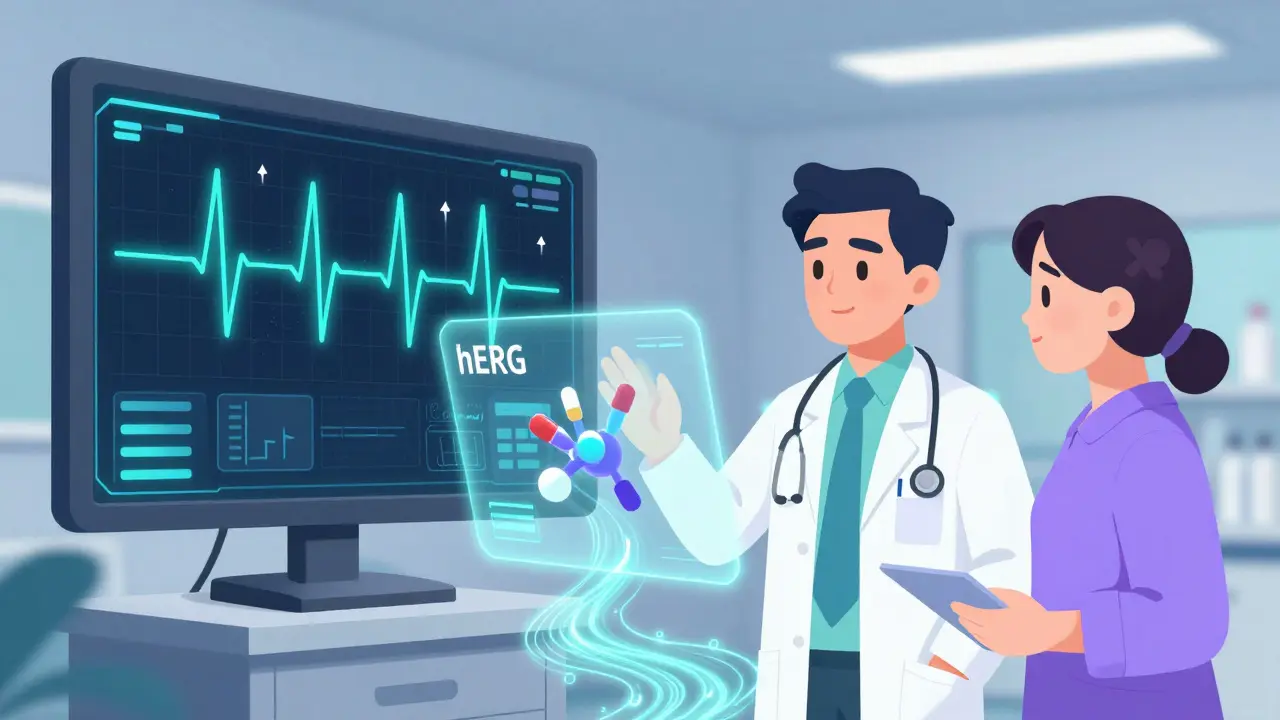
This isn’t rare. Back in 2013, the FDA found that 22% of the 205 drugs they reviewed caused measurable QT prolongation. By 2018, crediblemeds.org listed over 220 medications tied to this risk. The problem isn’t always the drug itself - it’s how it interacts with your body. Most of these drugs block a specific potassium channel called hERG. That channel helps reset your heart’s electrical charge. When it’s blocked, the reset takes longer. And if too many of those channels are blocked, your heart doesn’t recover fast enough.
Drugs That Carry the Highest Risk
Some medications are designed to slow down heart rhythms - like sotalol and dofetilide. These are antiarrhythmics, meant to treat irregular beats. But they’re also the most likely to cause torsades. Sotalol, for example, increases the risk of dangerous rhythms in 2% to 5% of patients. Amiodarone also prolongs QT, but its risk is lower - under 1% - because it affects multiple channels, not just one.
But the real surprise? Many of the most dangerous drugs aren’t heart meds at all.
- Antibiotics: Erythromycin and clarithromycin can stretch the QT interval by 15 to 25 milliseconds. Azithromycin carries a lower but still real risk.
- Antifungals: Fluconazole, especially at high doses, is linked to QT prolongation.
- Antipsychotics: Haloperidol and ziprasidone both carry black box warnings for sudden cardiac death. Ziprasidone’s label specifically warns of ventricular arrhythmias.
- Antiemetics: Ondansetron, commonly given for nausea after surgery or chemo, has been involved in over 40% of reported TdP cases in FDA data.
- Antidepressants: Citalopram’s risk is dose-dependent. The FDA capped it at 40 mg daily in 2011 - and 20 mg for people over 60 - because even standard doses could push QTc over 500 ms.
- Opioid replacement: Methadone is a major culprit. Doses above 100 mg daily significantly raise the risk. Many patients on methadone maintenance have QTc values above 470 ms, but with monitoring, TdP can be avoided.
It’s not just one drug. The real danger comes from stacking them. A 2020 analysis of 147 TdP cases found that 68% involved two or more QT-prolonging drugs. One case described a 65-year-old woman who got ondansetron and azithromycin for stomach flu - her QTc jumped from 440 ms to 530 ms in less than a day.
Who’s Most at Risk?
Not everyone who takes these drugs will have problems. But some people are far more vulnerable.
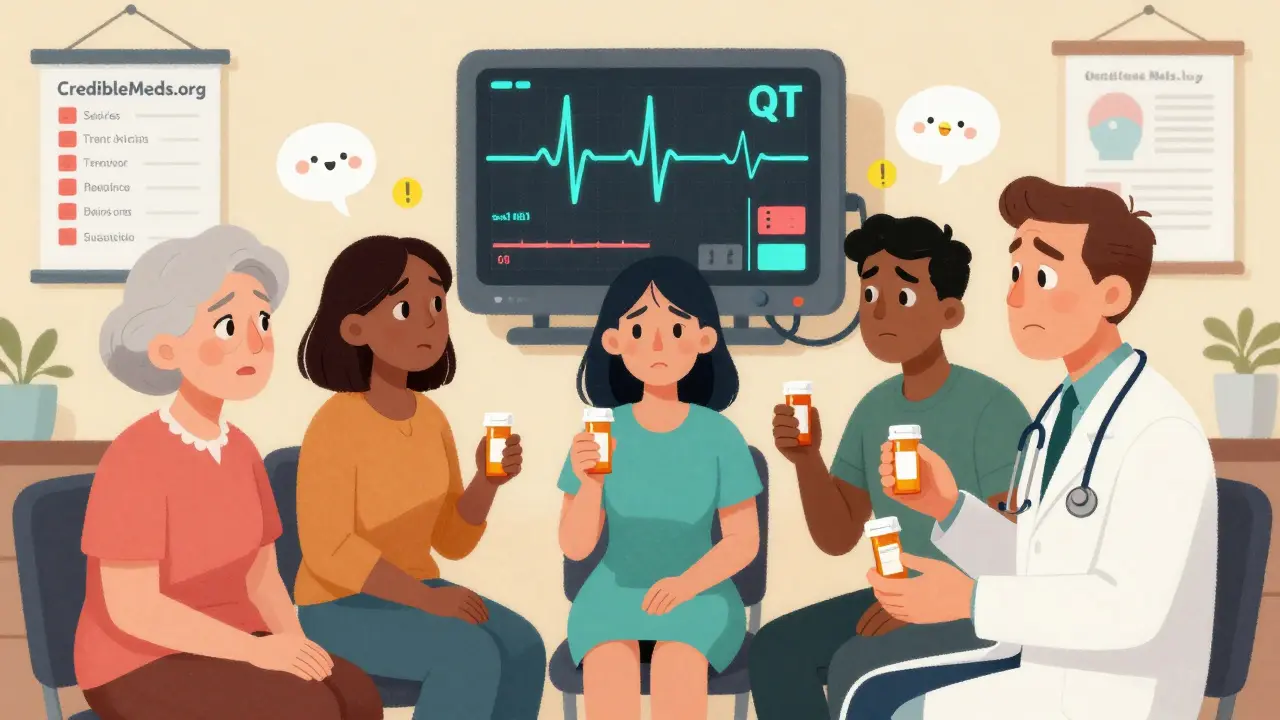
- Women: About 70% of documented TdP cases occur in women. Hormonal differences make their hearts more sensitive to potassium channel blockers. Postpartum women are especially at risk.
- Older adults: Age slows drug clearance. People over 65 are more likely to build up drug levels, especially with kidney or liver issues.
- People with low potassium or magnesium: Electrolyte imbalances make the heart even more prone to arrhythmias. A simple blood test can catch this.
- Those with heart disease: Structural problems like heart failure or prior heart attacks make the heart less able to handle electrical stress.
- People with genetic risk: About 30% of drug-induced TdP cases involve hidden genetic variants in the hERG channel. These people might never know they’re at risk - until they take a medication that triggers the problem.
How Doctors Spot and Manage the Risk
There’s no magic test to predict who will have a dangerous reaction. But there are clear steps to reduce the chance.
- Baseline ECG: Before starting a high-risk drug, get an ECG. This gives you a reference point. If your QTc is already over 450 ms, you’re already in the danger zone.
- Repeat ECG: Check again within 3 to 7 days after starting or increasing the dose. That’s when drug levels peak and QT prolongation is most likely to show up.
- Check electrolytes: Low potassium or magnesium? Correct them before starting the drug.
- Review all meds: Ask your doctor or pharmacist: “Is this drug on the crediblemeds.org list? Could it interact with anything else I’m taking?”
- Know the red flags: Dizziness, fainting, palpitations - especially after starting a new drug - could be your heart’s way of screaming for help.
The European Society of Cardiology and Medsafe (New Zealand’s drug safety agency) both recommend stopping the drug if QTc exceeds 500 ms or increases by more than 60 ms from baseline - unless there’s no other option.
The Bigger Picture: How Drug Development Is Changing
For years, drug makers only had to test if a new medication prolonged the QT interval. That’s it. But in 2013, the FDA, EMA, and Japan’s PMDA launched CiPA - the Comprehensive in vitro Proarrhythmia Assay. This new system doesn’t just measure QT. It tests how a drug affects multiple heart channels, uses computer models to simulate heart rhythms, and looks for signs of early arrhythmias.
The result? More drugs are being dropped in development. Between 2016 and 2022, 22 drugs were abandoned because of proarrhythmia risk. Each one cost over $2 billion to develop. That’s a big shift. Companies now know that even if a drug works perfectly, if it messes with the heart’s rhythm, it won’t get approved.
And it’s not just new drugs. Even approved ones get re-evaluated. In November 2023, crediblemeds.org added retatrutide - a new obesity drug - to its list after phase 2 trials showed an 8.2 ms QTc increase. The FDA’s 2024 draft guidance makes CiPA testing mandatory for all new drugs starting in January 2025.
What You Can Do
If you’re on any of these drugs, don’t panic. Most people won’t have a problem. But you should be informed.
- Ask your doctor: “Could this drug affect my heart rhythm?”
- Make sure your ECG was checked before starting, especially if you’re over 60, female, or on multiple medications.
- Know your electrolyte levels. A simple blood test can rule out low potassium or magnesium.
- Don’t mix QT-prolonging drugs unless absolutely necessary. Even over-the-counter meds like certain antihistamines or herbal supplements can add to the risk.
- If you feel lightheaded, have palpitations, or pass out after starting a new drug - get an ECG immediately.
QT prolongation isn’t something you can feel. But it’s something you can manage - with the right questions, the right tests, and the right team watching your back.
How Technology Is Helping
Hospitals that use electronic health records with built-in QT risk alerts have cut inappropriate prescribing by 58%. These systems flag when a patient is getting two high-risk drugs together, or when their QTc is rising too fast. They don’t replace judgment - they support it.
And in 2024, a new AI tool in Circulation: Arrhythmia and Electrophysiology showed it could predict TdP risk with 89% accuracy by analyzing tiny details in the ECG waveform - things even experienced cardiologists might miss. This isn’t science fiction. It’s coming to clinics soon.
The bottom line? We’re getting better at spotting this risk. But it still requires vigilance - from doctors, pharmacists, and patients alike.
Can a normal ECG mean I’m safe from QT prolongation?
No. A normal ECG today doesn’t guarantee safety tomorrow. QT prolongation can develop after starting a drug, especially after a dose increase or if you develop low potassium. That’s why follow-up ECGs within 3-7 days are critical for high-risk medications.
Is QT prolongation always dangerous?
Not always. Many people have slightly prolonged QT without any symptoms or events. The real danger comes when QTc exceeds 500 ms or increases by more than 60 ms from baseline - especially with other risk factors like female sex, low electrolytes, or drug combinations. The risk is low overall, but the consequences are severe.
Can I still take ondansetron if I’m on an antidepressant?
It’s risky. Ondansetron and antidepressants like citalopram or escitalopram both prolong QT. Combining them increases the chance of torsades de pointes. If you need anti-nausea meds, ask about alternatives like metoclopramide (with caution) or non-drug options. Always check your QTc before combining these drugs.
Does caffeine or alcohol affect QT prolongation?
Caffeine doesn’t directly prolong QT, but it can trigger palpitations that make it harder to read the ECG. Alcohol, especially in large amounts or during withdrawal, can cause electrolyte shifts and increase arrhythmia risk. Both can worsen the situation if you’re already on a QT-prolonging drug.
Are there any medications that are safe for people with long QT?
Yes. Many common drugs don’t affect QT - like amoxicillin, ibuprofen, or most statins. But you need to check each one. Crediblemeds.org is the most trusted source. Always verify before starting a new medication, even if it’s over-the-counter.



Alex Curran
December 20, 2025 AT 07:50Also methadone patients get monitored weekly anyway. If your QTc is under 500 and you're not on 5 other QT drugs, you're fine.
Janelle Moore
December 21, 2025 AT 01:01Laura Hamill
December 22, 2025 AT 13:42pascal pantel
December 23, 2025 AT 13:41Also, 22% of reviewed drugs? That's because they tested EVERYTHING. Even antihistamines. That's not a risk profile, that's a screening artifact.
Allison Pannabekcer
December 23, 2025 AT 17:27Also, if you're a woman over 60 or on methadone, you're already being monitored. This isn't a secret. It's just not talked about in casual chats.
Aboobakar Muhammedali
December 25, 2025 AT 10:40Also my cousin took azithromycin and felt dizzy. She stopped it and went to clinic. They checked her QT. It was normal. She was fine. Don't panic. Be smart.
Gloria Parraz
December 26, 2025 AT 02:33Dominic Suyo
December 26, 2025 AT 23:19Meanwhile, we're denying patients effective treatments because of a phantom risk. This isn't patient safety. It's liability avoidance dressed in white coats.
William Storrs
December 28, 2025 AT 09:19And if your doctor brushes you off? Find a new one. You deserve someone who listens. Your heart is worth it.
Sahil jassy
December 30, 2025 AT 09:15Also avoid alcohol. It makes it worse. I learned that the hard way.
Chris Clark
December 31, 2025 AT 11:21Guillaume VanderEst
December 31, 2025 AT 19:20James Stearns
January 2, 2026 AT 03:41Nina Stacey
January 3, 2026 AT 00:08Edington Renwick
January 3, 2026 AT 06:30