

If you’re taking several medications for chronic conditions like diabetes, high blood pressure, or asthma, you might have felt overwhelmed. Maybe you’ve forgotten a pill, worried about side effects, or wondered if one drug is making another less effective. You’re not alone. That’s where Medication Therapy Management (MTM) comes in - a free, personalized service designed to help you take your meds safely and correctly.
What Exactly Is Medication Therapy Management?
MTM isn’t just about getting your prescription filled. It’s a conversation - usually with a pharmacist - where you sit down (in person or over video call) and go through every single medication you take. That includes prescriptions, over-the-counter pills, vitamins, and even herbal supplements. The goal? To make sure nothing’s conflicting, nothing’s wasted, and you actually understand why you’re taking each one.
This service is built into Medicare Part D prescription plans. If you qualify, you don’t pay extra. It’s covered as part of your plan. The pharmacist doesn’t sell you drugs - they help you use them better. Think of them as your medication coach.
Who Qualifies for MTM Services?
You’re likely eligible if you meet all three of these criteria:
- You have three or more chronic conditions - like heart disease, COPD, depression, or kidney disease.
- You’re taking eight or more Medicare Part D-covered medications.
- Your total annual drug costs are over $4,430 (this number changes slightly each year).
Most people who qualify get a letter from their Medicare plan inviting them to sign up. If you haven’t heard anything but think you fit this profile, call your plan directly. Don’t wait - you might be missing out on free help that could prevent hospital visits or dangerous side effects.
What Happens During a Comprehensive Medication Review?
This is the heart of MTM. It’s called a Comprehensive Medication Review (CMR), and it lasts about 30 minutes. Here’s what you can expect:
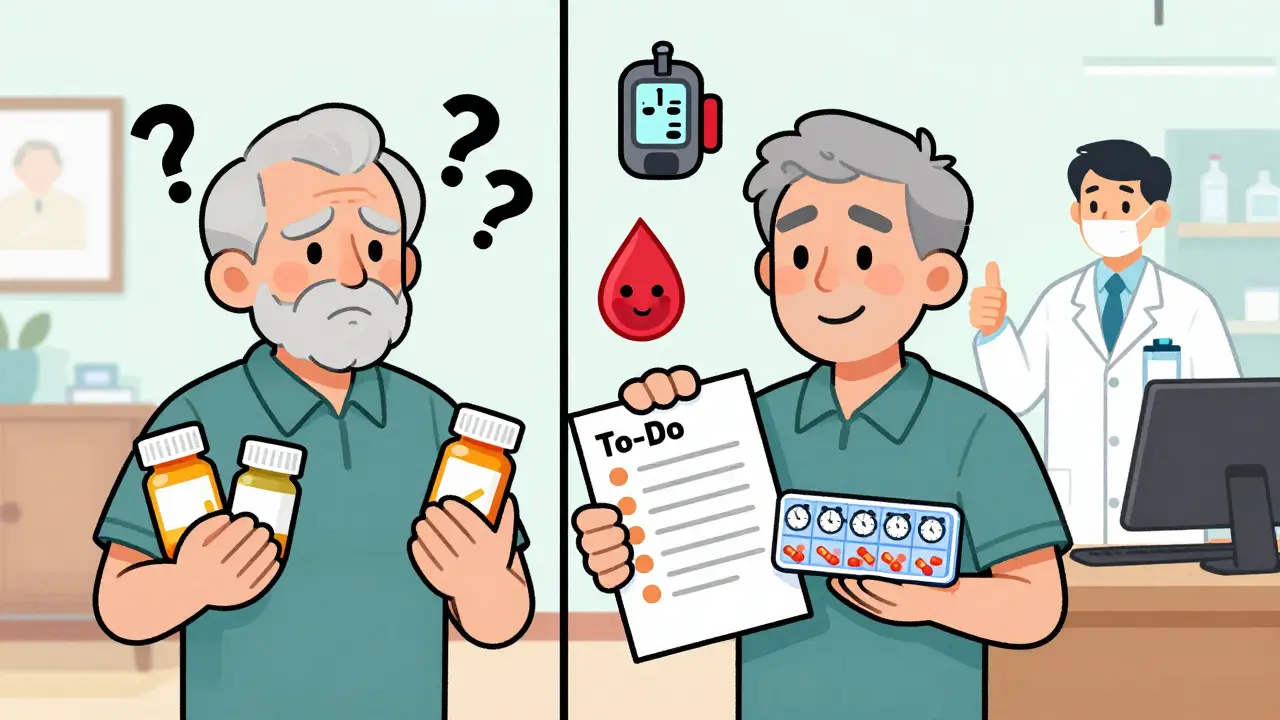
- You’ll get a list of all your medications - every pill, patch, inhaler, and injection - written out clearly. This is your Personal Medication Record (PMR).
- The pharmacist will ask you how you’re actually taking them. Are you skipping doses? Mixing them with alcohol? Forgetting because the bottles look too similar?
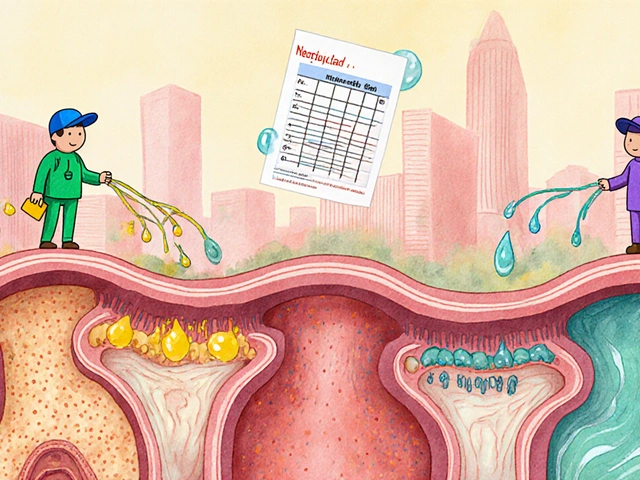
- They’ll check for dangerous interactions. For example, some blood pressure meds can cause kidney issues if taken with certain painkillers.
- You’ll talk about cost. Maybe there’s a generic version you’re not using, or a cheaper alternative that works just as well.
- You’ll get a To-Do list - things to follow up on with your doctor, like adjusting a dose or stopping a drug that’s no longer needed.
Afterward, you’ll get a printed copy of your PMR and To-Do list. Keep it in your wallet or phone. Bring it to every doctor visit. It’s your medication roadmap.
What About Follow-Ups?
The CMR happens once a year. But MTM doesn’t stop there. You’ll also get quarterly Targeted Medication Reviews (TMRs). These are shorter check-ins - usually by phone - focused on new problems. Maybe you started a new drug and feel dizzy. Or your blood sugar readings changed. The pharmacist will look into it, call your doctor if needed, and make sure you’re safe.
These aren’t sales calls. They’re safety checks. And they’re proactive. Most people don’t realize how many medication problems go unnoticed until something serious happens. MTM catches them before that.
Why Pharmacists? Why Not Just Talk to Your Doctor?
Doctors are busy. They see dozens of patients a day. They might not know every detail of your 12 medications. Pharmacists, on the other hand, are trained specifically in how drugs work - together, in your body, over time.
They know which drugs interact with grapefruit. They know which pills need to be taken on an empty stomach. They know which generics are just as good - and which aren’t. And they’re the only ones who see your full medication history across all prescribers, not just one doctor’s notes.
MTM is the only service where a healthcare provider sits down with you and asks: “What’s working? What’s not? What are you scared of?” That kind of attention is rare - and it’s free if you’re on Medicare Part D.
Can Family Members Help?
Yes. If you have trouble remembering your meds, hearing clearly, or speaking up in appointments, your caregiver - spouse, child, friend - can join the consultation. They can even attend on your behalf if you’re unable to participate. The pharmacist will talk to them just like they’re talking to you.
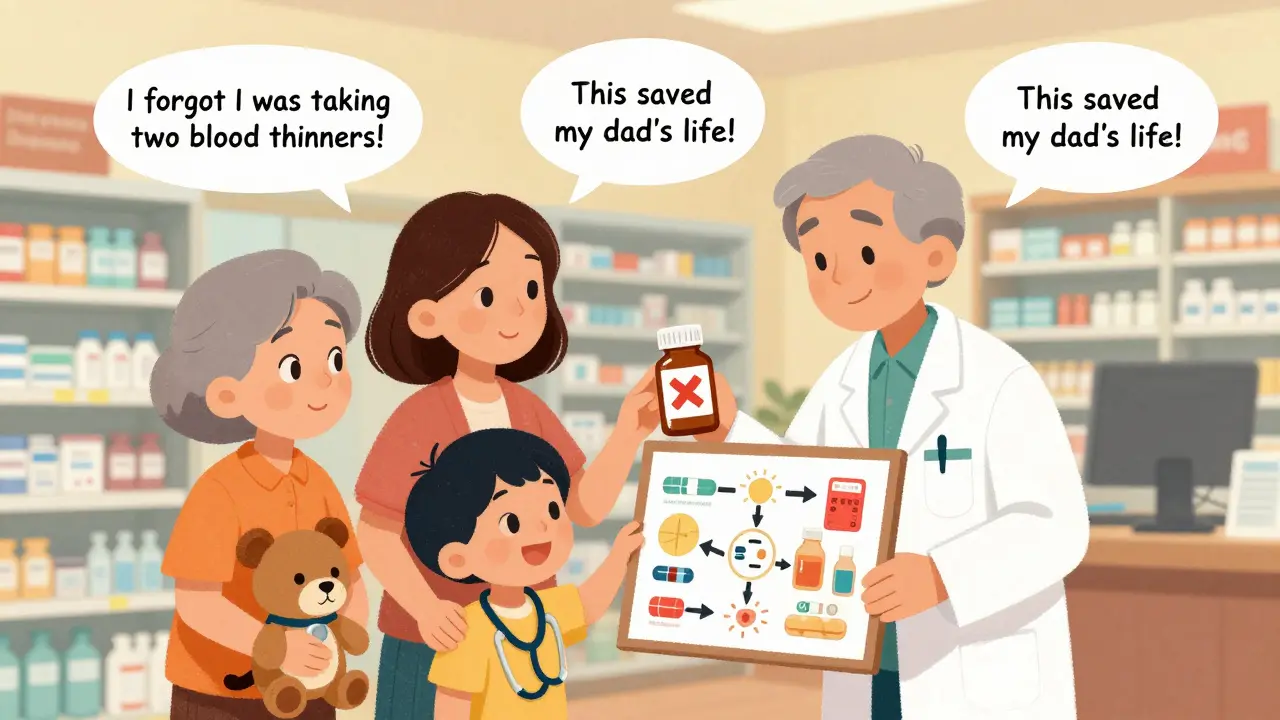
Many families tell us they didn’t realize how many pills their loved one was taking until they sat through the CMR. One woman found out her father was taking two different blood thinners at the same time - a dangerous mix. The pharmacist caught it, called his cardiologist, and changed the prescription. He avoided a stroke.
What If You’re Not on Medicare?
MTM started with Medicare Part D, but it’s spreading. Some private insurers, Medicaid programs like TennCare in Tennessee, and even some employer plans now offer similar services. Ask your pharmacy if they offer medication reviews. Some independent pharmacies offer them for free, even if you’re not on Medicare.
If you’re paying out of pocket, it’s worth it. A single hospital visit due to a medication error can cost thousands. MTM costs nothing - and it could save you more than money.
Real Benefits - Not Just Theory
Studies show people who use MTM:
- Take their meds correctly 20-30% more often.
- Save an average of $300-$500 a year on drugs by switching to cheaper generics.
- Have fewer ER visits and hospital stays.
- Feel more confident managing their health.
One patient in Birmingham told me she used to forget her diabetes meds until she started her MTM sessions. Now she uses a pill box with alarms set by her pharmacist. Her A1C dropped from 9.2 to 6.8 in six months. She didn’t change her diet. She just took her pills right.
How to Get Started
Step 1: Check your mailbox. If you’re on Medicare Part D, you should get an invitation letter.
Step 2: Call your plan’s MTM line. You can find the number on your plan’s website or your ID card.
Step 3: Schedule your CMR. Choose a time when you’re not rushed. Bring your meds - all of them - in a bag. Include vitamins, painkillers, and herbal teas.
Step 4: Ask questions. Don’t be shy. “Why am I taking this?” “Can I stop this one?” “Is there a cheaper option?”
Step 5: Keep your PMR and To-Do list. Update it every time your meds change. Share it with every new doctor.
Common Misconceptions
“MTM is just a sales pitch for new drugs.” False. Pharmacists aren’t paid to sell you anything. They’re paid to improve your outcomes.
“I don’t need it - I’ve been taking these pills for years.” That’s exactly why you need it. Long-term use increases the risk of side effects and interactions.
“My doctor already knows what I’m on.” Maybe. But they might not know about the ibuprofen you take daily for arthritis, or the melatonin you use for sleep. Pharmacists see the full picture.
Final Thought
Medications are powerful. But they’re not magic. They only work if you take them right - and if they’re safe for you. MTM is the missing piece for so many people juggling multiple prescriptions. It’s not complicated. It’s not expensive. And it’s not optional if you want to stay healthy.
Take 30 minutes. Talk to a pharmacist. Bring your pills. Ask questions. You might just save your life - or at least your wallet, your sleep, and your peace of mind.
Is Medication Therapy Management free?
Yes. If you’re eligible under Medicare Part D, MTM services - including the annual Comprehensive Medication Review and quarterly follow-ups - are offered at no extra cost. There are no copays, no hidden fees. It’s covered as part of your prescription drug plan.
Do I need to be sick to qualify for MTM?
No. You don’t need to be hospitalized or in crisis. MTM is for people managing chronic conditions like diabetes, high blood pressure, asthma, or depression - even if you feel fine. The service is designed to prevent problems before they happen, not just fix them after.
Can I get MTM if I’m not on Medicare?
Yes, but it depends. While MTM started with Medicare, some private insurers, Medicaid programs, and employer plans now offer similar services. Check with your pharmacy or insurer. Some independent pharmacies provide free medication reviews even for non-Medicare patients.
What if I don’t want to talk to a pharmacist?
You’re not required to participate. But if you’re eligible and skip it, you’re missing out on free, expert help that could prevent dangerous drug interactions, hospital visits, or unnecessary spending. Many patients say they wish they’d done it sooner.
How often do I need to do MTM?
You’ll get one Comprehensive Medication Review (CMR) per year. After that, you’ll receive quarterly Targeted Medication Reviews (TMRs) - shorter check-ins focused on new issues or changes in your meds. These are automatic if you’re eligible; you don’t need to request them.
Can MTM help me save money on my prescriptions?
Absolutely. Pharmacists look for cheaper alternatives - like generics, mail-order options, or manufacturer coupons. Many patients save $300-$500 a year just by switching to lower-cost versions of their meds. They’ll also flag if you’re paying for duplicates or unnecessary drugs.
What should I bring to my MTM appointment?
Bring all your medications - prescriptions, over-the-counter pills, vitamins, supplements, herbal teas, and even patches or inhalers. Also bring a list of your doctors and any recent lab results. The more info you give, the better they can help you.
Will my doctor be involved in MTM?
Yes. If the pharmacist finds a problem - like a dangerous interaction or a dose that’s too high - they’ll contact your doctor with a recommendation. You’ll be copied on the communication. You don’t have to go back to your doctor alone; the pharmacist helps bridge the gap.



Joni O
January 19, 2026 AT 06:39Just signed up for my CMR this week - brought my whole medicine cabinet. Pharmacist found I was doubling up on blood pressure meds I didn’t even know I was taking. I’m crying happy tears. This is the kind of care we deserve.
Tyler Myers
January 20, 2026 AT 01:39Medicare’s giving free advice now? Next they’ll be handing out gold watches and free cable. Wake up, sheeple. This is just the government’s way of tracking your meds so they can control your health later.
Dayanara Villafuerte
January 20, 2026 AT 06:09OMG YES. 🙌 I used to take 14 pills a day and felt like a walking pharmacy. My pharmacist sat with me for 45 mins, found 3 duplicates, got me generics that saved me $400/year, and even taught me how to use my inhaler properly. I’m not just alive - I’m thriving. 💊❤️
Eric Gebeke
January 21, 2026 AT 22:48People are actually excited about this? You’re letting a pharmacist - who probably can’t even write a prescription - dictate your treatment plan? This is why America’s healthcare is broken. You’re outsourcing your responsibility to someone who just wants to clear shelf space. Pathetic.
Stacey Marsengill
January 23, 2026 AT 17:57Oh, so now we’re supposed to trust the pharmacist? The same ones who sold us OxyContin like candy? The same ones who quietly swapped your brand-name drug for a generic you can’t even pronounce? You’re being manipulated. They don’t care about you - they care about their quota.
Andrew McLarren
January 25, 2026 AT 12:14While the utility of Medication Therapy Management is empirically supported and structurally integrated into Medicare Part D, one must not overlook the profound epistemological implications of delegating pharmaceutical decision-making to non-physician practitioners. The physician-patient relationship, historically sacrosanct, is being subtly reconfigured - and without adequate public discourse.
Robert Cassidy
January 27, 2026 AT 07:38They say it’s free - but what’s the real cost? They’re collecting your data. Your pill habits. Your health secrets. Then they sell it to Big Pharma. You think they care about your A1C? No. They care about your insurance ID. This isn’t help - it’s surveillance with a smile.
Danny Gray
January 29, 2026 AT 04:08Interesting. So we’re told to trust the pharmacist because doctors are too busy - but then why not trust the pharmacist to prescribe? Why not let them write the script? Why not let them be the primary care provider? The system’s a house of cards, and MTM is just the third card from the bottom. We’re being trained to accept incremental erosion of medical authority. It’s not about safety - it’s about control.
Kristin Dailey
January 29, 2026 AT 19:40My mom’s on 11 meds. She forgot her blood thinner last week. Got rushed to the ER. If she’d had MTM, she’d still be home. This isn’t optional. Do it.
Andrew Qu
January 31, 2026 AT 00:18I’m a pharmacist. I’ve done over 200 CMRs. Most people think they’re just getting a list - but what they’re really getting is someone who listens. I had a guy who was taking 6 different painkillers because he didn’t know they were all NSAIDs. He cried when I told him he could cut it to one. He said, ‘No one’s ever asked me how I really feel.’ That’s why this matters.
Zoe Brooks
February 1, 2026 AT 08:59My dad’s 82 and thinks MTM is a scam. I sat with him during his review. The pharmacist asked if he was taking his fish oil with his blood thinner. Dad said, ‘Yeah, I’ve been doing it for years.’ Pharmacist: ‘That’s why your INR was 8.0 last month.’ Dad didn’t say a word for 10 minutes. Then he said, ‘I’m glad you’re here.’ That’s the moment it clicked.
Wendy Claughton
February 2, 2026 AT 12:35Just got my first TMR call today - they noticed I started a new antidepressant and asked if I’d had any weird dreams or nausea. I hadn’t even told my doctor yet. They called my doctor, got my dose adjusted, and sent me a handwritten note with a little sunflower sticker. I’m not crying… I’m just… overwhelmed. 🌻💛
Aysha Siera
February 2, 2026 AT 21:30MTM? It's a trap. They use it to track your pills, then your insurance raises your rates. They know when you're sick, when you're healthy, when you're dying. The government is building a health database. Don't be fooled. They want to control you. Don't sign up. Don't talk. Don't trust.