| Feature | Standard Medical Material | Senior-Optimized Material |
|---|---|---|
| Reading Level | 8th Grade+ | 3rd to 5th Grade |
| Font Size | 10-12 pt | 14 pt minimum |
| Format | Text-heavy | Multimodal (Images, Video, Text) |
| Verification | "Do you understand?" | Teach-back Method |
The Reality of Health Literacy in Aging
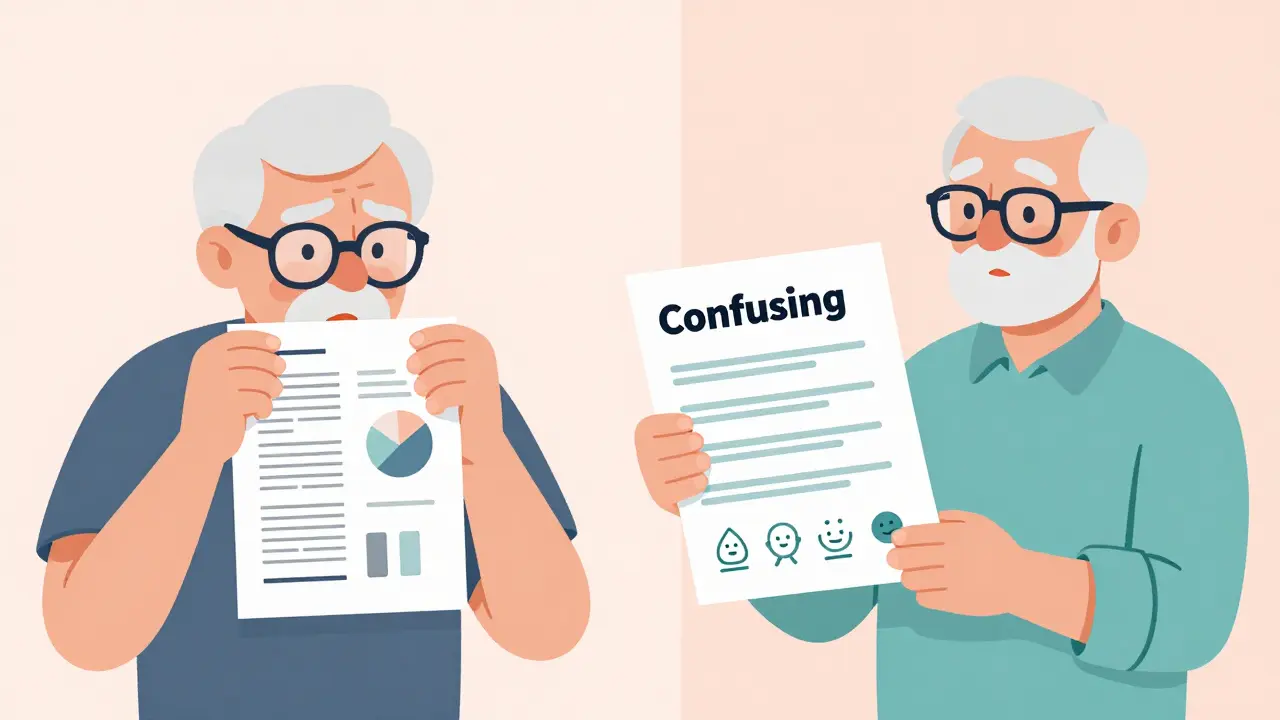
We often assume that a lifelong education protects someone from struggling with medical forms, but health literacy is a different beast. Data from the CDC reveals a striking reality: roughly 71% of adults over 60 struggle with basic print materials, and 80% find charts or forms confusing. This isn't just about reading; it's about interpreting numbers and calculations, which 68% of seniors find challenging. When a patient cannot decode the instructions on a pill bottle, they don't always ask for help. Many feel embarrassed or fear looking unintelligent. This silence is where medical errors happen. By implementing "universal precautions for health literacy," providers assume that any patient may have difficulty understanding and therefore simplify all materials by default. Research shows that moving to a 3rd to 5th grade reading level can boost comprehension by 42% for those over 65.Designing for Sensory and Cognitive Changes
Effective materials must account for the physical reality of aging. The National Institute on Aging is a division of the NIH that provides evidence-based guidelines for communicating with older adults. Their standards are the gold standard for a reason: they address the sensory decline that accompanies age. To make a document accessible, start with the visuals. A minimum 14-point font is non-negotiable. Use clean, sans-serif typefaces and avoid italics or thin fonts that blur together. Lighting also matters; if you're handing a paper to a patient in a dimly lit room, the best font in the world won't help. For verbal communication, provide context for similar-sounding letters-like saying "M as in Mary"-to help those with hearing loss. Cognitive processing also slows down. This means your materials should avoid long, rambling paragraphs. Instead, use:- Bullet points for key actions.
- Bold headers to separate topics.
- Plenty of white space to prevent the reader from feeling overwhelmed.
- Step-by-step illustrated instructions for medication or device use.
Beyond the Page: The Multimodal Approach
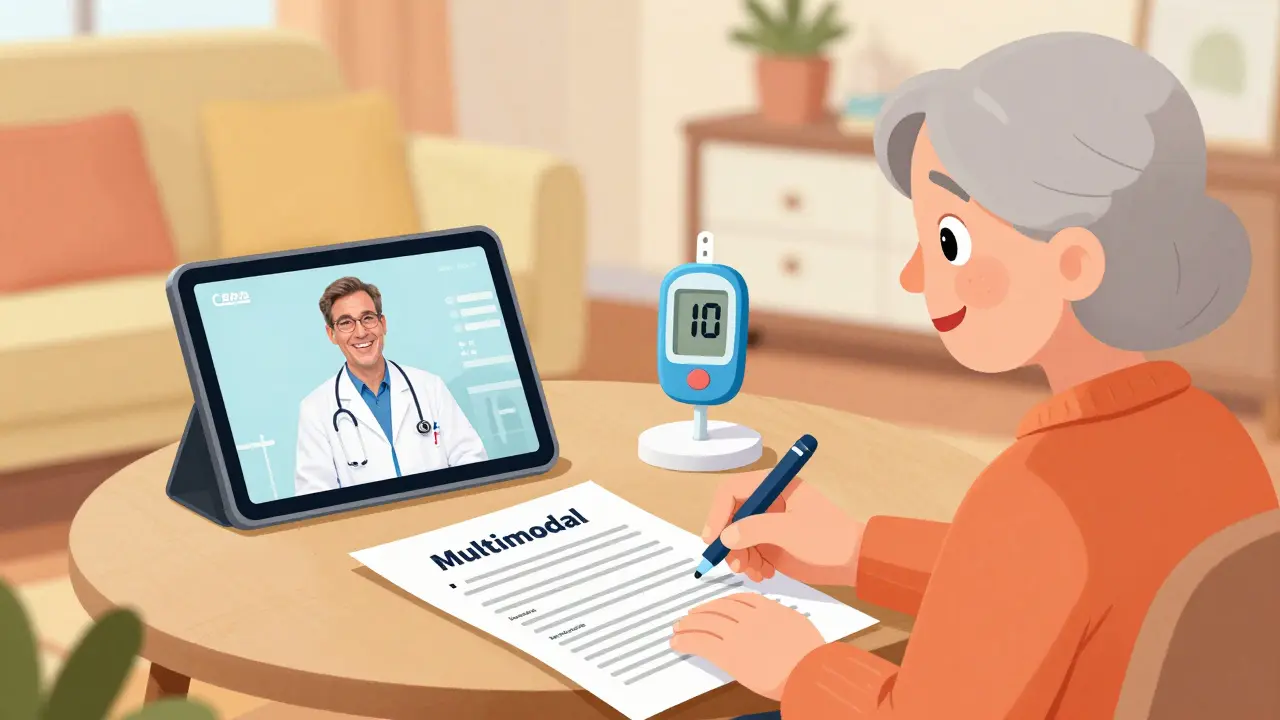
Paper is a start, but it's rarely enough. The most successful education strategies use multiple channels to reinforce the same message. A systematic review in the Journal of the American Geriatrics Society found that adding illustrated step-by-step instructions improved medication adherence by 37% compared to text alone. Consider a "mix and match" approach for a new diagnosis like diabetes:- A simple one-page handout with a 5th-grade reading level.
- A short video demonstration of how to use a glucose monitor.
- A physical model or drawing of where to inject insulin.
- A digital resource, such as HealthinAging.org is a public education portal developed by the Health in Aging Foundation to distill technical medical info into accessible formats , for those who are digitally literate.
Putting Knowledge into Practice: The Teach-Back Method
Even the best brochure can be misunderstood. The final and most critical step in senior patient education is the "teach-back" method. Instead of asking, "Do you understand?" (to which most patients will simply nod "yes"), ask the patient to explain the instructions back to you in their own words. For example, instead of saying "Take this twice a day," ask: "Just so I'm sure I explained this clearly, can you tell me how you're going to take this medicine when you get home?" This doesn't just check for understanding; it identifies exactly where the confusion lies. If the patient can't explain the timing, you know you need to go back to the material and perhaps add a visual clock or a color-coded chart to the handout. Studies show that providers who take a few extra minutes to use these techniques see a 31% improvement in patient comprehension.The Systemic Impact of Better Communication
When we fix the way we talk to seniors, the entire healthcare system wins. The Agency for Healthcare Research and Quality is a federal agency that focuses on making healthcare safer, higher quality, and more accessible has documented that healthcare systems using health literacy universal precautions saw a 22% drop in emergency department visits within 18 months. From a financial perspective, the stakes are huge. Limited health literacy costs the U.S. healthcare system billions annually. However, hospitals that implement comprehensive senior education programs have seen readmission rates drop by over 14%. For a hospital, that's not just better care-it's a massive cost saving per patient.
Common Implementation Pitfalls
If it's so effective, why isn't every clinic doing it? The barriers are usually practical. Many providers cite limited staff time and a lack of funding for specialized design. Developing a single high-quality resource can take 8 to 12 weeks because it requires multiple rounds of testing with actual older adults. Another hurdle is the "curse of knowledge." Experts often struggle to write at a 3rd to 5th grade level because they aren't used to stripping away the technical language they've used for decades. Using tools like the Health Education Materials Assessment Tool (HEMAT) can help providers objectively measure if their materials are actually "easy to read" or just "simpler than before."What is the ideal reading level for senior patient materials?
The ideal reading level is between 3rd and 5th grade. While the national average is higher, a significant portion of the older adult population reads at or below this level, and simplifying content improves comprehension for everyone without alienating high-literacy patients.
Why is 14-point font the minimum recommendation?
Age-related vision loss, such as presbyopia or cataracts, makes smaller text difficult to decode. 14-point font ensures that a larger percentage of the senior population can read materials independently without straining or requiring magnifying glasses.
How does the teach-back method differ from asking for understanding?
Asking "Do you understand?" often results in a reflexive "yes" due to social pressure or embarrassment. Teach-back requires the patient to actively demonstrate their understanding by explaining the plan in their own words, which exposes specific gaps in knowledge.
Are digital materials better than printed handouts for seniors?
Neither is inherently "better"; the most effective approach is multimodal. While digital tools allow for voice-activation and video, many seniors still prefer the permanence and tactile nature of printed materials. A combination of both ensures all patients are reached.
How can I test if my patient materials are actually effective?
The gold standard is to test the materials with at least 15 representatives from the target demographic. Observe them as they read the document and ask them to perform a task based on the instructions to see where they get stuck.