
When your baby’s skin is red, dry, and itchy, it’s hard not to worry. But what if that eczema isn’t just a rash-it’s the first sign of something bigger? Around the world, 1 in 5 children develop eczema before their first birthday. For many, this isn’t the end of the story. It’s the beginning of a chain reaction called the atopic march.
What Is the Atopic March, Really?
The atopic march used to be taught like a straight path: eczema first, then food allergies, then asthma, then hay fever. It sounded inevitable. But that’s not how it works anymore.
Recent studies show that only 3.1% of children with eczema follow this exact sequence. Most don’t. Many never develop asthma. Others get asthma without ever having eczema. The old model is outdated. Today, experts call it atopic multimorbidity-meaning these conditions often show up together, overlap, or appear in any order.
Still, eczema remains the most common starting point. About 7-12% of U.S. children get it before age 2. And when it starts early and is severe, the chances of other allergies follow. That’s not a guarantee-it’s a signal. A warning light.
Why Does Eczema Lead to Other Allergies?
The answer isn’t just genetics. It’s your child’s skin.
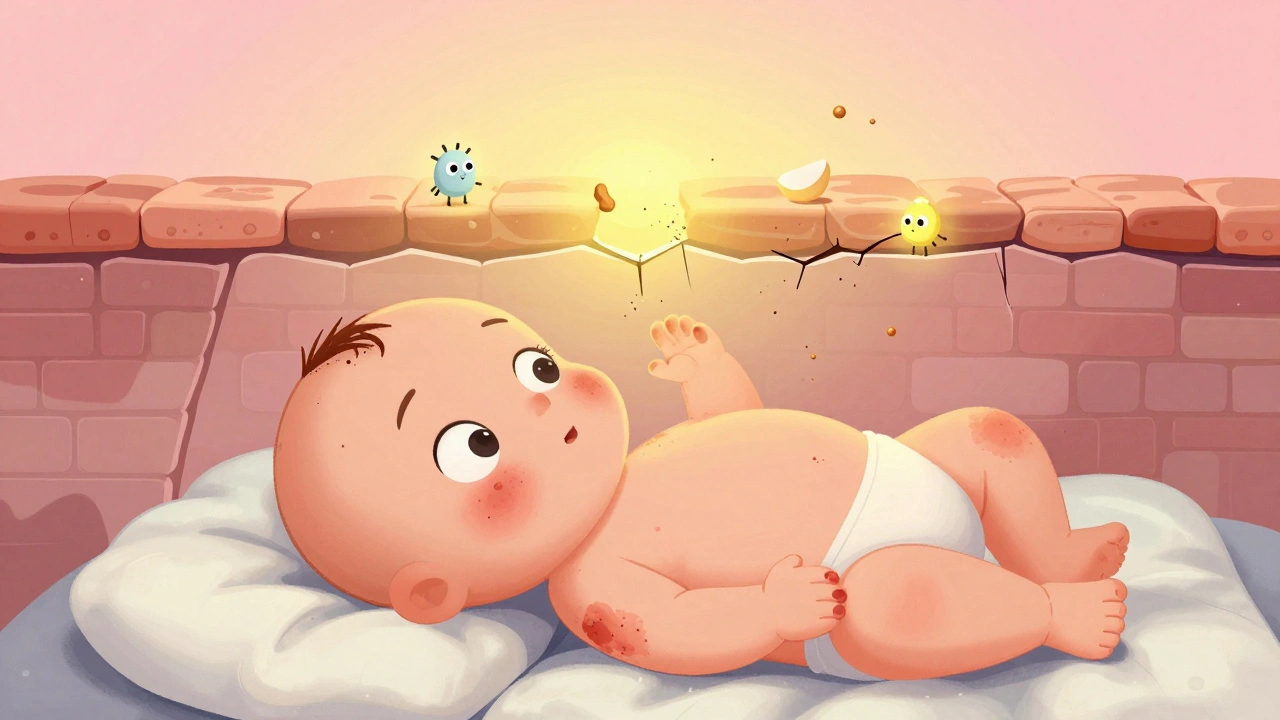
Think of the skin like a brick wall. The bricks are skin cells. The mortar is proteins that hold them together. One of those key proteins is called filaggrin. About 1 in 5 people carry a mutation in the filaggrin gene. That means their skin barrier is weaker. Cracks form. Tiny gaps open up.
When those cracks appear, allergens like peanut dust, egg particles, or pollen slip through. Your baby’s immune system sees them as invaders. It reacts. It makes antibodies. That’s sensitization.
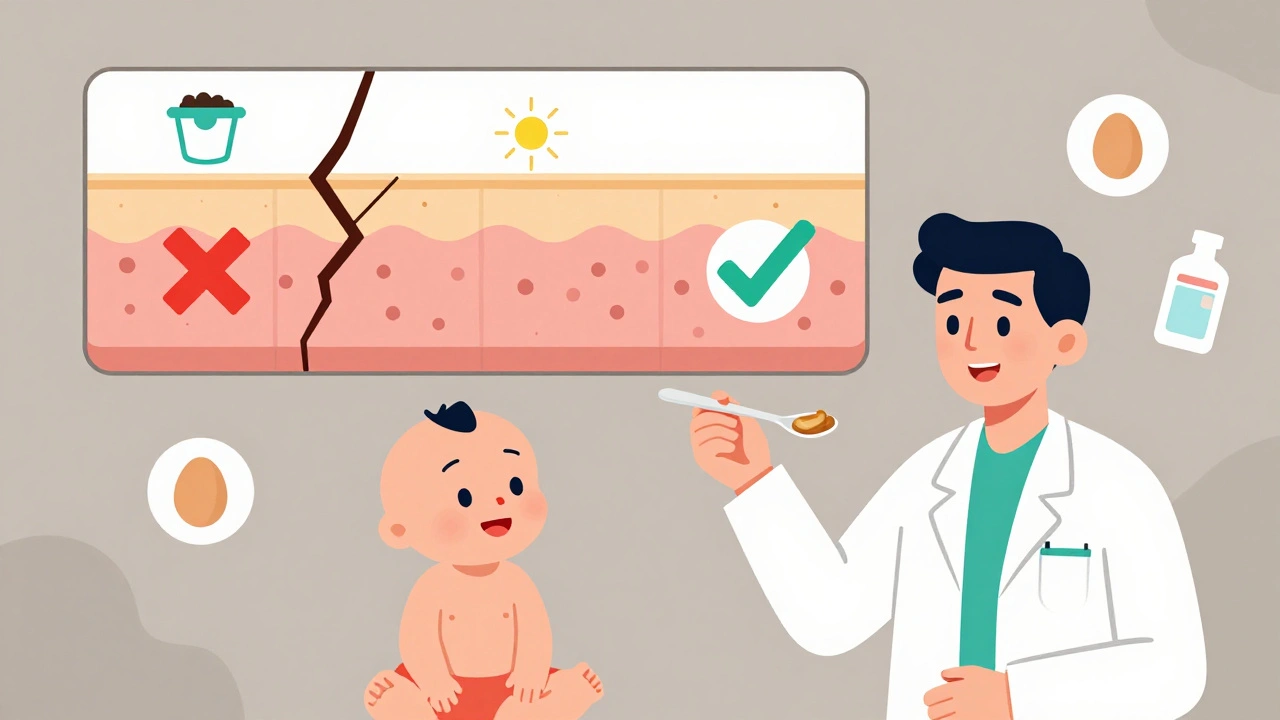
But here’s the twist: if that same peanut is later eaten safely, the immune system learns it’s harmless. That’s tolerance. The problem isn’t the allergen-it’s where it first meets the immune system. Skin exposure = danger signal. Mouth exposure = safety signal.
This is why the LEAP study changed everything. Researchers gave high-risk babies (those with severe eczema) a small amount of peanut protein daily starting at 4-11 months. By age 5, peanut allergy dropped by 86%. The same principle applies to eggs, milk, and other common allergens.
What Makes Some Kids More at Risk?
Not every child with eczema will develop asthma or allergies. But some are far more likely. Here’s what increases the risk:
- Severe eczema: Kids with widespread, persistent, or itchy rashes are 3-4 times more likely to develop asthma.
- Early onset: Eczema appearing before 3 months of age raises the risk.
- Family history: If a parent or sibling has asthma, hay fever, or food allergies, the risk climbs.
- Filaggrin mutations: These aren’t the whole story-but they’re a major piece. Kids with this mutation and eczema are far more likely to develop food allergies.
- Gut health: Babies with less diverse gut bacteria-especially those lacking microbes that produce butyrate-are more prone to multiple allergies.
One study tracked over 1,000 children from birth. They found that the gut microbiome at just 1 month old could predict whether a child would become sensitized to 3 or more allergens by age 5. That’s not magic. It’s biology.
How to Protect the Skin Barrier-Before It Breaks
The best time to stop the atopic march isn’t after eczema starts. It’s before it even shows up.
The PreventADALL trial gave daily emollients (moisturizers) to newborns with a family history of allergies. Results? A 20-30% drop in eczema by age 1. That’s huge. And it wasn’t just about hydration. It was about sealing the barrier.
Here’s what works:
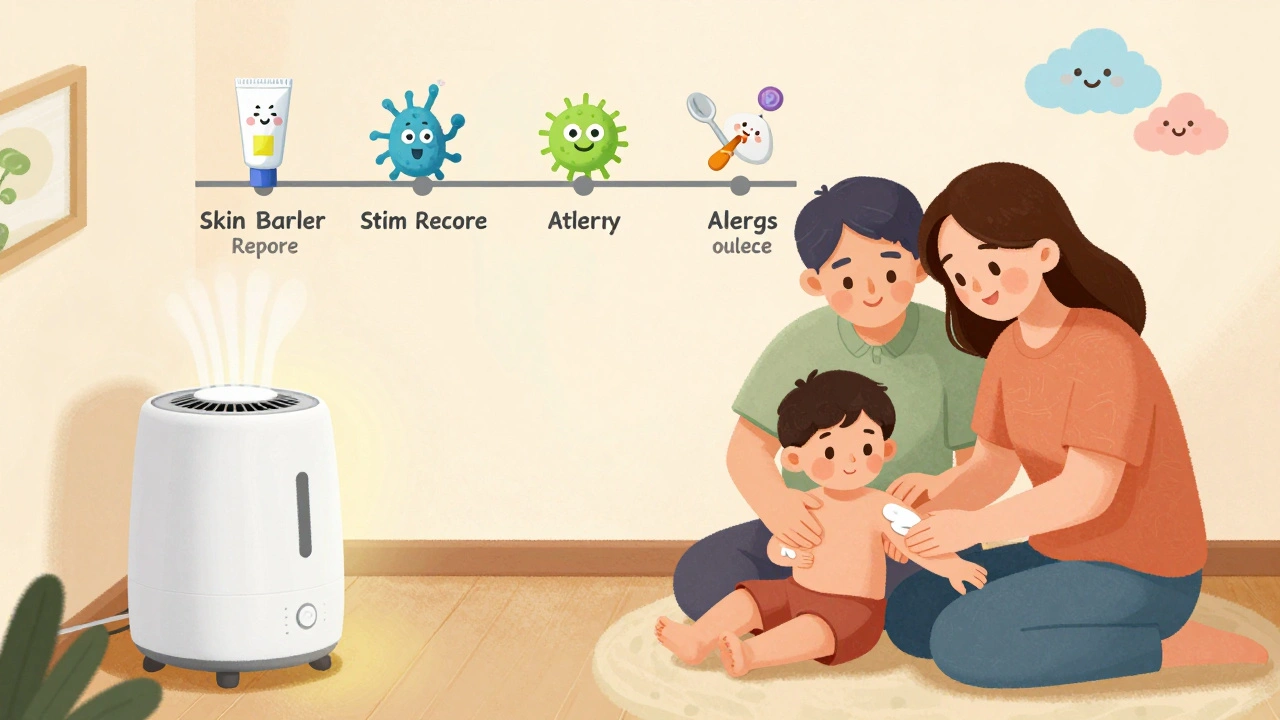
- Apply thick moisturizer daily, even on clear skin. Use fragrance-free, hypoallergenic ointments like petroleum jelly or ceramide-based creams.
- Start early. Begin in the first week of life if there’s a family history of allergies.
- Use gentle soap. Avoid bubble baths, scented wipes, and harsh detergents. Wash with lukewarm water and pat dry.
- Dress in soft cotton. Avoid wool, synthetics, and tight clothes that rub and irritate.
- Keep humidity up. Dry air cracks skin. A humidifier in the nursery helps-especially in winter.
Don’t wait for the rash to appear. Treat the skin like a shield, not a symptom.
When to Introduce Allergens-And How
Once eczema is under control, or even before it starts, it’s time to think about food.
The rule now is simple: introduce common allergens early and often.
- Peanut: Mix 2 tsp of smooth peanut butter with warm water or puree. Give 2 tsp, 3 times a week. Start around 4-6 months, if eczema is mild or moderate. If severe, talk to your doctor first.
- Egg: Cook it well. Start with 1/4 tsp of hard-boiled egg mixed into puree. Build up slowly.
- Milk: Use yogurt or cheese before whole milk. Cow’s milk as a drink should wait until 12 months, but dairy in food is fine earlier.
- Wheat, soy, fish: Introduce one at a time. Wait 3-5 days between new foods to watch for reactions.
Don’t delay. Delaying increases risk. And never introduce allergens on a day your child is sick or has a flare-up. Wait until skin is calm.
What About the Gut? Can Probiotics Help?
There’s a lot of buzz around probiotics. But the science is mixed.
Some studies show certain strains-like Lactobacillus rhamnosus GG-might reduce eczema risk in high-risk babies. Others show no effect. The key? It’s not just about adding bacteria. It’s about supporting the ones already there.
Here’s what actually helps gut health:
- Breastfeeding: If possible, it gives your baby protective antibodies and good bacteria.
- Maternal diet: Eating diverse fiber-rich foods during pregnancy and nursing supports a healthy microbiome.
- Delay antibiotics: Unless absolutely necessary, avoid them in the first 6 months. They wipe out good bacteria.
- Introduce solids with fiber: Pureed peas, sweet potatoes, apples, and bananas feed good gut bugs.
Probiotic supplements? Maybe. But food first. Always.
What Does This Mean for Parents?
Here’s the bottom line:
- Eczema isn’t a curse. It’s a clue.
- You can’t stop all allergies-but you can reduce the odds.
- Protecting the skin barrier is your most powerful tool.
- Early, regular exposure to allergens through the mouth builds tolerance.
- Not every child with eczema will develop asthma. But the ones who do? You can spot them early.
Focus on what you can control: moisturizing daily, introducing foods safely, avoiding irritants, and watching for signs of worsening. Don’t panic. Don’t wait. Act.
When to See a Doctor
Call your pediatrician or dermatologist if:
- Your baby’s eczema doesn’t improve with daily moisturizing after 2 weeks.
- The rash is weeping, crusted, or looks infected (yellow flakes, red streaks).
- Your child has a reaction after eating a new food-hives, vomiting, swelling, or trouble breathing.
- You notice wheezing, coughing, or noisy breathing, especially after colds.
- There’s a strong family history of asthma, severe allergies, or eczema.
Don’t wait for a crisis. Early intervention changes outcomes.
Is eczema the same as an allergy?
No. Eczema is a skin condition caused by a faulty skin barrier and immune overreaction. But it’s often linked to allergies because broken skin lets allergens in, which triggers the immune system. So while eczema isn’t an allergy itself, it makes allergic reactions more likely.
Can I prevent my baby from getting food allergies if they have eczema?
Yes, you can significantly reduce the risk. The LEAP study showed that introducing peanut early (between 4-11 months) to babies with severe eczema cut peanut allergy risk by 86%. The same applies to eggs and milk. The key is early, regular exposure through the mouth-not the skin.
Do I need to use special moisturizers for my baby’s eczema?
You don’t need expensive products. Look for thick ointments with ceramides, cholesterol, or fatty acids-like petroleum jelly or CeraVe. Avoid anything with fragrance, alcohol, or essential oils. Ointments work better than lotions because they seal in moisture longer.
If my child has eczema, will they definitely get asthma?
No. Only about 25% of children with eczema go on to develop asthma. But if the eczema is severe, early-onset, or accompanied by other allergies, the risk jumps. That’s why it’s important to monitor-not assume.
Is the atopic march still a useful concept?
Yes-but not as a fixed path. It’s now seen as a pattern of overlapping conditions, with eczema as the most common starting point. The real value is in identifying high-risk kids early so you can act. It’s not about predicting the future-it’s about changing it.
What’s Next?
Research is moving fast. Scientists are now building tools to predict which babies with eczema are most likely to develop asthma-using genetics, skin tests, gut bacteria, and even digital photos of rashes. In the next 5 years, we may have personalized prevention plans for each child.
For now, stick to the basics: moisturize daily, introduce allergens early, avoid triggers, and talk to your doctor if things worsen. You’re not powerless. You’re the first line of defense.




Yasmine Hajar
December 2, 2025 AT 21:55My daughter had severe eczema from 6 weeks old and we started peanut butter at 4 months like the docs said. No allergy at 3. I know it sounds crazy but I swear by this. We didn’t wait. We acted. And now I’m that mom who tells everyone to do the same.
Moisturize like your life depends on it. Because honestly? It kinda does.
Jake Deeds
December 3, 2025 AT 18:31Oh wow. Another ‘moisturize and feed peanut butter to infants’ manifesto. How quaint. Did you know the FDA has issued 14 warnings about over-the-counter emollients containing hidden allergens? No? Of course you didn’t. You’re just another parent following internet trends like a sheep.
Real science? It’s in the epigenetic modulation of filaggrin expression under environmental stressors - not some toddler’s bath time ritual.
John Filby
December 5, 2025 AT 09:08Just wanted to say I tried the daily emollient thing with my son after reading this - started at 1 week old. No eczema at all by 6 months. I’m not a doctor but this felt like the most logical thing to do. Also used CeraVe, no fragrance. No drama. Just consistency.
Also introduced egg at 5 months. No reaction. Felt weird at first but now he eats scrambled eggs like a champ 😊
Joe Lam
December 5, 2025 AT 10:06Let’s be real - this whole ‘atopic march’ thing is just Big Pharma’s way of selling you more creams and ‘allergen introduction kits.’
My kid had eczema. We used coconut oil. He’s 7 now. Never had allergies. Coincidence? Maybe. Or maybe you’re overcomplicating biology to sell products.
Rachel Bonaparte
December 6, 2025 AT 02:20Have you ever stopped to think that maybe the real culprit isn’t filaggrin or moisturizers - but glyphosate? The EPA has quietly approved 300% more glyphosate in baby food since 2018. The skin barrier isn’t failing - it’s being poisoned.
And don’t get me started on vaccines. The aluminum adjuvants? They’re not just triggering immune responses - they’re rewiring your child’s tolerance pathways from day one. You think this is about eczema? No. This is about corporate control of immunity.
I’ve read 17 peer-reviewed papers on this. None of them mention moisturizer. They all mention environmental toxins. Why? Because the truth is inconvenient.
My daughter’s eczema cleared when we switched to organic everything. No peanut butter. No ceramides. Just clean food, clean air, clean water. You’re being manipulated.
And yes - I know what I’m talking about. I’ve seen the data. You haven’t.
Scott van Haastrecht
December 6, 2025 AT 17:51Oh great. Another post that makes parents feel guilty for not doing enough. ‘Moisturize daily’ - like I have time between 3am feedings and work calls.
And now I’m supposed to start feeding my 4-month-old peanut butter? What if they choke? What if they have a reaction and I’m alone with them at 2am? Who’s gonna be there to save them? The LEAP study? Nah. The ER doctor who charges $1200 for a 10-minute visit.
This isn’t prevention. It’s anxiety marketing dressed up as science.
zac grant
December 8, 2025 AT 00:03TL;DR: Skin barrier integrity is the gatekeeper. Early oral antigen exposure = immune tolerance. Delay = sensitization. Gut microbiome diversity = modulator. All validated in RCTs.
Bottom line: Use ointments (not lotions), introduce allergens early, avoid irritants, and don’t panic. The data is robust. The paradigm shift is real. You’re not overreacting - you’re underreacting if you’re not doing this.
michael booth
December 9, 2025 AT 22:07It is imperative that parents recognize the paramount importance of proactive skin barrier maintenance in the neonatal period. The scientific consensus is unequivocal: early and consistent emollient application significantly reduces the incidence of atopic dermatitis and subsequent allergic conditions.
Furthermore, the introduction of allergenic foods during the window of immune plasticity - specifically between four and eleven months - constitutes a critical intervention point.
One must exercise caution with regard to environmental irritants and prioritize evidence-based protocols over anecdotal recommendations.
Thank you for this comprehensive and clinically grounded exposition.
Gillian Watson
December 10, 2025 AT 04:27I’m from the UK and we’ve been doing this since 2019 - moisturize from day one, introduce allergens early. My daughter’s 4, no allergies, no eczema. It’s not magic. It’s just common sense.
Also, skip the fancy creams. Vaseline works better than anything else. And don’t forget the humidifier - dry air is the silent killer of baby skin.
Jordan Wall
December 10, 2025 AT 13:15So like… if my kid has eczema and I don’t feed em peanut butter before 6 months… they’re gonna get asthma?? 😱
Also I use baby oil and it’s like 30% cheaper than ceramides lmao
Also my kid’s gut biome is like a rave 🎧💩
Can we get a meme about this? I’ll make one
Pavan Kankala
December 11, 2025 AT 17:42You think you’re protecting your child? You’re just participating in a system designed to make you dependent. The real cause of eczema and allergies? Vaccines. GMOs. Fluoride. The system wants you to believe it’s about moisturizer. It’s not. It’s about control.
My cousin’s son had eczema. He was never vaccinated. Never ate peanut butter. He’s 10. Healthy. Strong. No meds.
You’re being lied to. The truth is buried under peer-reviewed papers written by people who get paid by the cream companies.
Martyn Stuart
December 13, 2025 AT 07:57Just wanted to add - if you’re starting emollients, make sure you’re applying them within 3 minutes of bath time, while the skin is still damp. That’s when the barrier is most receptive. Also, use a fragrance-free detergent for clothes - even trace chemicals can trigger flares.
And for allergen introduction: don’t just do it once. Do it 3x a week, consistently, for at least 6 months. It’s not a one-off. It’s a habit.
Also, breastfeeding is still the gold standard. If you can’t, then donor milk is better than formula - if available.
Small steps. Big impact. You’ve got this.