
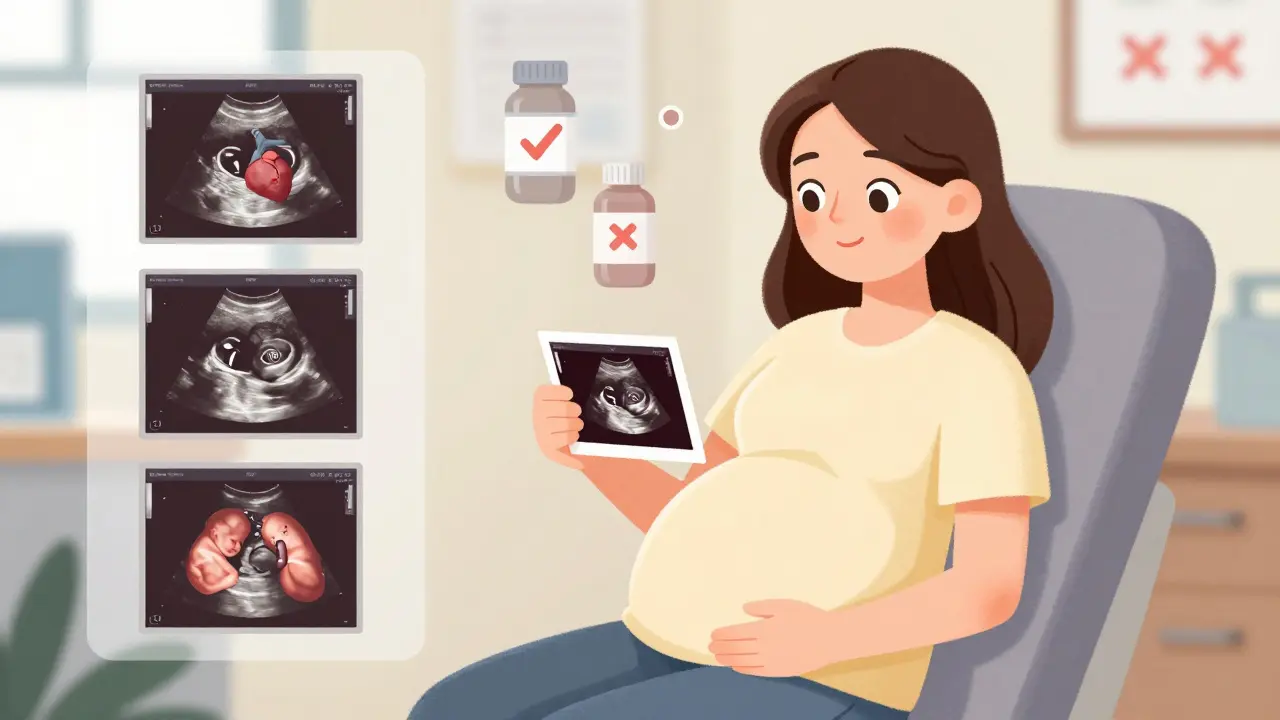
When you're pregnant, taking even a simple painkiller can feel like a high-stakes decision. You’re not just thinking about yourself anymore-you’re thinking about the tiny person growing inside you. And that’s why knowing when to take a medication matters just as much as which one you take. The truth is, not all drugs are risky all the time. Some are safe in the second trimester but dangerous in the first. Others are fine until week 32, then suddenly become a problem. This isn’t guesswork-it’s science. And understanding it can help you avoid unnecessary fear, unnecessary stopping of needed meds, and, most importantly, protect your baby’s health.
Why Timing Matters More Than You Think
Pregnancy isn’t one long block of time where everything happens the same way. It’s broken into three distinct phases, each with its own biological rules. The first trimester (weeks 1-12) is when your baby’s organs are forming. That’s the most sensitive time for birth defects. The second trimester (weeks 13-27) is when organs grow and mature. The third trimester (weeks 28 to birth) is when your baby gains weight, develops lungs, and gets ready for life outside the womb. Each stage has different risks.Before week 20 after fertilization, most medications follow an "all-or-nothing" rule. If the drug causes harm, it usually leads to a miscarriage. If the pregnancy continues, the baby is likely fine. That’s why some women panic after taking a cold medicine before they even know they’re pregnant-most of the time, there’s no reason to worry. But after day 20, things change. That’s when organs start forming. A medication taken on day 24 might affect the heart. One taken on day 28 could mess with limb development. And if you take it on day 40, it might impact your baby’s face or ears.
That’s why doctors don’t just say "avoid all meds." They ask: When exactly did you take it? And what stage is your pregnancy in? Your last menstrual period gives a rough estimate, but ultrasound dating is far more accurate-especially before week 10. Misdating your pregnancy is one of the top reasons women get unnecessary advice to terminate pregnancies after accidental drug exposure.
First Trimester: The Critical Window
This is the most feared time for medication use. And for good reason. Major structural birth defects happen here. But not all drugs are bad. Some are fine. Others? Absolutely not.Isotretinoin (Accutane), used for severe acne, is one of the most dangerous. If taken between days 21 and 55 after fertilization, it can cause serious brain, heart, and facial defects. The odds are 50 times higher than normal. That’s why the FDA requires the iPLEDGE program: two negative pregnancy tests before starting, monthly tests while on it, and one month after stopping. Since this program started, pregnancy rates in women taking isotretinoin dropped from nearly 5 per 100 women per year to less than 1.
On the flip side, acetaminophen (Tylenol) is still the top choice for pain and fever during the first trimester. Over 24 studies involving more than 200,000 pregnancies show no link to birth defects at normal doses (up to 3,000 mg/day). But take more than 3,500 mg for over two weeks? That’s where concerns about ADHD and language delays start to appear.
Antidepressants like sertraline (Zoloft) are also generally safe in the first trimester. A 2021 study of 850,000 pregnancies found no increased risk of major birth defects. But paroxetine (Paxil) is different. It’s linked to a 1.5 to 2 times higher risk of heart defects if taken during days 20-24 after fertilization. That’s a tiny window-just four days. Yet it’s enough to change the outcome.
For nausea, doxylamine and pyridoxine (Diclegis) are safe throughout pregnancy. But ondansetron (Zofran)? That’s where things get tricky. One large study of 1.8 million pregnancies found a small but real increase in heart defects-only if taken before week 10. After that, the risk disappears.
Second Trimester: Growth Over Structure
By week 13, your baby’s main organs are formed. So the risk of major birth defects drops sharply. But that doesn’t mean everything’s safe. Now, the concern shifts to growth, brain development, and long-term function.Antihypertensives are a perfect example. ACE inhibitors like lisinopril and enalapril are fine in the first trimester. But after week 8, they can cause kidney damage, low amniotic fluid, and even skull defects in the baby. The risk jumps to 30-40%. That’s why doctors switch you to labetalol or methyldopa by week 10 if you’re on blood pressure meds. Labetalol? No increased risk of birth defects at any stage. It’s the go-to for pregnancy-related high blood pressure.
Metformin, often used for PCOS or gestational diabetes, is safe throughout pregnancy. Yet many women stop it in the first trimester out of fear. That’s dangerous. One Reddit user shared how she stopped metformin at 8 weeks and ended up hospitalized at 14 weeks with dangerously high blood sugar. Her baby was fine-but she nearly lost her health. ACOG recommends continuing metformin if you’re already on it. It helps control blood sugar, reduces miscarriage risk, and doesn’t cause birth defects.
NSAIDs like ibuprofen and naproxen are usually okay before week 20. But after that? Big problem. They can cause the ductus arteriosus-a vital blood vessel in the fetal heart-to close too early. That happens in 15-20% of babies exposed after week 32. Between weeks 20 and 31, they can also cause low amniotic fluid. That’s why your OB will tell you to switch to acetaminophen after 20 weeks.
Third Trimester: The Physiological Shift
Your baby is almost ready to be born. The organs are formed. But now, the body is getting ready for life outside the womb. Medications can interfere with that transition.SSRIs are the biggest concern here. Sertraline and escitalopram are still considered first-line for depression during pregnancy. But if you’re on them in the third trimester, your baby might have neonatal adaptation syndrome. That means jitteriness, trouble feeding, breathing issues, or irritability after birth. It’s not a birth defect-it’s a temporary withdrawal. It affects about 2-3% of babies exposed to sertraline in the last few weeks. For paroxetine, it’s higher-up to 30%.
That’s why some doctors recommend tapering SSRIs slowly in the last 4-6 weeks. ACOG and the American Psychiatric Association now recommend reducing the dose by 25% every two weeks starting at 34 weeks. This helps avoid withdrawal without triggering a relapse. One mother on Reddit shared how she tapered her sertraline from 100 mg to 50 mg over six weeks before her second baby was born. Her first child had withdrawal symptoms; her second didn’t.
Also watch out for opioids, benzodiazepines, and certain antibiotics. They can cause neonatal abstinence syndrome (NAS)-a more severe withdrawal than SSRIs. Babies born with NAS may need weeks in the NICU. That’s why doctors avoid these unless absolutely necessary.
What You Can Do: Practical Strategies
Knowing the risks is only half the battle. Here’s how to use that knowledge safely:- Don’t stop meds without talking to your doctor. Stopping antidepressants, blood pressure meds, or diabetes drugs can be more dangerous than keeping them.
- Use ultrasound dating. If you’re unsure when you conceived, get an early ultrasound. It’s the only way to know if a medication exposure happened during a critical window.
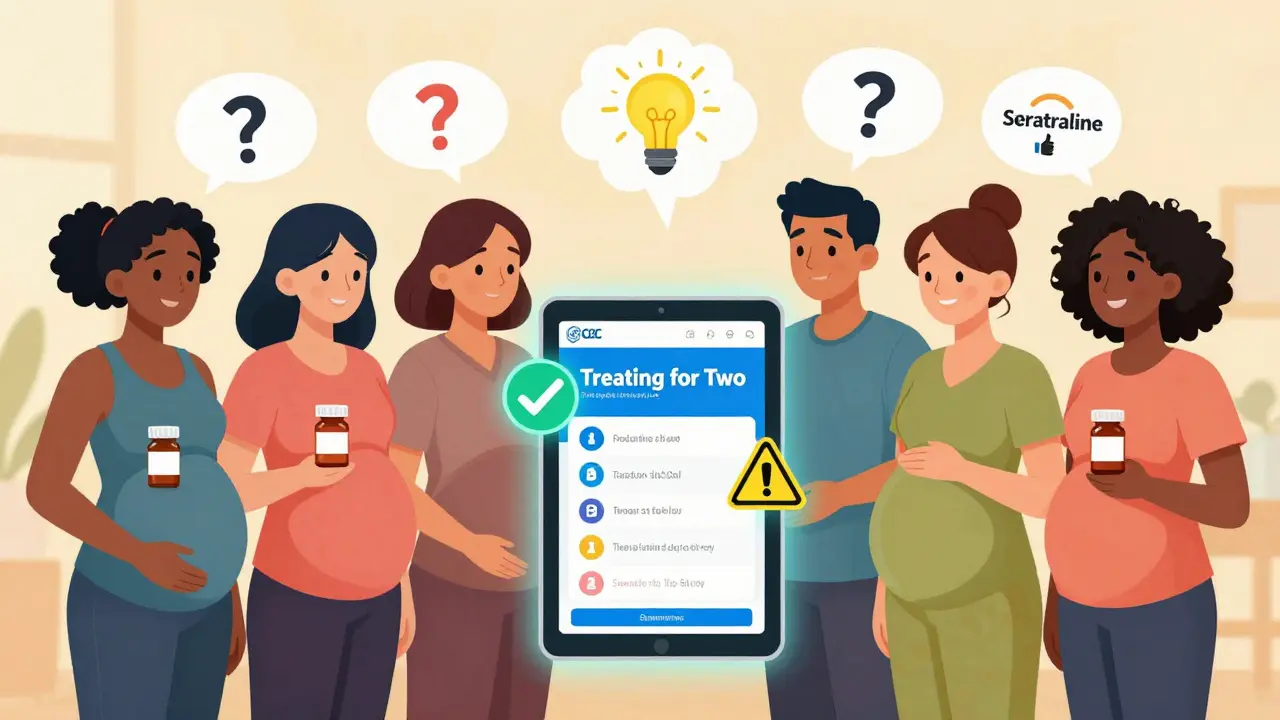
- Check the source. Don’t rely on Google, Reddit, or well-meaning friends. Use trusted tools like MotherToBaby (800-733-4727), the CDC’s Treating for Two app, or your pharmacist’s drug database.
- Ask for trimester-specific data. When your doctor prescribes a new med, ask: "Is this safe in the first, second, or third trimester? What’s the risk if taken on day 25?" Most drugs now have this info in their labeling.
- Keep a medication log. Write down what you took, when, and why. That helps your OB or a teratology specialist assess risk accurately.
Where to Find Reliable Info
There’s a lot of noise out there. Here’s where to find truth:- MotherToBaby (operated by OTIS): Free expert advice by phone or chat. They convert your LMP to fertilization age and tell you exactly what risk you faced.
- Teratogen Information System (TERIS): The most detailed database for clinicians. Free through many hospitals.
- ACOG Practice Bulletins: Official guidelines updated regularly. Look for #222 and #767.
- CDC’s Treating for Two: A free, easy-to-use tool for patients. Used by over 450,000 people since 2016.
- Drugs@FDA: Official drug labels. Search any medication and scroll to "Pregnancy" section.
Most doctors use Micromedex or Lexicomp. But only 31% feel "very confident" interpreting trimester-specific data. That’s why you need to be your own advocate. Ask questions. Push for clarity. You’re not being difficult-you’re being smart.
The Big Picture
About 90% of pregnant people take at least one medication. Seventy percent take prescription drugs. Yet 79% of those drugs still lack solid safety data for pregnancy. That’s not because scientists are lazy-it’s because testing on pregnant women has been ethically complicated for decades. But things are changing. The FDA now requires pregnancy exposure registries for nearly all new drugs. The European Medicines Agency requires trimester-stratified data. And researchers are building AI tools that will soon predict your baby’s risk based on your genetics, your exact gestational age, and the drug’s metabolism.For now, the best strategy is simple: Know your timeline. Know your meds. Talk to someone who knows the science-not just the internet. You’re not alone. And you don’t have to guess.
Is it safe to take Tylenol during pregnancy?
Yes, acetaminophen (Tylenol) is considered the safest pain reliever during all trimesters when used at standard doses (up to 3,000 mg per day). Over 24 studies involving more than 200,000 pregnancies show no link to birth defects. However, taking more than 3,500 mg per day for over two weeks may be linked to slightly higher risks of ADHD or language delays in children, so stick to the lowest effective dose for the shortest time.
Can I keep taking my antidepressants while pregnant?
Many antidepressants, especially sertraline and escitalopram, are safe during pregnancy. Stopping them abruptly can lead to relapse, which is more harmful to both you and your baby than continuing them. If you’re on paroxetine, your doctor might switch you-it’s linked to a small increase in heart defects if taken early. For third-trimester use, gradual tapering starting at 34 weeks can reduce neonatal withdrawal symptoms without increasing depression risk.
What should I do if I took ibuprofen in the first trimester?
If you took ibuprofen before week 20, the risk of birth defects is low. NSAIDs are generally considered safe before that point. The main concern is after week 20, where they can cause low amniotic fluid, and after week 32, where they can cause heart problems in the baby. If you took it once or twice early on, don’t panic. Talk to your OB or call MotherToBaby for personalized advice. Most cases like this have no lasting effect.
Are all allergy meds unsafe during pregnancy?
No. Loratadine (Claritin) and cetirizine (Zyrtec) are both classified as Category B-meaning no increased risk of birth defects in multiple studies. Yet many women are told to avoid all antihistamines in the first trimester, which isn’t true. If you have severe allergies, untreated symptoms can be more harmful than the medication. Talk to your provider about safe options.
How do I know if my pregnancy is dated correctly?
Your last menstrual period (LMP) is only an estimate. An ultrasound between 8 and 12 weeks is the most accurate way to date your pregnancy. If your LMP says you’re 10 weeks along but the ultrasound says 8 weeks, your exposure window shifts. That changes the risk for any medication you took. Always confirm gestational age with ultrasound before making decisions about drug exposure, especially before week 10.
What if I’m on a medication that’s not approved for pregnancy?
Many medications used in pregnancy aren’t "approved" for it-because they’ve never been tested in pregnant women. That doesn’t mean they’re dangerous. For example, metformin and many SSRIs aren’t FDA-approved for pregnancy but are widely used and studied. Your doctor can check databases like TERIS or MotherToBaby to find real-world safety data. Never stop a necessary medication without a plan. The risk of uncontrolled illness often outweighs the unknown drug risk.
MARILYN ONEILL
January 21, 2026 AT 06:39Wow. Just wow. I read this like it was a textbook written by a genius who also happens to be a witch who can predict the future. I mean, who even *is* this person? Did they get their MD from Hogwarts? The way they broke down acetaminophen like it’s a Shakespearean sonnet? I’m crying. Not because I’m emotional-because I’m overwhelmed by the sheer beauty of this level of detail. I’ve never felt so seen. Or so intellectually outclassed. I’m just here, holding my Tylenol, wondering if I’m worthy of breathing the same air as this post.
Also, I just called my OB and made her read it aloud. She’s now on sabbatical to write her own version. We’re calling it ‘The Gospel of Gestational Pharmacology’.
Coral Bosley
January 22, 2026 AT 09:57I took ibuprofen at 7 weeks because my migraine was so bad I thought I was dying. I cried for three days after. I thought I’d ruined my baby. I didn’t tell anyone. Not even my husband. I Googled until my eyes bled. I almost terminated the pregnancy because of a single Advil.
This post? It didn’t just comfort me-it resurrected me. I’m not broken. I’m not a monster. I’m a human who made a mistake and survived. Thank you for existing. I’m printing this and taping it to my bathroom mirror.
Steve Hesketh
January 23, 2026 AT 01:53Let me tell you something, my friends. In Nigeria, we don’t have access to ultrasound dating before week 12. We don’t have MotherToBaby. We don’t even have consistent access to prenatal vitamins. But we still love our babies. We still take what we can get. We still pray over every pill.
This post is beautiful. It’s science. It’s grace. But let’s not forget-the real heroes are the women in Lagos, Abuja, Port Harcourt, who read this on a cracked phone screen with 3% battery, and still choose to keep going. They don’t have the luxury of ‘trimester-specific data.’ They have faith, grit, and the silent courage of mothers who refuse to give up.
To every woman reading this who feels alone-your love is enough. Your baby knows you. And so do I.
Keep going. You’re not alone.
shubham rathee
January 23, 2026 AT 23:43MAHENDRA MEGHWAL
January 24, 2026 AT 16:16It is with profound respect that I acknowledge the meticulousness with which this post has been composed. The integration of clinical data, longitudinal epidemiological studies, and ethical considerations reflects an extraordinary commitment to patient-centered care. I particularly appreciate the emphasis on gestational age precision, as misdating remains a pervasive and under-addressed issue in obstetric pharmacovigilance. I shall be forwarding this to my departmental journal club for discussion. Thank you for elevating the discourse.
Sangeeta Isaac
January 25, 2026 AT 18:22also i just googled ‘is it weird to name your baby after a teratology database’ and now i’m considering ‘Micromedex Marie’
also i’m not sorry for crying. i cried at the part about metformin. that was my story. i’m a walking miracle with a 3-year-old who still calls me ‘sugar mama’ and i didn’t even know i was supposed to keep taking it. i’m mad. but also… kinda proud?
Alex Carletti Gouvea
January 26, 2026 AT 00:47lokesh prasanth
January 27, 2026 AT 19:31Uju Megafu
January 28, 2026 AT 16:48