
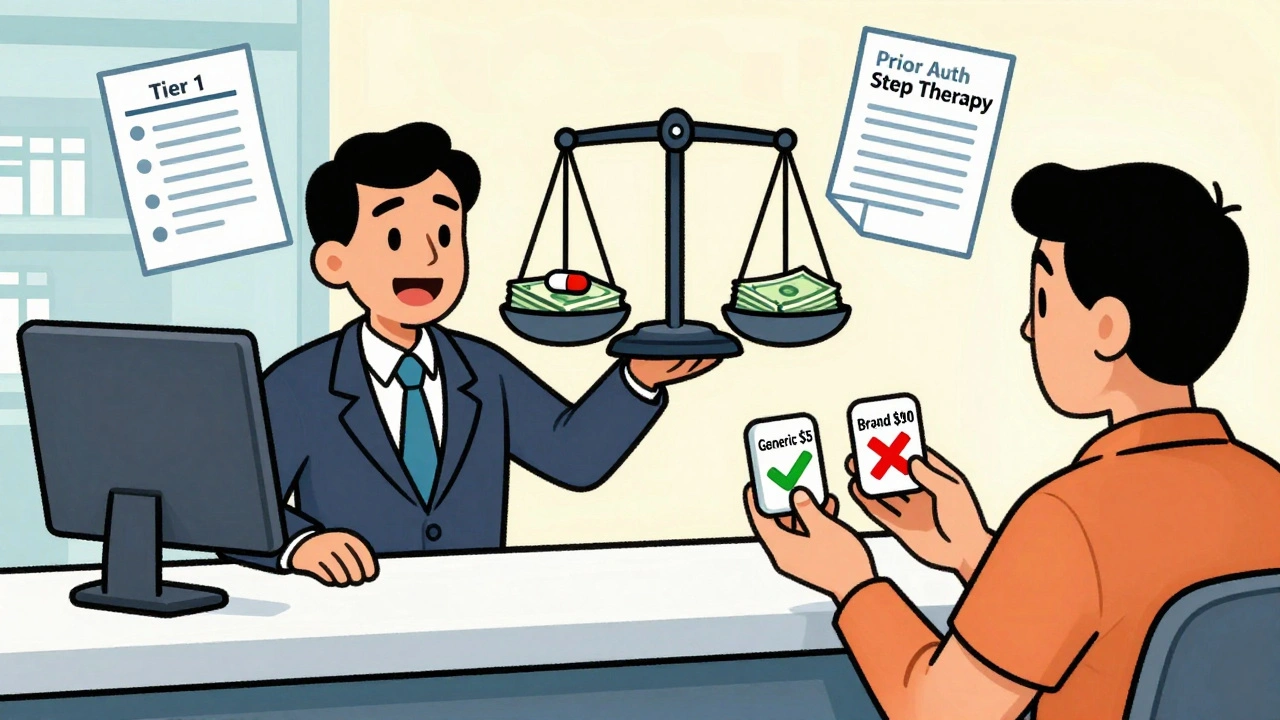
When you pick up a prescription, you might not realize you’re walking into a complex battle between cost, policy, and your health. Your insurance plan doesn’t treat generic and brand-name drugs the same-even when they contain the exact same active ingredient. The difference isn’t just in price. It’s in coverage, rules, and how much you end up paying out of pocket.
Why Insurance Treats Generics and Brands Differently
Generic drugs are exact chemical copies of brand-name medications. The FDA requires them to have the same active ingredient, strength, dosage form, and effectiveness. So why does your insurance charge you $5 for a generic and $90 for the brand version? The answer lies in how the system was built. The 1984 Hatch-Waxman Act created the legal pathway for generics to enter the market without repeating expensive clinical trials. That’s why generics cost 80% to 85% less. Insurance companies didn’t just welcome generics-they built their entire cost-control strategy around them. Most plans use a tiered formulary. Tier 1 is for generics. Tier 2 and 3 are for brand-name drugs. If a generic exists, your plan will almost always push you toward it. In fact, 90% of all prescriptions filled in the U.S. in 2022 were generics, saving the system over $370 billion that year.How Your Copay Changes Based on the Drug Type
Your out-of-pocket cost isn’t just a number. It’s a policy decision. For a 30-day supply:- Generic drug: $5-$15
- Brand-name drug with generic available: $40-$100
- Brand-name drug with no generic: $60-$150
What Happens When Your Doctor Says “No Substitution”
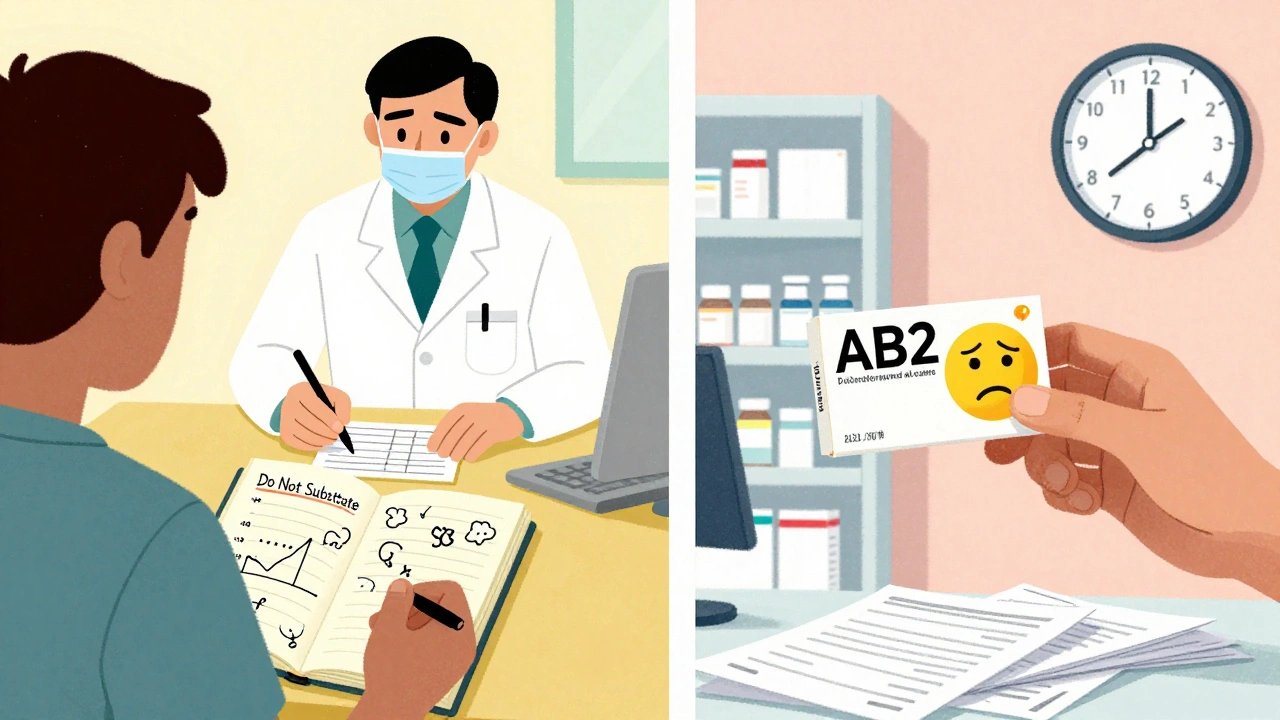
You might think your doctor can just write “dispense as written” and you’ll get the brand. But that’s not always enough. In 42 states, physicians can indicate medical necessity for a brand-name drug. But that doesn’t mean automatic approval. Insurance companies often require:- Documentation of failed trials with generics
- Proof of side effects or therapeutic failure
- A prior authorization form filled out by your doctor
Step Therapy: The “Try the Cheap One First” Rule
Many plans use step therapy. That means you have to try the generic before you can get the brand-even if your doctor thinks the brand is better. For 35.6% of specialty medications, you’re required to fail on at least two generic versions before your insurer will approve the brand. That’s not just a policy. It’s a delay. In some cases, it adds 6-8 weeks to your treatment timeline. Patients with depression, epilepsy, or chronic pain often report setbacks from forced switches. A 2022 study in JAMA Neurology found a 12.3% increase in seizure frequency when patients with epilepsy were switched from brand to generic antiepileptic drugs.Why Some People Have Bad Experiences with Generics
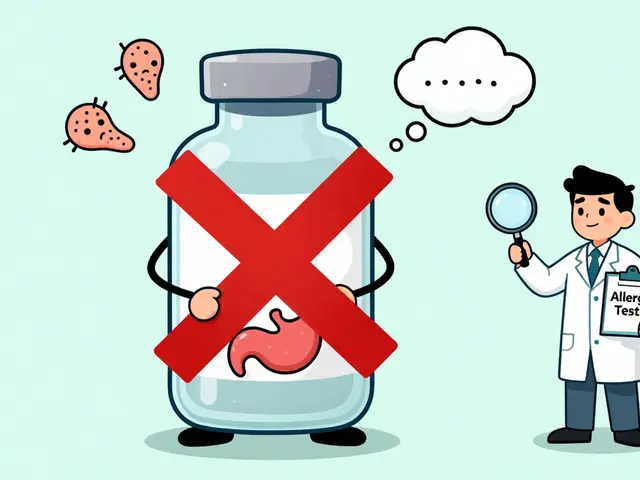
The FDA says generics are equivalent. And scientifically, they are. But people report differences. On forums like Drugs.com and Reddit, hundreds of users describe issues after switching: fatigue, mood swings, nausea, or loss of symptom control. The problem isn’t the active ingredient. It’s the fillers-lactose, dyes, binders-that vary between manufacturers. Thyroid patients are especially vulnerable. Levothyroxine generics from different companies can have slight variations in absorption. One patient on Reddit wrote: “I was stable on Synthroid for 10 years. Switched to generic. My TSH shot up. Took three months to get back to normal.” Doctors report that 68% of patients notice side effects after switching to generics-even when the active ingredient is identical. That’s why some insurers allow exceptions. But getting them requires paperwork, persistence, and sometimes a lawyer.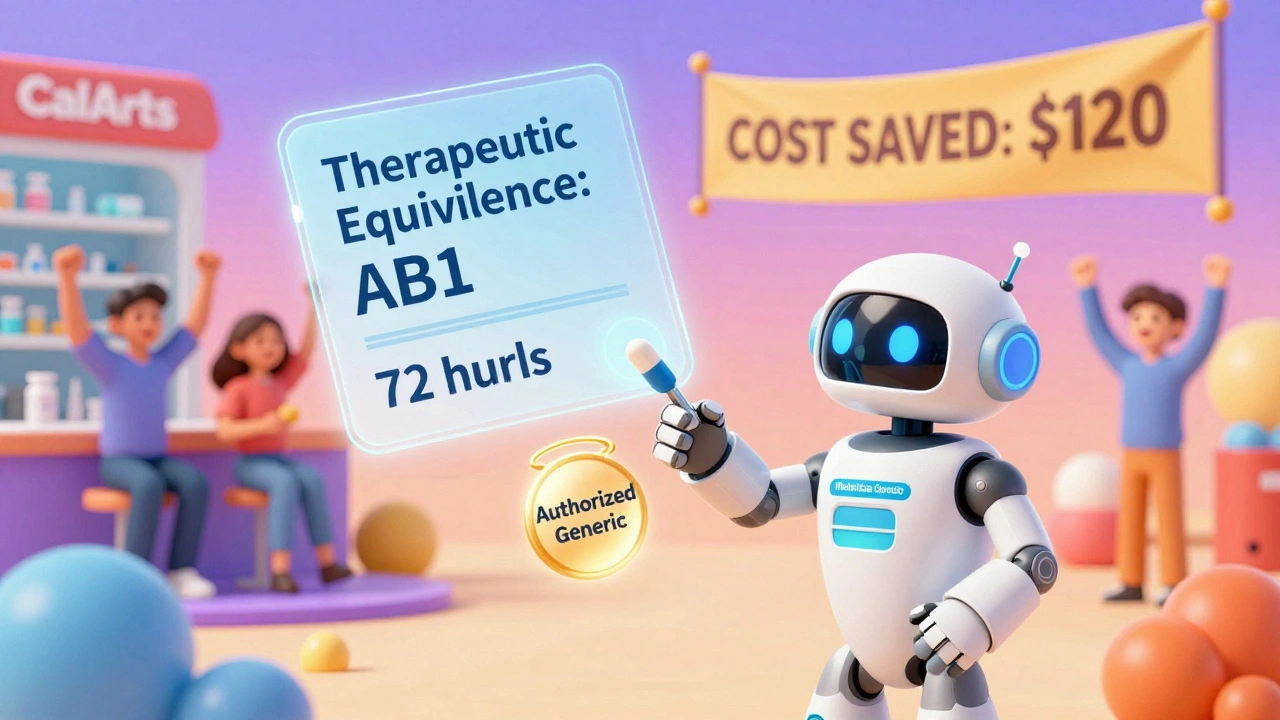
What’s Changing in 2025
The rules are shifting. The FDA’s new GDUFA III guidelines, starting in 2025, will require clearer labeling on generic drugs. Each package will show its therapeutic equivalence rating (AB1, AB2, etc.). This will help insurers and pharmacists make better substitution decisions. Medicare is also stepping in. The 2024 proposed rule will cap prior authorization wait times at 72 hours for brand-name drugs when generics exist. Right now, approval can take up to 14 days in some states. Another big change: “authorized generics.” These are brand-name drugs made by the original company but sold as generics. They’re chemically identical to the brand but cost less. In 2023, 46% of all generic prescriptions were authorized generics-and insurers are giving them better coverage than third-party generics.How to Navigate Your Coverage
You don’t have to guess. Here’s how to take control:- Check your plan’s formulary. Look up your drug on your insurer’s website. Is there a generic? What tier is it on?
- Ask your pharmacist: “Is there a generic? If I take the brand, will I pay more?”
- If you have side effects after switching, document them. Keep a symptom log. Bring it to your doctor.
- If your doctor agrees, ask them to write “do not substitute” on the prescription. But know that your insurer may still require prior authorization.
- For Medicare patients: Use the Medicare Plan Finder tool. Filter by “preferred generics” to see which plans cover your meds cheapest.
- Don’t skip your meds because of cost. Ask about patient assistance programs. Brand manufacturers often offer copay cards-but they’re not allowed for Medicare or Medicaid.

Inna Borovik
December 6, 2025 AT 09:10Let’s be real - the system is rigged. I switched from Synthroid to generic levothyroxine last year and my TSH went from 2.1 to 8.9. My doctor said it was ‘just a fluctuation.’ Then I found out the generic was made by a company that also produces rat poison fillers. No thanks. I pay out of pocket now. $120/month is cheaper than dying.
And don’t get me started on step therapy. They make you fail on three generics before letting you have the drug your body actually works with. It’s not healthcare. It’s Russian roulette with a pill bottle.
Rashmi Gupta
December 6, 2025 AT 12:11Interesting how Americans act like generics are some kind of conspiracy. In India, we’ve been using generics for decades - and they work fine. The problem isn’t the drug. It’s the placebo effect + bad pharmacy practices.
My uncle takes generic metformin for 12 years. No issues. But if you tell an American they’re ‘not the same,’ they’ll start crying like their soul was violated.
Andrew Frazier
December 7, 2025 AT 19:42Y’all are so weak. If you can’t handle a generic, you’re just a crybaby. The FDA says they’re the same. End of story. Stop being snowflakes and pay your damn copay. Also, why are you even on insurance? Just buy the brand if you’re so picky. America’s broken because people want everything for free and then whine when they don’t get the exact same blue pill.
Also, who the hell uses Reddit to complain about thyroid meds? Get a life.
Mayur Panchamia
December 8, 2025 AT 16:58Geniuses! You’re all missing the BIGGER PICTURE!!
Generics? Ha! They’re not even REAL drugs! The FDA doesn’t test the fillers - the fillers are the problem! Lactose? Dyes? Talcum? These are the same chemicals used in Chinese factory dust! And guess what? The brand-name companies? They’re owned by the same pharma cartels that control your water supply, your vaccines, and your Netflix recommendations!!
And now they want to force us into ‘authorized generics’ - which are just the original brand with a fake label! It’s a trap! A 300-year-old colonial plot to keep us docile!!
My cousin in Jaipur? He took a generic and grew a third eye. Coincidence? I think NOT.
STOP TRUSTING THE SYSTEM!!
Karen Mitchell
December 10, 2025 AT 07:20It is, without question, a moral failure of the American healthcare infrastructure that patients are forced into pharmacological roulette based on corporate profit margins. The fact that insurers prioritize cost over clinical efficacy - particularly for medications with narrow therapeutic indices - constitutes a systemic violation of the Hippocratic Oath, as interpreted through the lens of modern bioethics.
Moreover, the normalization of step therapy as a default protocol reflects a chilling commodification of human suffering. One does not simply ‘try’ a seizure-inducing generic when one’s neurological stability is at stake.
It is not ‘picky’ to demand continuity of care. It is a basic human right.
And yet, here we are.
Geraldine Trainer-Cooper
December 10, 2025 AT 16:13generics work for most people
but for some? they’re like swapping your favorite coffee for a bag of dirt that kinda looks like beans
your body notices
and no, it’s not ‘all in your head’
just because science says ‘same’ doesn’t mean your nerves, your gut, your brain feel it the same
trust yourself
and if your doc says ‘it’s fine’ - find a new doc
Nava Jothy
December 12, 2025 AT 09:46OMG I’m crying right now 😭
I switched from Lamictal brand to generic and had a full-blown panic attack that lasted 11 days. My therapist said I was ‘reacting emotionally to change.’ But I know. I KNOW. My soul felt it.
And now my insurance won’t cover the brand unless I submit 17 forms and a blood sample from my cat. I’m not even kidding. My doctor had to call them 4 times. They hung up on him. I’m so traumatized.
Who designed this system? A robot? A demon? My soul is in pieces 💔
Also, why do they make the pills different colors?? It’s psychological warfare.
Annie Gardiner
December 14, 2025 AT 01:15Okay but have you ever tried switching from one generic to another? That’s when the real horror starts.
I was on one generic levothyroxine for years. Then my pharmacy switched me to another - same FDA rating, same active ingredient. But suddenly I was exhausted, gaining weight, crying in the shower.
Turns out, the fillers changed. One had corn starch. The other had wheat. I’m gluten sensitive.
So yeah. ‘Same’ doesn’t mean ‘same for you.’
And no, insurance doesn’t care. They just want you to shut up and take the blue pill.
Chris Park
December 14, 2025 AT 08:57Everything you’ve read here is a distraction. The real issue? The FDA doesn’t test for bioequivalence in real human bodies - only in test tubes. The ‘80-85% cheaper’ claim? That’s a lie. The real cost savings go to the middlemen - PBMs, insurers, and pharmacy chains. The manufacturer? They make the same profit on generics as brands.
And the ‘authorized generics’? They’re not generics. They’re the original brand sold under a different label - with a different barcode - so insurers can pretend they’re saving money.
This isn’t about health. It’s about accounting. And the system is designed to keep you confused, powerless, and medicated.
Wake up.
Nigel ntini
December 15, 2025 AT 02:49Hey everyone - I get it. This is frustrating. But let’s not lose sight of the big win: generics saved over $370 billion last year. That means millions of people got life-saving meds they couldn’t afford otherwise.
Yes, some folks have bad experiences. Yes, the system is clunky. But the answer isn’t to throw out generics - it’s to fix the gaps.
Doctors: document side effects clearly.
Patients: speak up. Keep logs.
Insurers: shorten prior auth to 24 hours, not 3 days.
We can do better. Not by breaking the system - by fixing it. Together.